





































































Unlocking Bangladesh’s Next Frontier
For many, the desire to contribute extends far beyond remittances -- it reflects a deep and enduring connection to the country.

Bangladesh stands at an important juncture in its development journey. Over the past several decades, the country has made remarkable progress in poverty reduction, health, education, and social innovation -- often outperforming peers with far greater resources. Much of this success has been driven by world-class institutions such as BRAC and Grameen Bank, whose models have been replicated across the globe.
Yet as Bangladesh looks toward its next phase of growth, a new challenge is emerging: How to more effectively integrate global expertise, particularly from its own diaspora, into its development ecosystem.
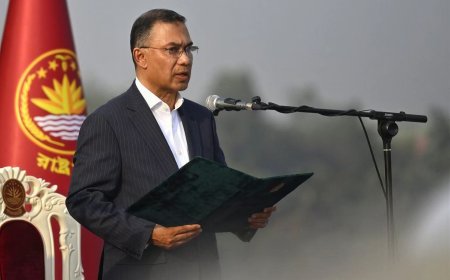
At a recent discussion during IMF-World Bank Week, hosted by the Atlantic Council, Bangladesh’s Finance Minister emphasized the importance of fully harnessing the country’s diaspora as part of its broader economic strategy.
The recognition is timely. While Bangladesh has benefited enormously from remittances and diaspora goodwill, it has yet to systematically translate that engagement into sustained collaboration in research, innovation, and development -- especially when compared to several regional peers that have more actively leveraged diaspora networks for knowledge transfer and investment.
For decades, the Bangladeshi diaspora has been central to the country’s economic and social trajectory. According to the World Bank, Bangladesh remains one of the world’s top recipients of remittances, with inflows exceeding $30 billion annually in recent years.
These flows have helped stabilize foreign exchange reserves -- which have recently rebounded to roughly $35 billion and with a record $4.25 billion in remittances in March as reported by Dhaka Tribune -- and have supported millions of households.
But beyond remittances and philanthropy, there is an underutilized opportunity: Academic collaboration, technical knowledge exchange, and diaspora-led development initiatives.
Across North America, Europe, and the Gulf, Bangladeshis hold prominent positions in universities, research institutions, technology firms, and policy organizations. Many are eager to collaborate with institutions in Bangladesh through joint research, training programs, and applied development projects. Yet translating this interest into sustained engagement remains difficult.
The barriers are not conceptual, but rather are procedural.
The process for registering and operating development initiatives or research collaborations in Bangladesh remains cumbersome and, at times, unpredictable. Diaspora-led organizations and academic partnerships often encounter delays, unclear requirements, and concerns about regulatory risk. As a result, some initiatives are delayed for months, while others are never formally launched.
I encountered this firsthand during the Sheikh Hasina government while working on a labor rights initiative led by the University of South Carolina Rule of Law Collaborative in partnership with the Bangladesh Legal Aid and Services Trust. Despite strong local demand and innovative programming, the project faced an eight-month delay in government approval. Similar experiences are frequently cited by academics and practitioners attempting to establish joint ventures or research collaborations.
This dynamic is particularly striking given Bangladesh’s global leadership in development innovation. Institutions such as BRAC and Grameen have long demonstrated how locally rooted ideas can achieve global impact. It is therefore somewhat ironic that, while Bangladesh exports development models to the world, inbound collaboration -- especially from its own diaspora -- remains constrained by administrative friction.
At the same time, the global development landscape is becoming more challenging. Reductions in international aid, including large programs historically supported by USAID, are affecting sectors such as public health, education, agriculture, and governance. European donors, who play a key role in funding research and civil society initiatives, are also facing tighter budgets, as highlighted in recent analyses by the OECD.
This creates both a challenge and an opportunity.
As traditional funding sources become more constrained, the importance of alternative forms of collaboration -- including diaspora-led initiatives and academic partnerships -- will only grow. Facilitating these forms of engagement is not simply a matter of improving efficiency, but a strategic investment in Bangladesh’s long-term development.
One way to think about this is through the concept of “ease of development.” Just as Bangladesh is making strides in improving the ease of doing business, it can also reduce the friction that prevents development and research initiatives from taking root.
This would involve streamlining approval processes for academic partnerships and NGO registration, clarifying regulatory frameworks, and creating dedicated channels to support diaspora engagement. Importantly, such reforms would not replace Bangladesh’s strong domestic development ecosystem, but rather complement and strengthen it.
The goal is not to import solutions, but to enable collaboration at the project and policy research levels.
By lowering barriers to engagement, Bangladesh can position itself as a hub for North-South academic and development partnerships -- linking global expertise with local implementation. This would build on the country’s existing strengths while opening new pathways for innovation.
Bangladesh’s diaspora has already demonstrated its commitment through sustained financial support and continued interest in engagement. For many, the desire to contribute extends far beyond remittances -- it reflects a deep and enduring connection to the country.
The question now is whether Bangladesh’s policy environment is ready to fully harness that potential.
If the country succeeds in enabling academic collaboration and diaspora-led initiatives, it can unlock a new frontier of development -- one that builds on its past successes while positioning it for the future. If it does not, it risks leaving valuable expertise and partnerships untapped at a time when they are needed most.
Atif Ahmed Choudhury is Founder and CEO of the US-Bangladesh NextGen Fellowship & Policy Institute.