


































































Dhaka Alone Cannot Carry Bangladesh Forward
A farmer in Rangpur, a student in Barishal, an entrepreneur in Khulna, or a patient in Sylhet should not feel disadvantaged simply because they live outside Dhaka.


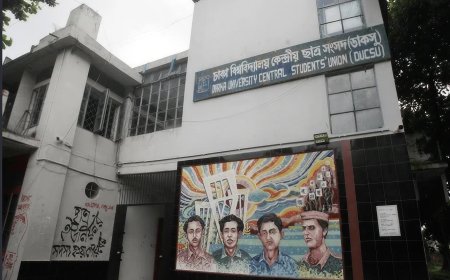
Bangladesh was born in 1971 through extraordinary sacrifice, courage, and an uncompromising dream for justice, dignity, and equality.
The brave freedom fighters and millions of ordinary citizens who participated in the Liberation War envisioned a nation free from discrimination, corruption, exploitation, and injustice, a country where every citizen would have the opportunity to live with honour and hope.
More than 50 years later, Bangladesh has undoubtedly made remarkable progress in several areas including agriculture, education, women’s empowerment, healthcare, remittance earnings, and industrial growth.
Yet, despite its enormous human potential and strategic advantages, the country continues to struggle in achieving balanced, inclusive, and institutionally strong development comparable to many successful Asian nations such as Singapore, South Korea, Malaysia, Vietnam, Japan, and the United States.
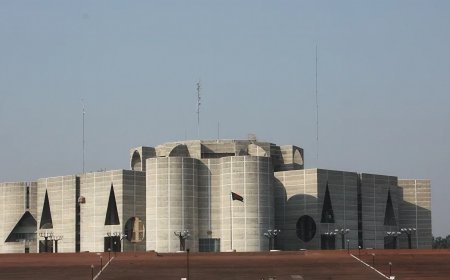
One of the major reasons behind this challenge is the excessive centralization of power, opportunities, institutions, and resources in Dhaka. Over the decades, the capital has gradually become the centre of almost everything; administration, commerce, higher education, healthcare, employment, and decision-making.
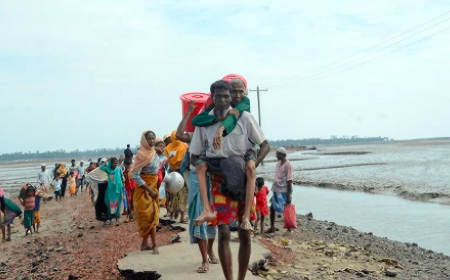
As a result, millions of people from across the country continue to migrate towards Dhaka in search of better opportunities and public services, creating enormous pressure on the city while depriving regional areas of deserved growth and investment.
If Bangladesh truly wants to emerge as a dignified, developed, and globally respected nation, decentralization must become a national priority rather than merely a political slogan.
Bangladesh emerged as an independent nation with enormous possibilities and opportunities. Those who sacrificed their lives and sustained serious injuries during the Liberation War wanted an independent country based on justice, equality, good governance, humane values, and economic progress.
They dreamed of a nation where state institutions would serve people fairly and efficiently, and where citizens from all regions would enjoy equal opportunities for advancement.
Although Bangladesh has achieved progress in several social and economic indicators, many of the aspirations of independence remain unfulfilled.
One of the major expectations after liberation was the establishment of strong and independent institutions, particularly the rule of law based on an impartial judiciary capable of delivering justice quickly and fairly.
Unfortunately, despite some improvements, institutional weaknesses, corruption, favouritism, bureaucratic inefficiency, and inequality continue to hinder national development.
At the same time, many countries in Asia that were economically weaker or devastated during the 1960s and 1970s managed to transform themselves into developed or rapidly developing nations.
Countries such as Singapore, South Korea, Malaysia, Vietnam, and Japan invested heavily in efficient governance, decentralized growth, education, industrialisation, technology, and strong institutions.
They recognised that national development cannot depend on one city alone and that empowering regions and local administrations is essential for sustainable progress.
Singapore, despite its limited land and natural resources, established efficient administrative systems and strong institutions that ensured transparency and effective service delivery.
South Korea transformed itself from the ruins of war into a global technological and industrial powerhouse through balanced economic planning, regional industrialisation, and long-term investment in education and infrastructure.
Malaysia also expanded development beyond Kuala Lumpur by creating regional industrial hubs, universities, and modern infrastructure across different states.
Vietnam, once devastated by prolonged conflict, introduced wide-ranging economic reforms and empowered provincial economic zones that significantly contributed to rapid growth and poverty reduction.
Similarly, the United States and Japan demonstrate the strength of decentralized national development. Their economic, educational, technological, and administrative success is not concentrated in only one city.
Multiple cities and regions contribute actively to national prosperity. Strong local governments, efficient municipalities, and regional institutions help ensure accountability, innovation, and balanced development.
Bangladesh, unfortunately, followed a different path where Dhaka gradually became overwhelmingly dominant in almost every sphere of life.
Today, citizens from all districts often feel compelled to move to Dhaka for quality education, specialised healthcare, employment, business opportunities, legal services, and administrative support.
This excessive concentration has created enormous social, economic, and environmental pressures on the capital.
Traffic congestion, pollution, rising housing costs, pressure on utilities, shortage of public spaces, and declining quality of life have become major challenges in Dhaka.
At the same time, many districts and regional towns continue to suffer from inadequate investment, fewer employment opportunities, weak healthcare facilities, and limited higher educational institutions.
This imbalance is neither sustainable nor desirable for a country aspiring to become developed and dignified.
Bangladesh now needs a bold and visionary decentralization strategy. Stronger local governments with real administrative and financial authority should be established.
Districts and divisions must gradually evolve into vibrant economic and administrative centres with quality universities, modern hospitals, industrial zones, research centres, and efficient public services.
Certain ministries, public institutions, and government agencies could gradually be relocated outside Dhaka to reduce excessive pressure on the capital and stimulate regional growth.
Investments in transport connectivity, digital infrastructure, renewable energy, and regional industries can create employment opportunities closer to where people live.
The judiciary and administrative systems should also be strengthened at regional levels to ensure that ordinary citizens can access justice and government services without unnecessary suffering and delays.
Greater transparency, accountability, and institutional independence are essential for reducing corruption and restoring public confidence.
Most importantly, decentralization is not merely an administrative necessity; it is a moral and national responsibility. A farmer in Rangpur, a student in Barishal, an entrepreneur in Khulna, or a patient in Sylhet should not feel disadvantaged simply because they live outside Dhaka.
Every citizen deserves equal access to opportunities, services, and development.
The future of Bangladesh cannot and should not depend on Dhaka alone. No capital city, regardless of its importance, can sustainably carry the burden of an entire nation of more than 180 million people.
A truly strong and prosperous Bangladesh will emerge only when development reaches every district, every region, and every citizen.
The experiences of Singapore, South Korea, Malaysia, Vietnam, Japan, and the United States clearly demonstrate that balanced regional development, empowered local institutions, administrative efficiency, and decentralized economic growth are essential foundations for national progress.
Bangladesh possesses all the necessary ingredients for similar success; hardworking people, youthful energy, entrepreneurial spirit, fertile land, strategic location, and remarkable resilience.
What is now required is visionary leadership, political commitment, institutional reform, and long-term national planning.
Decentralization does not mean weakening the state; rather, it means strengthening the nation by empowering its people and regions. It means reducing inequality, improving governance, accelerating service delivery, promoting accountability, and creating opportunities closer to where citizens live.
The dream of the Liberation War was not the prosperity of one city alone, but the dignity and advancement of the entire nation. The time has come to move beyond excessive centralization and build a Bangladesh where no citizen feels neglected because of geography.
If implemented sincerely and wisely, decentralization can become one of the most transformative forces in shaping a fairer, stronger, and more dignified Bangladesh for future generations.
A Gafur is a private sector professional and a writer and Former Executive Director, The American Chamber of Commerce in Bangladesh.