






































































Why are We Talking About What Women Wear?
Women are neither vessels of national honour nor laboratories of cultural experimentation. They are citizens. And the value of a citizen lies not in her clothing, but in her ideas, her voice, her political convictions, and her contributions.

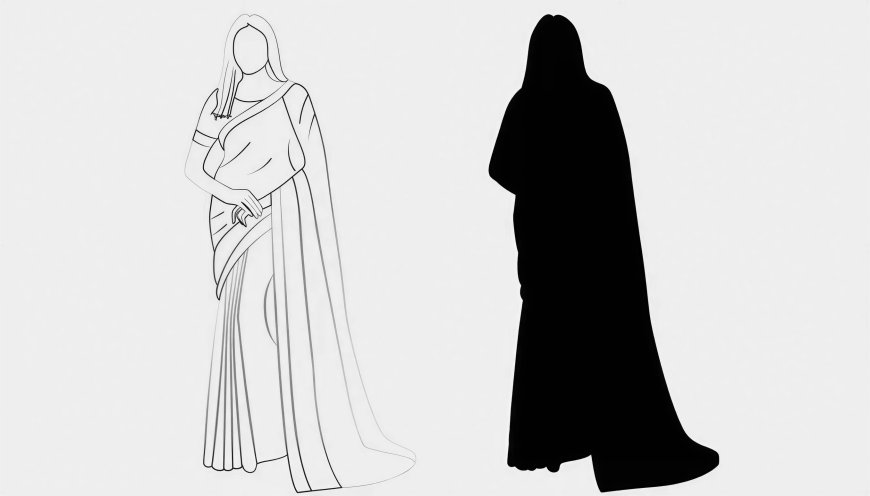
For a long time now, Bangladesh has been engaged in a rather peculiar national debate about women. Not about what they think, what they do, what they achieve, or what values they bring into public life. Our debates revolve around what they wear.
It is as though the future of the nation depends less on a woman’s political convictions, intellectual capabilities, or civic contributions, and more on the fabric draped around her body.
The latest controversy is no exception. One group is pleased because the Prime Minister’s wife did not wear a sari. According to them, Bangladesh has finally found a “First Lady” who looks “international,” does not look “Indian,” and appears modern and elegant.
Another group is outraged. In their view, the sari is the only authentic attire capable of representing Bangladesh and the timeless heritage of Bengal. By not wearing it, they argue, she imitated Pakistani state dress and violated national protocol.
At first glance, these two camps appear to occupy opposite ends of the spectrum. But look a little closer, and an uncomfortable truth emerges.
Despite their disagreements, both sides ultimately reduce a woman’s political, civic, and human identity to her clothing.
To one group, she is a “good” woman because she did not wear a sari. To the other, she would have been a “good Bangladeshi woman” had she worn one. Their disagreement is not merely about clothing. It is about who gets to decide how women’s bodies should function as symbols of the nation.
Ultimately, both groups are doing the same thing: bypassing questions about what this woman thinks, believes, values, or represents, and translating her entire public identity into her wardrobe. That is where the deepest political and feminist significance of this debate lies.
Feminist scholar Nira Yuval-Davis argued that women are often imagined as the “biological and cultural reproducers of the nation.” They become the bearers of national culture, boundaries, and notions of purity. Deniz Kandiyoti described this arrangement as a patriarchal bargain: Women are granted respect, but only on certain conditions.
Society determines what they should wear, how they should behave, and how they should carry the honour of the nation. Gayatri Chakravorty Spivak showed how women are frequently transformed into voiceless symbols, sometimes in the name of “protecting” them, sometimes in the name of “liberating” them.
Her famous formulation: “White men saving brown women from brown men,” captured how women’s agency is erased while others speak on their behalf. The framework has taken many forms over time. Today’s debate is simply another version of it.
Women have repeatedly been told: “Do not become too modern; you will destroy the culture.” And then, in another breath: “Become modern enough, otherwise you won’t look international.” Do you know what is tragic? In both cases, women themselves disappear. What remains is the patriarchal nation’s imagined woman.
On one side, she is the guardian of tradition. On the other, she is the showcase of modernity. Women’s bodies become, simultaneously, fortresses of heritage and showrooms of progress.
However, another issue deserves clarification. There is no publicly available Bangladeshi state protocol requiring the Prime Minister’s spouse to wear a sari during official foreign visits. Diplomatic attire is generally shaped by the nature of the event, host-country expectations, degrees of formality, and cultural sensitivity.
Even ASEAN diplomatic guidance allows flexibility depending on the occasion. Tradition, courtesy, and diplomatic convention certainly exist. But they are not legal obligations. At the same time, it is equally true that, in the context of Bangladeshi representation, the sari carries enormous symbolic significance.
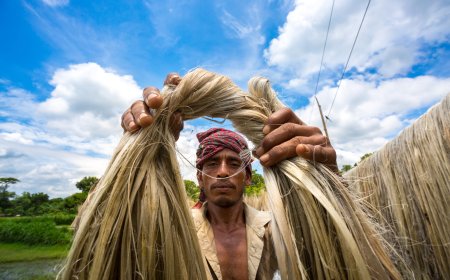
Jamdani, muslin, handloom weaves, katan, these are not simply garments. They embody labour, craftsmanship, memory, aesthetics, and history.
UNESCO has recognized the traditional art of Jamdani weaving as an Intangible Cultural Heritage of Humanity.
Many people therefore argue: “This is not about ordinary women. We are talking about the Prime Minister’s wife. When she accompanies the head of government abroad, she no longer appears solely as a private citizen. She becomes a symbolic representative of the state.” And that objection should not be dismissed lightly.
Indeed, clothing during state visits often carries symbolic meaning. Like diplomatic language, attire can communicate political messages. The Japanese Empress’s kimono, Bhutan’s royal ghō and kira, or the use of national dress at state ceremonies are all examples of this. Clothing often functions as a form of silent diplomacy, a way in which a nation tells the world a story about itself.
In that sense, if someone says that they would have preferred to see Bangladesh’s Jamdani, muslin, or handloom sari showcased on an international stage, that is a perfectly legitimate cultural expectation. Personally, I do not find that expectation unreasonable at all. But there is a fine line here.
The representation of tradition and moral obligation are not the same thing. Expecting cultural sensitivity from a symbolic representative of the state is understandable. Turning that expectation into a test of national loyalty is not.
Someone may say: “I wish she had worn Jamdani because it is a powerful symbol of Bangladesh.” That is a cultural preference. But if that statement evolves into: “She did not wear a sari, therefore she is less Bangladeshi.” “She represents Pakistani culture.” “She violated national protocol.” “She disrespected national identity.” Then we have moved beyond cultural commentary into political judgement.
Clothing may carry symbolic significance in matters of representation. But once a garment becomes a litmus test of patriotism, we stop celebrating culture and start policing it. And if we truly accept the argument of symbolic representation, another question follows.
Do we apply the same standards to men? Have we ever held national debates asking: Why did the Prime Minister wear a suit? Why a Western-cut coat? Why a tie? Why not a panjabi? Rarely.
Even when we frame the Prime Minister’s wife’s clothing as an issue of representation, the moral burden of representation falls almost entirely upon the female body. For male leaders, attire is usually treated as a political choice. For women, it often becomes an examination of national character.
Similarly, those celebrating the absence of the sari because it appears more “international” reveal another kind of anxiety. Embedded within that argument is a subtle form of self-denial. It assumes, often unconsciously, internationalism has a Western face, while local identity is somehow embarrassing.
That global legitimacy requires the erasure of one’s cultural particularities. But what exactly do we mean by “international”? European tailoring? Western aesthetics? White standards of elegance? If that is the case, are Japan’s kimonos not international? Korea’s hanbok? Ghana’s kente cloth? The Arab world’s abaya? Scotland’s kilt?
The problem is that colonialism does not merely occupy territory. It colonises imagination. Colonised peoples were once taught that to become civilised, they had to resemble their colonisers.
Tragically, decades after political independence, traces of that mentality remain. We still assume that looking like ourselves appears “local,” while looking like others appears “international.” But internationalism is not imitation. Internationalism is the confidence to inhabit one’s own identity without needing to become somebody else’s replica in order to be accepted. There is another deeper political psychology at work here. Benedict Anderson famously described nations as “imagined communities.”
Nations are not eternal truths; they are political communities constructed through shared imagination. And there is an interesting rule to this construction. Nations do not build their identities by looking in the mirror. They build them by looking at their neighbours.
We do not merely ask: “Who are we?” We also insist on declaring: “We are not like them.” That “them” may be former colonisers, neighbouring states, speakers of another language, or followers of another faith. As a result, national identity often becomes less about positive self-understanding and more about the politics of differentiation.
The years 1947 and 1971 gave South Asia not only new states, but new anxieties about identity. India had to prove that it was not Pakistan. Pakistan had to demonstrate that it was not India. Bangladesh had to establish its moral foundation through the rejection of Pakistani state ideology. In that sense, South Asian nationalism has often been a politics of difference. Who we are matters. But so does who we are not. Up to this point, such processes are part of ordinary nation-building.
The danger begins when political separation evolves into projects of cultural purity. When we begin to assume that creating a new state requires inventing an entirely new civilisation, as though history has left no shared inheritance. Then the sari becomes “Indian.”
The salwar-kameez becomes “Pakistani.” Centuries-old multicultural inheritances shrink into national labels. And women become living maps upon which nations write their anxieties, insecurities, and uncertainties. But history has an inconvenient habit. It refuses to tell the simple stories nationalists prefer.
Most garments we casually label “Indian,” “Pakistani,” or “Muslim” are far older than the modern nation-states that claim them.
The salwar-kameez is one example. Pakistan was founded in 1947. The salwar-kameez existed centuries before that. Its roots lie in Persian, Central Asian, and Turkic cultural worlds before spreading throughout South Asia through centuries of exchange during the Delhi Sultanate and Mughal periods (Ross, 2008; Tarlo, 1996). Pakistan adopted it as part of its national identity. It did not invent it.
The story of the sari is no different. India, too, was founded in 1947. Yet the sari’s history stretches back centuries, perhaps millennia. The tradition of unstitched draped garments existed across present-day India, Bangladesh, Nepal, and Sri Lanka long before modern borders emerged. The word sari derives from the Sanskrit śāṭikā.
Its predecessors appear in second-century BCE sculptures, the carvings of Sanchi Stupa, and the murals of Ajanta (Banerjee & Miller, 2003; Lynton, 1995). India elevated the sari into a national symbol. It does not own it exclusively. More interestingly, the blouse-and-petticoat sari that many of us today imagine to be “timeless tradition” is itself relatively modern. In the nineteenth century, Jnanadanandini Devi popularised new draping styles influenced by European blouses, Parsi customs, and local practices.
What we often imagine to be pure and unchanging tradition is, in reality, a history of borrowing, exchange, adaptation, and reinvention. Tradition itself is a kind of travelogue. Another popular misconception also deserves attention. In Bangladesh, one often hears that the sari is a “Hindu dress,” while the “proper” attire of Muslim women is supposedly the salwar-kameez, abaya, or Arab clothing.
Conversely, salwar-kameez is sometimes imagined as inherently “Muslim,” as though wearing a sari signals allegiance to another religious identity. History refuses to support either claim.
Muslim women in Bengal have worn saris for generations. Bengali literature, photographs, family archives, and social histories from the nineteenth and 20th centuries testify to this reality. Saris were entirely normal within the Muslim middle classes of Begum Rokeya’s time.
Likewise, neither the Qur’an nor Hadith prescribes the salwar-kameez for Muslim women. Islamic traditions emphasise modesty and appropriate bodily covering, not specific cuts or garment designs (Ahmed, 1992; El Guindi, 1999). If the sari were inherently Hindu, why have millions of Muslim women worn it for generations?
If the salwar-kameez were inherently Muslim, why do millions of Hindu, Sikh, Christian, and Nepali women wear it? Religion and culture are not the same thing. Religion offers people a language of belief. Culture offers them a memory of history. Clothing is one of the languages through which that history speaks, a language shaped by migration, trade, empires, coexistence, borrowing, and reinvention.
Perhaps this is why reducing clothing to religious boundaries is as unfair to history as turning it into the private property of modern nation-states. Culture has always emerged through contact, exchange, and coexistence. Perhaps history’s greatest lesson is this: India does not own the sari.
Pakistan does not own the salwar-kameez. Religions do not own particular cuts of fabric. Civilizations create garments; states later stitch their flags onto them.
Personally, I would have loved to see greater visibility for Bangladeshi Jamdani, muslin, and handloom traditions on the international stage. They carry the labour of weavers, the memory of riverine Bengal, centuries of craftsmanship, and the aesthetic history of a people. Such expectations toward symbolic representatives of the state are not unreasonable.
But I also believe that insisting a woman must wear a sari is authoritarian. Equally, assuming that not wearing a sari automatically makes her modern is a form of colonial self-denial. Women are neither vessels of national honour nor laboratories of cultural experimentation.
They are citizens. And the value of a citizen lies not in her clothing, but in her ideas, her voice, her political convictions, and her contributions. Perhaps the day we stop counting the folds of women’s clothing and begin to see them as full human beings will be the day we finally become truly modern.
Dr. Lubna Ferdowsi is an academic and researcher based in England.