
























































The American Experiment at 250
The republic that declared itself in 1776 was, at bottom, an argument that human beings could be trusted, through reflection and iteration, to correct themselves. Two and a half centuries on, having stumbled badly and then caught itself, it has just offered fresh evidence for that argument. The experiment is older now, but it is still running.

This is not the article I had thought I would be writing for this July 4.
I had imagined something simpler, even celebratory: A meditation on 250 years of a singular national experiment. The Fourth of July in 2026 was always going to be an occasion.
It marks the semiquincentennial, a killer Scrabble word indicating the two hundred and fiftieth anniversary of the Declaration of Independence.
250 years since the founding that announced to a world organized around kings and royal families that a people could govern themselves without the benefit of an exalted bloodline.
What made the American founding genuinely new was the decision to anchor nationhood in an idea rather than in blood, soil, or lineage.
The republic did not define its citizens by where their ancestors were born or which church they attended. It defined them, at least in aspiration, by their willingness to subscribe to a proposition: that all are created equal, and that legitimate government rests on the consent of the governed.
A nation built on a creed rather than a bloodline is, by definition, open to anyone who accepts the creed. That openness has been honored unevenly and betrayed sometimes, but it remains America’s guiding principle.
Instead of approaching this moment with the celebratory jubilation it deserved, it had seemed that the nation would wake up on July 4 still mired in war.
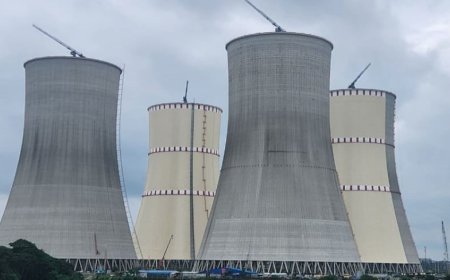
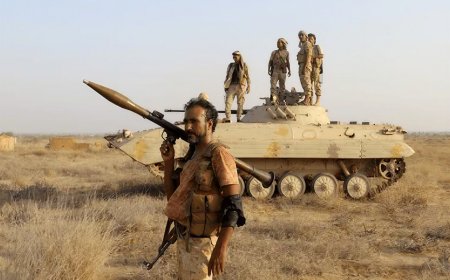
The war with Iran, now formally winding down under the just-signed Memorandum of Understanding, was fought under conditions that made a ground campaign all but unthinkable. Iran is large, mountainous, and populous, with a society where the only thing resented more than its autocratic rulers would be foreign occupiers.
No serious planner believed American or allied infantry could hold Iranian territory at an acceptable cost. So the war was waged from the air and the sea: Strikes on military and nuclear sites that began in late February, a naval blockade, and a months-long contest over the Strait of Hormuz.
How the United States arrived there is its own cautionary tale. The capture of Nicolas Maduro in early January, accomplished in a matter of hours and with few American casualties, was treated in Washington as proof that regimes could be removed cleanly and quickly.
After so swift a result in Caracas, President Trump appears to have been persuaded, in no small part by the Israeli prime minister, that toppling the government in Tehran would be a comparable affair.
This was a grievous miscalculation. The opening decapitation strikes, including the killing of Iran's supreme leader, did not produce collapse or surrender. They produced a wider war, a closed strait, and a spike in the price of energy felt in every American gas station and grocery aisle.
As important as how the war started is how it ended. The war did not end because of any overwhelming military imperative, but because the architecture of American democracy began, slowly and clumsily, to assert itself. A mid-term election loomed in November.
Prices were rising, and the public was uneasy. Members of Congress, of both parties, forced repeated votes on war powers. The President himself, defending the settlement abroad, reached for the memory of Herbert Hoover and warned of economic catastrophe.
The genius of the founders of the American republic reasserted itself: A leader who answers to voters, to a kitchen-table economy, and to a legislature he cannot simply ignore is a leader who can be pulled back from the brink and made to see reason.
Those now describing the outcome as an American defeat are reading only half the page. The agreement secures from Iran a reaffirmed commitment never to acquire a nuclear weapon, the very objective that a generation of statecraft had pursued. It is worth saying plainly what that recalls.
In 2015, the Obama administration negotiated the Joint Comprehensive Plan of Action, an imperfect but functioning arrangement that placed Iran's program under inspection and constraint and emphatically earned Barack Obama the Nobel Peace Prize that had been awarded in 2009.
The United States walked away from it in 2018, and the years that followed brought not a better bargain but a war. In hindsight, the patience of that earlier diplomacy looks like precious wisdom.
Had successive administrations stayed the course, Washington might today have had the might of a united Middle East behind it, free to turn its full attention to the pivot it has long postponed: the long contest with China across Asia. Instead, it spent its credibility and its capital relearning a lesson it had already been taught.
The most remarkable feature of the past six months is not the error that all dominant superpowers make in their history; rather, it is the correction.
Monarchies and autocracies can blunder spectacularly, but they struggle to admit it, because the admission threatens the ruler and not merely the policy.
A democracy is built differently. It contains, within its own machinery, the means to notice that it has gone wrong and to reverse course without bloodshed at home.
Elections, a free press, a divided legislature, an anxious electorate doing arithmetic at the pump: these are all the prosaic instruments by which a free people governs its own decisions and its own mistakes.
That is what I find myself thinking about as the fireworks are readied for the two hundred and fiftieth Fourth of July. The republic that declared itself in 1776 was, at bottom, an argument that human beings could be trusted, through reflection and iteration, to correct themselves.
Two and a half centuries on, having stumbled badly and then caught itself, it has just offered fresh evidence for that argument. The experiment is older now, but it is still running. Its capacity for second thoughts is intact. And for a country whose defining act was a refusal to accept that things must remain as they are, that is reason enough to believe the best days are still ahead.
Ehteshamul Haque is a lawyer who focuses on technology transactions. He teaches corporate law at American University.