





































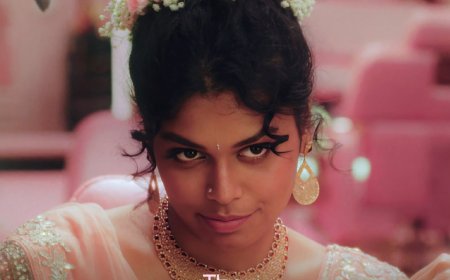
























Why Is It Called Morog Polao?
The language of our food carries a social order within it. That is what we name, what we price, what we celebrate, and what we quietly demand of women versus men at the dinner table is not neutral tradition. It is instruction, delivered warm in a serving bowl, generation after generation.

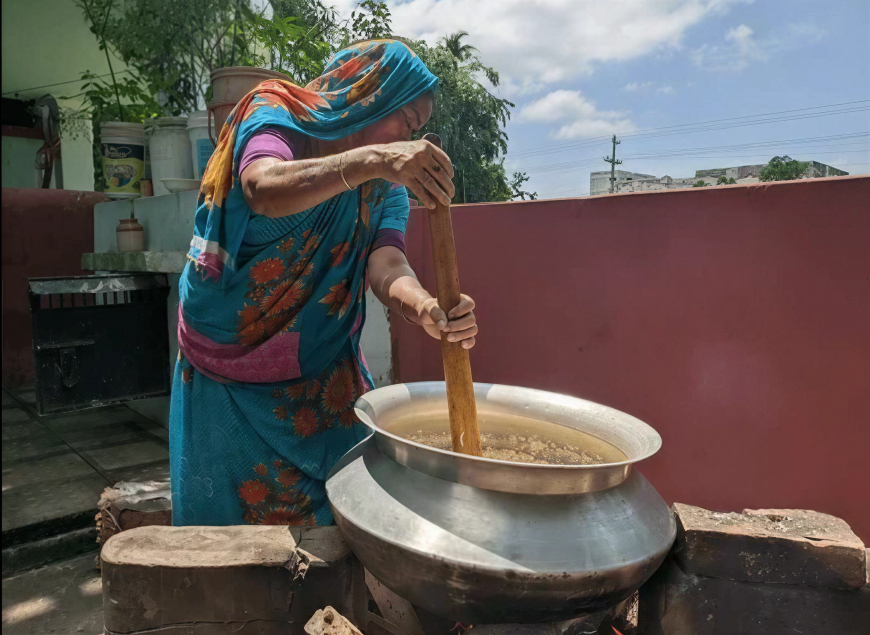
A Bengali professor stopped a podcast host mid-sentence with a single question: Why do we call it Morog Polao? The clip went viral. The laughing emojis followed quickly. The discomfort underneath them took a little longer to name.
The dish translates literally as rooster rice. Not chicken rice. Not poultry rice. The male of the species, specifically, is elevated into the name of a celebratory meal. Nobody chose this consciously. Nobody needed to. That is precisely the point.
This is not the first time a Bengali digital public has converted an uncomfortable observation into a shareable joke and moved on. A few months earlier, researchers Avishek Ray and Diyali Bhattacharya published a study in Celebrity Studies on how Bengali networked publics respond to Hero Alom, a self-produced, working-class creator whose videos routinely draw millions of views and, in almost the same breath, relentless ridicule.
Their argument is precise: in Bengali digital spaces, laughter is rarely innocent. It is a mechanism. Cringe, they write, functions as an affective and aesthetic technology that both enables visibility and enacts exclusion. The laughing emojis that met the professor’s question about morog polao are part of the same repertoire. They signal that something has been noticed. They also ensure it does not have to be felt.
So let us sit with the question properly. Morog polao is not an ordinary dish. It sits at the high table of Bengali cuisine. It is served at weddings, placed before guests of honour, and priced at a deliberate distance from the everyday. It is the dish you order to signal that the person in front of you is worth the extra taka.
And it is named after the male of the species. The female chicken has been feeding Bangladeshi families for as long as anyone can remember. In jhol, in curry, in the unremarkable but essential heroism of the Tuesday dinner, she is routine. She is expected. Nobody named a dish after her. The morog gets the feast. The murgi gets the weeknight.
You could call this a coincidence of culinary history. But then you would have to explain why the same pattern keeps appearing, not just in our kitchens, but across cultures, across continents, and is now documented in a peer-reviewed academic journal published earlier this year.
Researchers Iwona Gibas and Sylvia Jaworska at the University of Reading spent years examining something most of us scroll past without a second thought: Food advertisements in Women’s Health and Men’s Health magazines, two of the world’s most widely read health publications, with a combined readership approaching 105 million.
Their study, published in Discourse & Communication, identifies three distinct strategies through which food is used to construct and reinforce gender. The findings are difficult to dismiss as overthinking. The first strategy appears before a single product is even described. Food advertisements make up 29% of all ads in Women’s Health, compared to only 16% in Men’s Health. Simply by volume, the message is already being sent.
Food, its selection, its discipline, and its moral weight are treated as primarily a woman’s domain, her responsibility, her ongoing project of self-management. Alongside cosmetics and beauty products, women are expected to devote careful attention to food as yet another instrument of self-improvement. Men, relatively speaking, are not issued the same standing instruction.
The second strategy concerns which foods go to whom. The same broad food categories appear in both magazines, but the distributions diverge sharply. Foods coded as “healthy,” including dairy, fruits, vegetables, gut supplements, and weight-loss products, cluster disproportionately in the women’s publication. Protein, red meat, and alcohol cluster in the men’s.
Food for infants and children is advertised exclusively in Women’s Health, as though fatherhood comes with no grocery list attached. Alcohol accounts for 41% of all drink advertisements in Men’s Health. In Women’s Health, a magazine specifically about health, that figure is 4%.
Put plainly, men are permitted to indulge. Women are expected to manage.
Even within shared categories, the gendering persists. In the protein section, red meat is marketed almost exclusively to men. Women are directed instead toward lean chicken, fish, and plant-based alternatives, the lighter, more “virtuous” options. Men’s bodies require fuel and performance. Women’s bodies require restraint and refinement.
The parallel to morog polao requires no stretching. The expensive, prestigious, meat-forward dish named for the male bird carries the same cultural grammar. The male body is worthy of the rich, hearty, celebrated preparation. The female gets the routine.
The third and perhaps most revealing strategy concerns not what is advertised, but how. Through what the researchers call semiotization, the deliberate selection of colour, pose, language, gaze, and imagery, the same neutral food product is transformed into an entirely different message depending on who is meant to receive it.
Consider a single brand of pistachios running two different advertisements in the same month.
In Women’s Health, the headline read: “Love yourself. Snack accordingly.” A nameless woman sat in a yoga pose, smiling softly at the camera, defined by care of the self.
In Men’s Health, the identical pistachios were described as “part of the gear,” placed alongside a named, award-winning snowboarder preparing for what the text called an “adrenaline-fueled descent.” The man had an identity, a reputation, a destination. The woman had a feeling.
The same protein supplement came packaged in pink for women, with words like “shape,” “weight loss,” and “fight fatigue,” and in blue for men, with words like “muscle,” “strength,” “power,” and “endurance.” The female version promised to help women cope with weakness. The male version promised to build on strength.
Most striking was the treatment of two real Team GB Olympic athletes used by the same dairy brand in parallel advertisements. The male athlete appeared in his official kit, his relay records listed, his career anchored in fact. The female athlete appeared in loose, flowing clothing, styled as a semi-mythological figure drawn from ancient Greece, eyes closed, posture tilted, with no athletic achievement referenced anywhere.
She was visibly muscular. Her muscles, however, were offered no context, no competition record, no identity to which they could be attached. They decorated her. They did not define her. The researchers conclude that female athletic success was, in effect, erased. The language of performance, mastery, and conquest was reserved for the male body. The female body was left with appearance, sensuality, and the ongoing project of remaining pleasing. The food did not change. The story constructed around it changed everything.
Now think about the last Bangladeshi wedding you attended.
Think about who was complimented for eating so little and who was urged to take more. Think about which relative’s plate was quietly monitored and whose appetite was celebrated as vigour.
Think about the aunties who spent the morning in the kitchen and ate last, standing near the sink. Think about the uncles who arrived hungry and were seated first, with the morog polao placed before them as a matter of course.
Think, if you are a woman, about the last time you reached for something in public and felt, not shame exactly, but the ghost of an apology forming somewhere in your chest. Because the air in the room, without a word being spoken, seemed to expect one.
This is not melodrama. This is the accumulated instruction of a thousand small moments delivered through food: Through what is named for whom, what is priced for whom, what is permitted, and what silently requires justification. Gibas and Jaworska describe it as food functioning as a “technology of gendering,” not nourishment alone, but a daily mechanism through which people are reminded of what kind of body they are supposed to have, what kind of person they are supposed to be, and how much space, physical, social, and moral, they are allowed to occupy.
Ray and Bhattacharya, writing about a very different kind of Bengali cultural text, arrive at the same architecture from a different direction. Their argument, that cringe operates as an affective technology for policing who may aspire to visibility and on what terms, describes not an exception to the cultural logic of Morog Polao but its digital continuation. In one register, the question is whose appetite deserves celebration. In the other, whose self-presentation deserves legitimacy.
The answer, in both cases, is structured by the same hierarchies of class, gender, and belonging that Bengalis have been quietly reproducing for a very long time. What the professor identified in the name morog polao, and what researchers documented across hundreds of magazine advertisements on the other side of the world, are not two separate observations. They are the same observation made in two different rooms, at two different points on the same thread.
This is what the viral reel is actually carrying beneath the laughing emojis. The professor was not making a quirky remark about poultry. She was pulling a thread. And if you follow it through the naming of dishes, the architecture of a wedding spread, the premium price assigned to the male bird, and the quiet calculus of whose appetite is celebrated and whose is managed, it leads somewhere most of us would rather not sit with for too long.
Which is, of course, precisely why we made it into a joke. There is a particular social reflex that fires when an uncomfortable truth arrives without a solution attached. We laugh. We share the reel. We roll our eyes at feminists finding problems in the pantry. We perform amusement as a substitute for engagement. Then we go home and serve the morog polao to the men at the table first, because that is simply what you do, because it has always been done this way, because it is just a name, because nobody means anything by it.
Ray and Bhattacharya identify this reflex in Bengali digital culture with some precision. The mockery directed at Hero Alom, the roast videos, the laughing comment threads, and the ironic praise function less as spontaneous amusement than as a public performance of normative judgment. Cringe circulates, they write, not simply to mock failure but to rehearse hierarchies of taste, legitimacy, and belonging through communal ridicule.
The laughing emojis beneath the professor’s clip are doing something structurally similar: They convert the discomfort of recognition into the pleasure of shared amusement, and in doing so, ensure that the recognition does not have to go anywhere. The joke becomes the destination. The question disappears inside it. But meaning, as both a Dhaka podcast and a British academic journal suggest in their separate registers, does not require intention. It only requires repetition.
Nobody is asking to rename the dish. That was never the point, and turning it into the point is its own kind of deflection.
The point is noticing. That uncomfortable, slightly restless awareness that arrives when you realize that something you have always done without thinking was, in fact, a choice.
The language of our food carries a social order within it. That is what we name, what we price, what we celebrate, and what we quietly demand of women versus men at the dinner table is not neutral tradition. It is instruction, delivered warm in a serving bowl, generation after generation.
The professor asked her a question on a podcast, and the internet turned it into content. But somewhere, between the reels, the reaction videos, and the comment section philosophers, a few people sat with it a little longer than they meant to.
That is where it begins.
Nafew Sajed Joy is a Bangladeshi researcher, writer, and environmentalist whose work sits at the intersection of academia, journalism, and social advocacy.