





























































Reserved Seats, Real Representation?
Rethinking Women’s Political Empowerment in Bangladesh

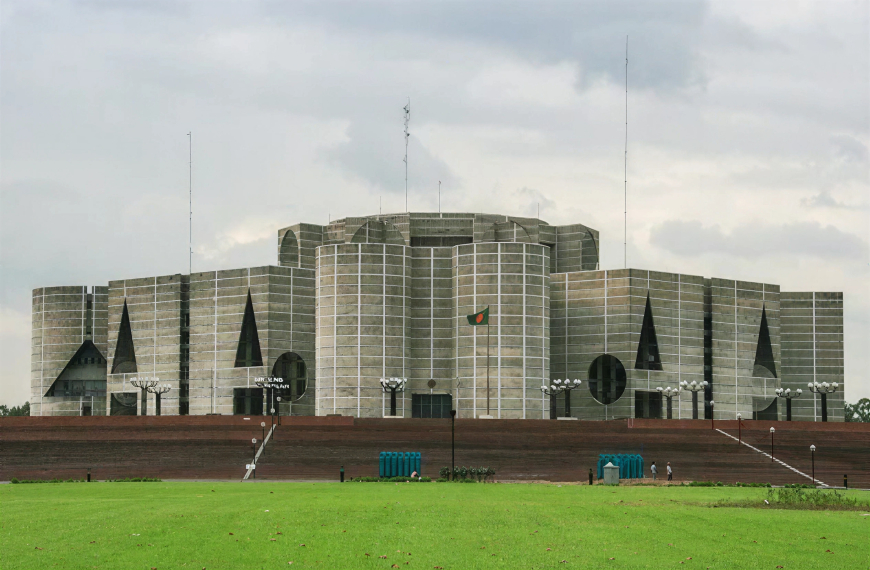
During the era of Hussain Muhammad Ershad, the 30 reserved seats for women in the Jatiya Sangsad were popularly criticized as “30 sets of ornaments” -- present, yet politically insignificant.
Decades later, the number has risen to 50. But has their influence grown in proportion to their numbers, or has symbolism simply been expanded?
Political representation is not merely about occupying seats in parliament; it is about possessing the legitimacy, independence, and authority to influence national decision-making.
Bangladesh’s system of 50 reserved seats for women in the Jatiya Sangsad was introduced to enhance women’s participation in politics, but after decades of practice, an uncomfortable question remains: Has it created genuine political empowerment or merely numerical representation?
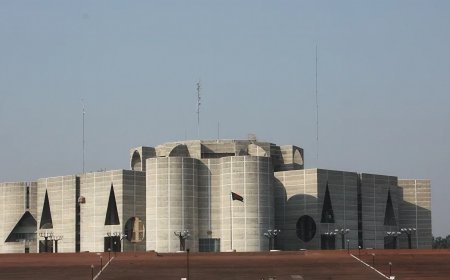
The Constitution provides for a 350-member parliament, comprising 300 directly elected members and 50 women occupying reserved seats allocated to political parties in proportion to their parliamentary strength.
These women are elected by Members of Parliament rather than by the people themselves. While the arrangement undoubtedly increases the number of women in parliament, it does not necessarily strengthen women’s democratic agency.
During early independence period, women faced significant social, economic, and political barriers. In that context, affirmative measures to encourage their participation were understandable and arguably necessary. Society was not prepared to provide equal opportunities, and reserved seats served as a transitional mechanism to bring women into the legislative process.
At the same time, political parties are required under the RPO to ensure at least 33 percent female representation in their committees. If inclusion is essential within party structures, why should it not extend more meaningfully to candidate nomination for national elections as well?
Half a century later, however, Bangladesh presents a different reality. Women have served as prime ministers, opposition leaders, ministers, judges, diplomats, entrepreneurs, academics, senior civil servants, and more. They have demonstrated leadership across virtually every sector of national life.
Continuing to treat women as a category requiring permanent political reservation raises an important question: Does such a system empower women, or does it unintentionally reinforce the perception that they cannot compete equally?
The greatest weakness of the current arrangement lies in its method of selection. Reserved-seat MPs derive their mandate primarily through party nominations rather than direct electoral competition. Their political survival therefore depends more on party leadership than on voters.
This inevitably creates a relationship of dependence that limits their ability to act independently when party interests conflict with broader public concerns.
The challenge becomes even more significant in light of Article 70 of the Constitution, which effectively prevents party-nominated MPs from voting against their party without losing their parliamentary position.
Although this restriction applies broadly, its impact on reserved-seat members is particularly pronounced because their political legitimacy originates from party allocation rather than direct public endorsement. As a result, many citizens perceive them as representatives of party leadership rather than representatives of the people.
This is not a criticism of the competence or commitment of women MPs themselves. Many possess impressive academic credentials, professional experience, and strong public service records. The structural design of the system, however, often prevents them from exercising their full potential. Political capability exists, but political independence may remain constrained.
Moreover, the existence of reserved seats can unintentionally reduce incentives for political parties to nominate women in competitive general constituencies.
Instead of investing in building women as electoral leaders capable of winning direct mandates, parties may rely on reserved allocations to demonstrate their commitment to inclusion. Numerical representation is achieved, but substantive political competition remains limited.
True democratic empowerment requires more than presence; it requires public legitimacy. A parliament becomes stronger when its members are directly accountable to identifiable constituencies that can reward or reject their performance through elections. Without such accountability, representation risks appearing symbolic rather than substantive.
This does not necessarily mean that affirmative action should disappear overnight. Rather, the system should evolve toward a model that strengthens democratic legitimacy.
One option is gradually increasing the nomination of women for general seats while reducing reliance on indirect reservation. Another is to retain reserved seats but establish clearly defined constituencies where women contest elections through direct universal adult franchises, allowing voters rather than party elites to determine their representatives.
Political parties also bear significant responsibility. They should nominate capable women in winnable constituencies instead of treating female leadership as a quota to be satisfied after elections. Financial support, organisational backing, leadership training, and equal access to party structures are essential if women are to compete on genuinely equal terms.
Perhaps the strongest argument for reform lies in a simple statistic. In the 13th Parliament, 50 women entered Parliament through reserved seats, yet only seven women were directly elected by the people in general constituencies. Moreover, of the 78 women who contested general seats, around one-third had established family political backgrounds.
Ultimately, the objective should not be to reserve politics for women but to remove the barriers that make reservations necessary. Equality under Article 28 of the Constitution should be reflected not only in legal language but also in political practice. The success of women in parliament should depend on public confidence, merit, and democratic competition rather than institutional tokenism.
Reserved seats may have served as an important bridge in Bangladesh’s democratic journey, but bridges are meant to lead somewhere. The long-term destination should be a parliament where women occupy seats because citizens choose them, not because the system reserves places for them. That would represent not merely greater representation, but genuine democratic equality.
Md. Yeasir Arafat is an undergraduate student from the Department of Political Science, University of Rajshahi, Bangladesh.