































































The History of Green Politics
What started as a protest became politics. What was once dismissed as extreme is now the subject of international summits. The questions Green activists were asking 50 years ago -- how do we live within the limits of this planet, and who pays when we do not -- are still the most important questions today.

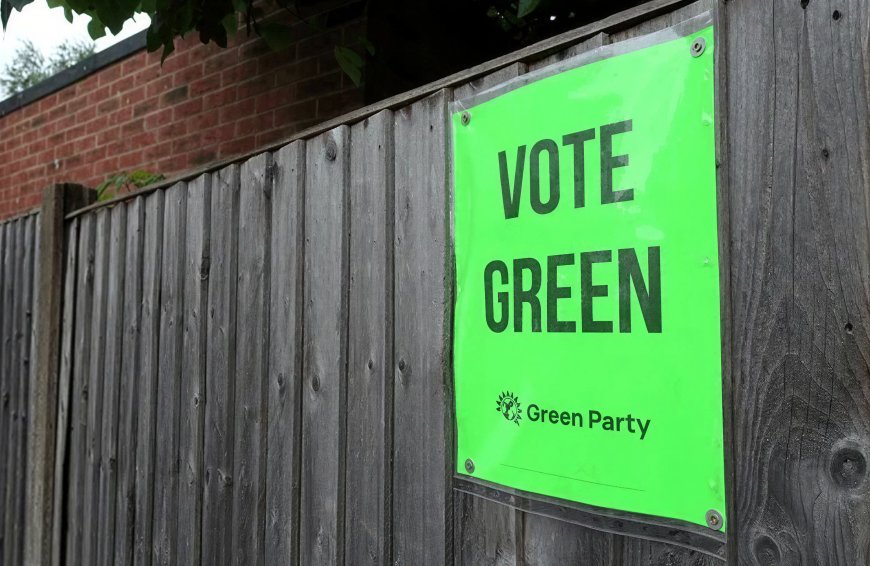
Not long ago, thinking about the environment was seen as something for hippies and protesters -- people tied themselves to trees, or sailed small boats into nuclear test zones. Today, climate policy sits at the heart of elections, world leaders argue over emission targets, and going green is a promise made by governments, corporations, and supermarkets alike.
This did not happen by accident, but rather through a movement that started on the streets, found its way into parliament, and, once there, it changed what everyone else had to talk about.
This is the story of how Green parties took ideas that were once considered extreme and made them impossible to ignore.
Began with Anger
The roots of Green politics started in the 1960s -- a decade when many young people decided the world their parents had built was badly broken. In the United States, opposition to the Vietnam War, nuclear weapons testing, and the widespread use of chemical pesticides all fed into a growing sense that governments were making dangerous decisions with little regard for people or the planet.
Rachel Carson's 1962 book, Silent Spring, brought the damage caused by pesticides to a wide public audience for the first time, and helped spark a movement that went far beyond wildlife protection.
Between 1969 and 1972, major environmental groups were founded one after another. Friends of the Earth International (FOEI) was founded in 1969. Greenpeace followed in 1971, growing out of a small group of peace activists in Canada who wanted to sail to a nuclear test zone in Alaska to stop a bomb from going off.
In April 1970, the first Earth Day held in the United States brought twenty million people onto the streets. These were not fringe events, but signs of a society asking serious questions about where it was landing.
However, the reality is that protest alone does not change policy. It can raise awareness, shift public opinion, and embarrass governments -- write laws, set budgets, or sit at the negotiating table. For that, the movement would eventually have to become a political party.
From Protest to Party
The first real attempt to take Green ideas into electoral politics came from an unlikely place -- the Values Party of New Zealand, founded in 1972. It was the first party anywhere in the world to fight a general election on a fully ecological manifesto, arguing for a smaller economy, a cleaner environment, and a fairer society.
It won zero seats, but wrote the blueprint that Green movements everywhere would later follow.
Europe picked up the idea quickly. In West Germany, the late 1970s during the Cold War were at their height, American nuclear missiles were being stationed on German soil, and a powerful anti-nuclear movement had taken hold.
Many of the people involved had been students during the 1968 protests -- politically experienced, angry, and convinced that neither the left nor the right was willing to face what mattered most. In 1979, they founded Die Grünen, the Greens.
Petra Kelly, one of its founders, had spent years working in politics in the United States. Joschka Fischer, who would later become Germany's foreign minister, came from radical street politics. These were not career politicians but activists who decided that if the system would not change from the outside, they would go inside and change it themselves.
Most Green parties shared a set of core ideas -- protecting the environment, social justice, nonviolence, and giving ordinary people more say in decisions that affect them. They were not just an environmental pressure group with seats, but a new kind of politics.
Winning Ground, Slowly
The progress of Green politics at the ballot box was slow but real, becoming a hot topic across Europe through the 1980s. Miljöpartiet de Gröna (MDG) of Sweden was founded in 1981 and within seven years had won 20 seats in parliament -- the first new party to enter the Swedish legislature in seventy years.
In 1989, the UK Green Party won 2.2 million votes, fifteen per cent of the vote in the European elections. That is a remarkable result for any minor party, yet Britain's first-past-the-post voting system gave it zero seats in parliament. The rules of the game mattered enormously.
The 1986 Chornobyl nuclear disaster in Ukraine gave Green parties across Europe a huge boost. When a reactor exploded and sent radioactive clouds across the region, the argument that nuclear power was safe became very hard to make.
Environmental concerns were no longer abstract; they were visible, measurable, and frightening. That helped Green parties build broader, mainstream support -- and other parties, slowly and reluctantly, began borrowing their environmental language.
By 1995, the Finnish Green League (Vihreä liitto) became the first Green party in Western Europe to enter a national government. It was a landmark moment. A movement that had started with activists dumping bottles on the pavement outside a soft drinks company in London in 1971 had, within a generation, reached the cabinet table.
Changing the Conversation
Green parties did not just win seats; they changed what other parties had to say. Before they existed, economic growth was treated as unquestionable by nearly every government worldwide. The idea that a country might deliberately choose to grow more slowly to protect the environment, or that workers might have a right to shorter hours to live better lives, was simply not part of mainstream debate.
Green parties put these ideas on the table, challenging the logic of endless growth on a planet with limited resources. The case was first laid out in the Club of Rome's landmark 1972 report, The Limits to Growth, and carried into electoral politics by the Greens.
They also changed the language of climate diplomacy. Harriet Bulkeley and Peter Newell (2023), in their study of global climate governance, show how civil society pressure organized by movements and parties with Green roots shaped international climate negotiations from the 1992 Rio Earth Summit onward.
The demand for legally binding emissions targets, the push for rich countries to pay for the damage climate change causes in poorer ones, and the insistence that warming be kept below 1.5°C were all positions argued by Green activists and small island nations long before they were accepted by the powerful countries that dominate international talks.
The Alliance of Small Island States, for example, has fought for decades to make the existential threat of sea-level rise a central issue in climate negotiations. Its success in getting a standalone article on loss and damage written into the 2015 Paris Agreement means that countries suffering the worst effects of climate change can seek compensation. This is Green politics in action -- the margins pushing the mainstream.
Where Are They Now?
Green parties' electoral fortunes have always run hot and cold, and the last two years have been a cold spell. Germany's Greens spent four years in the federal coalition government -- Annalena Baerbock ran for chancellor in 2021, and Robert Habeck served as economy and climate minister -- before the coalition collapsed in late 2024, leaving the Greens out of the government formed after the February 2025 election.
Ireland's Greens fared worse still, losing all but one of their twelve seats in the November 2024 election after a difficult term as junior coalition partner. Even so, Green parties remain part of government in several Nordic and EU states, and the wider movement's influence on EU climate law and the language of international diplomacy has outlasted any single party's time in office.
That is really the point. The ideas that once seemed radical are now written into law in dozens of countries. The language of the 1972 protesters is now the language of the European Union's Green Deal and the United Nations climate agreements.
Does this mean Green politics has won? Not quite. Emission targets are still being missed. Fossil fuel production is still rising. As Bulkeley and Newell (2003) point out, many of the market-based solutions now dominating climate policy -- carbon trading, offsets, and green finance -- reflect the priorities of wealthy countries and corporations far more than those of the communities most vulnerable to climate change.
But the argument has changed. The Overton window -- the range of ideas a society considers acceptable in politics -- has shifted dramatically since the days when Greenpeace activists were sailing into nuclear test zones in Alaska. Green parties did not just ride that shift. In large part, they caused it.
What started as a protest became politics. What was once dismissed as extreme is now the subject of international summits. The questions Green activists were asking 50 years ago -- how do we live within the limits of this planet, and who pays when we do not -- are still the most important questions today.
Ahamed Jobayer is a recent postgraduate in International Relations from South Asian University, New Delhi.