





























































The Unknown and the Uncounted
If Bangladesh can spend decades debating who qualifies as a Freedom Fighter, why has it never undertaken a house-by-house, district-by-district effort to document those who perished?

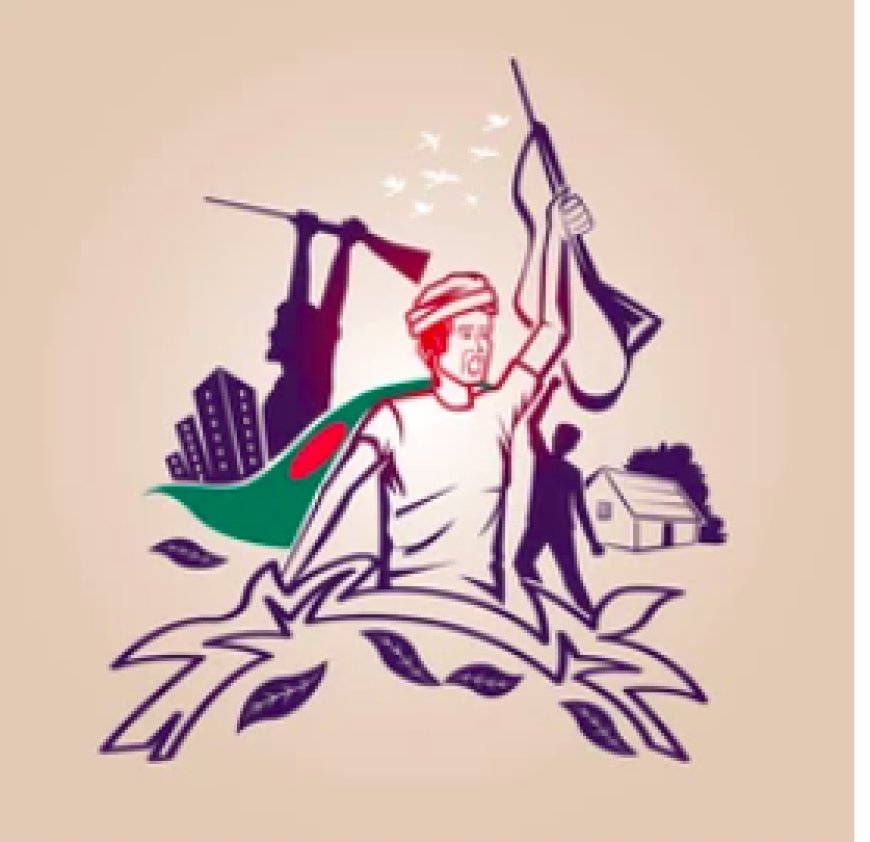
More than half a century after the birth of Bangladesh, one question remains both sacred and strangely unresolved: Who were the three million shaheeds of 1971?
Every Bangladeshi grows up hearing the number. It is repeated in textbooks, speeches, memorials, documentaries, and political rhetoric. The Liberation War is rightly remembered as a national catastrophe marked by massacres, displacement, torture, rape, and immense human suffering. The figure of three million dead has become inseparable from the moral foundation of the Bangladeshi state itself.
Yet 55 years after independence, Bangladesh still cannot produce a comprehensive national list of those three million victims.
This is not a trivial administrative gap. It is one of the great unresolved historical questions of modern South Asia.
To ask for documentation is not to deny atrocities. That distinction is crucial.
The evidence of large-scale killings during 1971 is overwhelming and indisputable. Entire localities were devastated. Millions fled as refugees into India. Sexual violence occurred on a horrifying scale. The brutality of the conflict is beyond serious dispute.
The real question is different: How did the figure of three million emerge, and why has no systematic state effort ever been made to document the dead with historical precision?
The number itself emerged during the chaotic aftermath of war, when the newly independent Bangladeshi leadership confronted a shattered country traumatized by months of violence. Administrative structures had collapsed. Communications were broken. Refugees were still returning from India. Mass graves remained undiscovered across rural Bangladesh.
Under such conditions, casualty estimates inevitably relied upon fragmented local reports, eyewitness testimony, battlefield information, refugee accounts, and preliminary surveys.
The figure of three million gradually became institutionalized through official speeches, media repetition, diplomatic circulation, and national memorialization.
Over time, the number ceased to function merely as a demographic estimate. It became a symbol of national sacrifice and collective suffering.
But symbols and statistics are not the same thing.
Unlike the Holocaust, where the Nazi state itself maintained extensive bureaucratic records of deportations and extermination, the Bangladesh war unfolded amid administrative collapse and chaotic military operations. Many records were destroyed, never created, or lost forever. Millions were displaced internally while nearly ten million refugees crossed into India. Entire villages changed demographically after the war.
Reconstructing wartime mortality under such conditions is extraordinarily difficult.
Yet difficult is not impossible.
Historians and demographers have attempted various estimates over the decades. Some studies suggested casualty figures in the several hundreds of thousands; others estimated totals approaching or exceeding one million. Researchers such as Christian Gerlach, R. J. Rummel, and Sarmila Bose reached sharply different conclusions using divergent methodologies, assumptions, and source materials. Predictably, these debates became politically explosive.
In Bangladesh, casualty figures are not treated simply as historical questions. They are intertwined with legitimacy, nationalism, and political identity. As a result, even discussing methodology is often interpreted as ideological hostility.
This has produced a troubling contradiction.
Successive Bangladeshi governments have spent decades revising, verifying, expanding, and contesting official lists of Freedom Fighters. Thousands of Certificates have been granted, disputed, revoked, restored, and litigated. Entire bureaucracies exist to administer benefits and recognition connected to Liberation War status.
Yet no equivalent national institution exists to identify the dead.
The living have files. The martyrs largely do not.
If Bangladesh can spend decades debating who qualifies as a Freedom Fighter, why has it never undertaken a house-by-house, district-by-district effort to document those who perished?
Even today, no Independent National Authority systematically maps massacre sites, digitizes local records, preserves oral testimony at scale, or conducts comprehensive demographic reconstruction. No publicly accessible National Archive exists for ordinary citizens seeking to identify relatives lost during the war.
This absence weakens historical scholarship and leaves the field vulnerable to both politicized exaggeration and politically motivated minimization.
Bangladesh deserves better than rhetorical repetition unsupported by institutional rigor.
A mature nation does not fear documentation. It embraces it.
An Independent Liberation War Documentation Commission -- composed of historians, demographers, archivists, forensic specialists, and international researchers -- could still undertake a serious reconstruction project. Perfect precision may no longer be possible after five decades. But credible estimates, verified victim databases, regional mortality mapping, and digitized archives remain achievable.
Such a project would not diminish the moral significance of the Liberation War.
On the contrary, it would strengthen it.
Nations honor the dead not only through monuments and slogans, but through records, names, archives, evidence, and historical honesty.
The unresolved question of the Three Million Shahids is therefore larger than a dispute over numbers. It is ultimately a test of whether Bangladesh is willing to move from sacred memory toward documented and credible history of its War of Liberation.