

















































![A Ledger of the Soul: Navigating the Allah-Bhagavant Nexus in a 19th-Century Puruṣākāra Jñāna Caupara [Gyan Chauper]](https://counterpointbd.com/uploads/images/202608/image_430x256_6a93baa3b09a7.jpg)





















Why the Dollar Remains Inevitable
Stability is not achieved through currency redesign, but through effective liquidity coordination and risk management within the existing global monetary framework.


The debate on cross-border payment systems in Asia has gained momentum in recent years, driven by the rise of digital finance, regional integration ambitions, and recurring concerns over dependence on the US dollar.
Proposals such as local currency settlement (LCS), regional payment networks, and cross-border digital interoperability are increasingly presented as potential alternatives to the dollar-based international settlement system.
However, when examined through the actual structure of trade in Asia -- particularly involving Bangladesh, India, China, and the wider regional economy -- these proposals face fundamental constraints that are often overlooked.
The central issue is not the absence of payment infrastructure or technological capability. Rather, it is the persistent asymmetry in trade flows, currency convertibility, and external sector dependence.
No payment architecture can override the economic reality that settlement ultimately depends on currencies that are universally acceptable, liquid, and stable in value. In this context, US dollar continues to function as the dominant settlement medium not because of institutional preference, but because it uniquely satisfies these conditions across all trading partners.
The Asian trade structure is not balanced in a way that would support a viable multi-currency settlement system. Instead, it is characterized by persistent surpluses and deficits distributed unevenly across economies. China maintains large trade surpluses with most regional economies, accumulating external claims.
Bangladesh, Sri Lanka, and several South Asian economies run chronic deficits with key suppliers. ASEAN economies present a mixed picture, with some export-oriented economies such as Vietnam and Thailand generating surpluses, while others remain import dependent. Smaller economies in the region lack sufficient trade scale and financial depth to function as meaningful absorbers of foreign currency balances.
In such a system, there is no natural mechanism for reciprocal currency recycling. Surplus economies accumulate claims in foreign currencies, while deficit economies continuously require hard currency to settle obligations. This structural imbalance leads to an unavoidable convergence toward a neutral settlement asset, which in practice remains the US dollar.
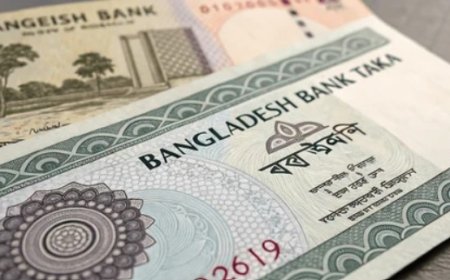
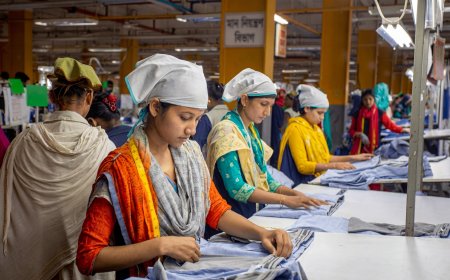
In Bangladesh’s case, this asymmetry is particularly pronounced. Export earnings are largely generated from Western markets and are denominated in US dollars, while import obligations are heavily concentrated in Asian economies such as India, China, and ASEAN countries.
This creates a directional imbalance in currency flows: dollars are earned in one part of the global system and spent in another. As long as this pattern persists, the demand for dollar liquidity remains structurally embedded in the economy.
Local currency settlement arrangements are often presented as a mechanism to reduce dependence on the dollar by allowing trade to be settled in domestic currencies. However, their practical feasibility depends on a critical condition: currency reciprocity and reuse.
For such systems to function sustainably, trading partners need to be willing to hold each other’s currencies and find meaningful ways to deploy them in subsequent transactions.
This condition is not satisfied in most Asian bilateral relationships. In the case of Bangladesh–India trade, for example, Bangladesh runs a substantial structural deficit. If settlements were conducted in Taka, India would accumulate large Taka balances without sufficient avenues for utilization or conversion.
Similar constraints apply in Bangladesh–China trade, where the renminbi is subject to capital account restrictions and is not fully convertible in a way that allows unrestricted regional recycling.
As a result, local currency settlement does not eliminate settlement risk; it merely shifts it into currency holdings that lack liquidity and cross-border usability.
Cross-border digital payment systems, including instant payment linkages, QR interoperability, and fintech-driven settlement platforms, are often proposed as transformative solutions for regional integration.
While these systems significantly improve transaction efficiency by reducing cost, time, and intermediary dependence, they do not alter the underlying settlement logic. Faster payment systems improve the operational mechanics of trade but do not change the fact that final settlement requires a universally acceptable currency.
When the broader regional structure is considered, including China, India, and ASEAN economies, the limitations of currency substitution become even more evident. China, despite its efforts to internationalize the renminbi, operates under capital account management and does not provide full convertibility.
India has experimented with rupee settlement arrangements in selected bilateral contexts, but these are largely supported by trade balance considerations and credit extensions rather than full market-driven currency acceptance. ASEAN economies, while diverse, are predominantly export-oriented and do not collectively form a natural deficit-absorbing bloc.
Smaller economies in South Asia and Southeast Asia lack the financial depth required to sustain large-scale bilateral currency accumulation.
This configuration implies that no regional currency currently functions as a true substitute for the US dollar. Even where local arrangements exist, they remain limited in scope, conditional in design, and dependent on underlying dollar-based valuation for ultimate settlement or risk management.
Given these structural constraints, the most realistic adjustment mechanism is not currency substitution but trade finance. Instead of attempting to settle trade in non-convertible or illiquid regional currencies, countries can rely on structured short-term bilateral credit arrangements that align financing with actual trade flows.
These include supplier credit, buyer credit, deferred payment structures, and bank-supported trade financing facilities.
Such mechanisms do not attempt to change the currency of settlement. Instead, they manage the timing of payment obligations and smooth liquidity pressures across trade cycles. This distinction is critical. Unlike local currency settlement systems, trade finance arrangements do not require currency acceptance across borders.
Unlike foreign exchange swaps, which primarily operate within financial market liquidity management, trade credit mechanisms are directly embedded in import-export transactions and reflect the commercial structure of trade relationships.
In practical terms, bilateral credit lines between central banks, export credit agencies, or designated financial institutions can support trade continuity without imposing structural currency substitution. These arrangements allow importers to defer payment while exporters receive guaranteed settlement backed by institutional credit frameworks.
This reduces immediate pressure on foreign exchange reserves while preserving the integrity of dollar-based settlement systems.
US dollar remains the dominant anchor in this structure because it uniquely satisfies three conditions: universal acceptability, deep global liquidity, and full convertibility. Neither the renminbi nor the Indian rupee currently meets these conditions across the full range of Asian trade relationships.
As long as trade asymmetry persists, the demand for a neutral settlement currency will remain structurally embedded in the system.
Bangladesh’s external sector experience reinforces this conclusion. Despite periodic pressures, the economy has maintained relative stability through a combination of export earnings, remittance inflows, import management, and policy interventions. Support from international institutions such as the International Monetary Fund has contributed to stabilizing external balances during stress periods.
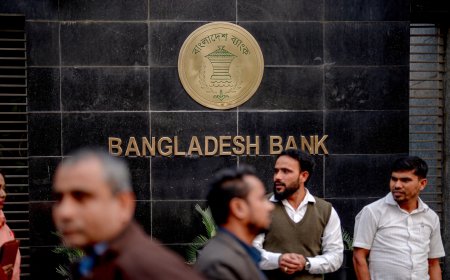
At the same time, the operational role of Bangladesh Bank in managing liquidity and exchange rate pressures has been central to maintaining macroeconomic stability within a dollar-based system.
This experience suggests that the system does not require structural replacement but rather more refined management tools. The challenge is not to redesign the currency architecture of regional trade, but to ensure that liquidity constraints do not disrupt real economic activity.
In conclusion, the idea of replacing the US dollar through regional payment systems or local currency settlement mechanisms does not align with the structural realities of Asian trade. The region is characterized by persistent asymmetries in trade flows, currency convertibility, and financial depth. In such an environment, currency substitution cannot function at scale.
The more viable policy direction lies in strengthening trade finance mechanisms, particularly short-term bilateral credit arrangements that align payment obligations with trade flows.
Stability in this context is not achieved through currency redesign, but through effective liquidity coordination and risk management within the existing global monetary framework.
Tashzid Reza works in a trade finance company operating as a liaison office in Bangladesh.