
























































One Step at a Time
If the Special Marriage Act can first be modernized and made genuinely functional, the more difficult conversation -- extending that same civil framework -- becomes conceivable. Until then, it remains a conversation without legal ground to stand on.


I would argue that the time has not yet come to raise the issue of same-sex marriage in Bangladesh.
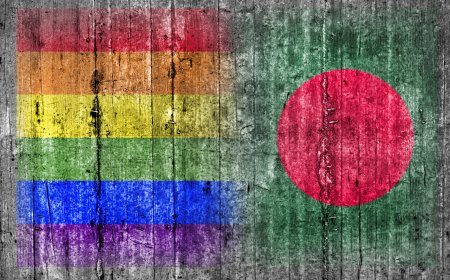
The focus should instead be on: 1) Expanding Article 28 of the Constitution of Bangladesh to include "sexual orientation" and "gender identity" among the grounds on which the state cannot discriminate; 2) Repealing or amending Section 377 of the Penal Code; and 3) Fostering a positive attitude among the public (and within our own community) regarding our contributions, rights, and existence through visibility -- both online and through personal interactions (even though this may be harder than moving mountains in a Muslim-majority country).
Until these objectives are met, discussing same-sex marriage is premature.
There is also another important issue. In Bangladesh, the state policy on marriage is confined largely within the boundaries of religious prescriptions.
For most citizens, marriage is administered under personal religious law -- the Muslim Family Laws, Hindu custom, or the Christian Marriage Act, 1872 -- and is limited to a union between a man and a woman.
Attempting to alter religious doctrine itself would be a waste of time. Bangladesh does, on the other hand, have a secular alternative on paper: The Special Marriage Act, 1872, a colonial-era law that allows a government-appointed Marriage Registrar to solemnize a marriage between a man and a woman without any religious ceremony, including between people of different faiths or no faith at all.
In principle, this is exactly the kind of civil marriage provision one might call for. In practice, it is a relic that badly needs reform.
It still requires parties who profess a recognized religion (Islam, Christianity, Hinduism, etc.) to formally declare renunciation of that religion in order to marry under the Act.
India, working from the same colonial template, dropped this requirement when it modernized its own version in 1954. Bangladesh never did.
Divorce under the Act still routes through the Divorce Act, 1869, which sets unequal grounds for husbands and wives -- a provision Bangladesh's own Law Commission has flagged as inconsistent with the constitutional guarantee of equality.
The Act is written entirely in the language of "husband and wife" and offers no gender-neutral framework. It remains obscure and rarely used relative to religious marriage, in part because of the renunciation requirement and the bureaucratic friction involved. So the mechanism is outdated, discouraging, and not fit for purpose.
The first step, then, is to reform and modernize the Special Marriage Act -- removing the renunciation requirement, bringing divorce provisions in line with constitutional equality, and making the process genuinely accessible, so that people of different religions, or no religion, can marry as equals without symbolic or bureaucratic humiliation.
This reform matters for its own sake. Achieving it would eliminate the need for individuals of different religions, or atheists, to take the drastic step of converting to a faith they do not hold simply to marry.
Being compelled to perform a religious conversion one does not believe in, purely for the sake of marriage, is inhumane.
Secular marriage is nothing new in the Western world, and in Bangladesh it already exists in skeletal form. What would be revolutionary is making it work -- visible, dignified, and equally available.
A reformed Special Marriage Act would not interfere with religious marriage in any way. It would simply give those who cannot or do not wish to marry within religious boundaries, but who love each other and want to build a life together, a path to having that commitment recognized by the state with equal dignity.
Only after this reform is achieved should the question of same-sex marriage be raised -- not before. Bangladesh has never extended the logic of civil, state-administered marriage beyond the man-woman framework the 1872 Act still assumes.
If the Special Marriage Act can first be modernized and made genuinely functional, the more difficult conversation -- extending that same civil framework to be neutral with respect to sex and gender identity, so that homosexual, transgender, intersex, and non-binary individuals could marry based on self-identified identity rather than religious doctrine or the male-female binary -- becomes conceivable.
Until then, it remains a conversation without legal ground to stand on.
Riaz Osmani is a political and social analyst.