






























































Beyond Bangladesh 2.0 Victory
Youth Uprising Must Now Learn to Govern

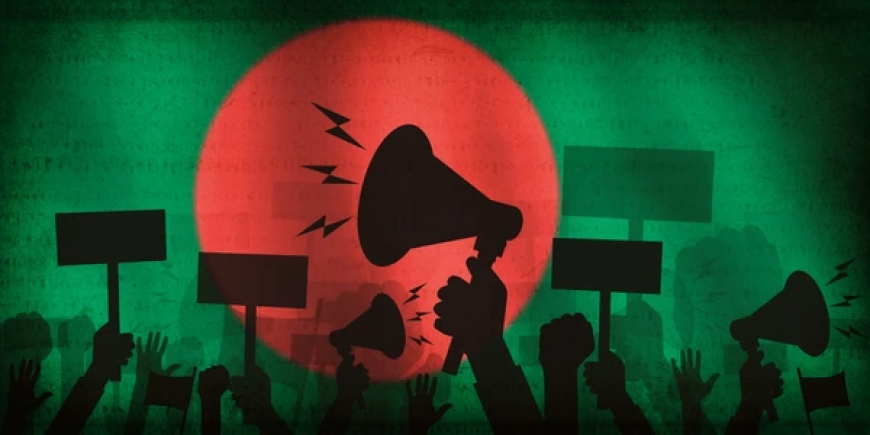
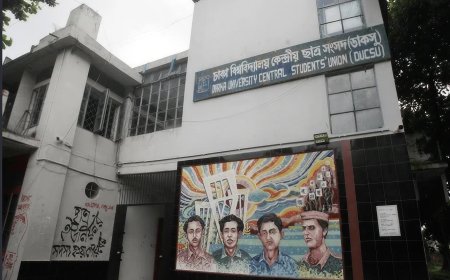
The instinct to label Bangladesh’s 2024 student-led uprising (often called the July Uprising) as either a “success” or a “failure” misses the deeper story. It was, undeniably, a historic rupture -- one that reshaped the political landscape by forcing the exit of a totalitarian regime.
Nearly two years on, a more uncomfortable question demands attention: Why has such a powerful movement struggled to convert its moral force and street legitimacy into lasting political influence?
One way to understand this moment is not through binary judgment, but through comparison. Looking across the border to Nepal -- where youth-led mobilizations have also surged in recent years -- offers a contrast that is both instructive and cautionary.
Bangladesh’s uprising was driven by a combustible mix of grievances: Entrenched corruption, extreme violence, and widespread youth unemployment.
When protests erupted, they spread with astonishing speed, powered by decentralized student networks and relentless social media mobilization. What followed was extraordinary; few youth movements anywhere have forced such a decisive political rupture.
Nepal’s youth politics, by contrast, has been less dramatic and far less revolutionary in tone. But it has been more effective where it matters most after the moment of protest: Consolidation. It achieved something arguably more durable -- entry into, and influence within, the political process.
Why Bangladesh’s uprising looks like a “failure”
Toppling power is not the same as transforming it. The months that followed the uprising exposed deep structural weaknesses within the movement. Despite its energy and public legitimacy, the student-led coalition struggled to make the transition from protest to politics. Several factors help explain why:
Weak institutional follow-through: Youth activists found it difficult to convert street power into durable political organization. A youth-linked party performed poorly in the February 2026 national election, winning only a handful of seats -- undermined by weak organization, unclear policy direction, and the absence of many key uprising leaders. The lesson is stark: Mobilization ≠ governance capacity.
Elite capture and political reversion: Established parties (e.g. BNP) quickly reasserted dominance. Regime change did not translate into systemic transformation, and allegations of election engineering continue to cast a long shadow.
Structural grievances unresolved: The uprising was rooted in youth unemployment, inequality, “jobless growth,” corruption, and violence. For many young people, little has materially changed.
High costs of violence and instability: Heavy repression, significant casualties, and the interim government’s struggle to govern effectively weakened cohesion. Consolidating democratic gains has proven far harder than winning them.
Horizontal but fragile leadership: Decentralized Gen Z activism was a powerful engine for mobilization -- but far less effective when it came to negotiation, coordination, and long-term strategy.
This pattern is not unique to Bangladesh. In social movement theory, the “mobilization trap” describes a recurring dilemma: The very strengths that bring people into the streets -- speed, decentralization, spontaneity -- often become weaknesses when movements must govern, negotiate, and build institutions. In Bangladesh, that gap has been decisive.
The Case of Nepal: Narrower goals, deeper roots
Contrast this with Nepal’s recent youth movements. Why do they appear more “successful”?
Integration into political channels: Youth activism in Nepal has increasingly fed into electoral and institutional outcomes, rather than remaining oppositional.
Less rupture, more negotiation: Instead of sudden collapse, Nepal experienced incremental reform. Slower, yes -- but more stable.
Political opportunity structure: Nepal’s more open democratic system provided entry points for youth actors that simply did not exist in Bangladesh’s constrained environment.
Coalition-building: Youth movements often aligned with broader anti-corruption and reform coalitions, avoiding isolation and amplifying their influence.
In summary, Bangladesh’s “revolutionary surge” model -- rapid, mass mobilization -- carried the risk of fragmentation after victory. Nepal’s “embedded reform” model, though less dramatic, has been more effective at converting protest into policy and representation. It shows how youth can enter a system -- and gradually reshape it.
Bangladesh’s uprising unfolded under a far more restrictive political environment. In such conditions, movements tend to escalate toward rupture rather than reform. The same decentralization that made the student movement so powerful in the streets made sustained coalition-building far more difficult afterward.
Nepal’s relatively pluralistic system, by contrast, allowed a slower but steadier path. There, youth movements could align with broader governance and anti-corruption agendas, embedding themselves within existing structures rather than standing outside them.
Cautious Optimism for Bangladesh
This is not about romanticizing Nepal or diminishing Bangladesh. It is about recognizing a fundamental tension every modern protest movement faces: The transition from resistance to governance.
Bangladesh’s youth have already shown that they can shake the foundations of power. That chapter is written. The harder task now is to build something in its place.
That requires a different mindset -- and a different skill set. Organization must replace spontaneity. Policy must stand alongside protest. Leadership -- however uncomfortable for a generation wary of hierarchy -- must take shape. Without these shifts, the danger is not only political marginalization, but the slow erosion of the movement’s original ideals.
And yet, there are real reasons for cautious optimism. The uprising has already transformed Bangladesh’s political consciousness. It has shattered the myth of untouchable authority. It has proven that youth voices cannot be ignored. It has reminded an entire generation that collective action still matters.
The challenge now is to turn that consciousness into capacity.
If the 2024 uprising was about disruption, the next phase must be about consolidation. Nepal’s experience suggests this is possible -- but only with patience, strategy, and a willingness to strategically engage the very institutions that protest movements instinctively distrust.
History rarely delivers clean victories. More often, it offers moments of possibility followed by long, uncertain struggles over what comes next. Bangladesh is now in that phase.
The real measure of the uprising will not be what it destroyed -- but what it builds.
Calling Bangladesh’s uprising a failure ignores the scale of what was achieved -- it was one of the most consequential youth uprisings of recent times. But calling Nepal a success also requires caution -- it reflects gradual influence, not transformative rupture.
The real distinction is not success versus failure. It is disruption versus consolidation -- and mobilization versus institutionalization.
And the future of Bangladesh’s youth movement will depend on whether it can make that difficult, necessary transition.
Dr Muhammad Abdul Bari is an Educationist, Civic Advocate and Parenting Adviser.