






















![A Ledger of the Soul: Navigating the Allah-Bhagavant Nexus in a 19th-Century Puruṣākāra Jñāna Caupara [Gyan Chauper]](https://counterpointbd.com/uploads/images/202608/image_430x256_6a93baa3b09a7.jpg)



















Before Memory Becomes Myth
As the second anniversary of the July Uprising approaches, the country has a rare opportunity to move beyond ceremonial commemoration and begin the serious work of preservation.

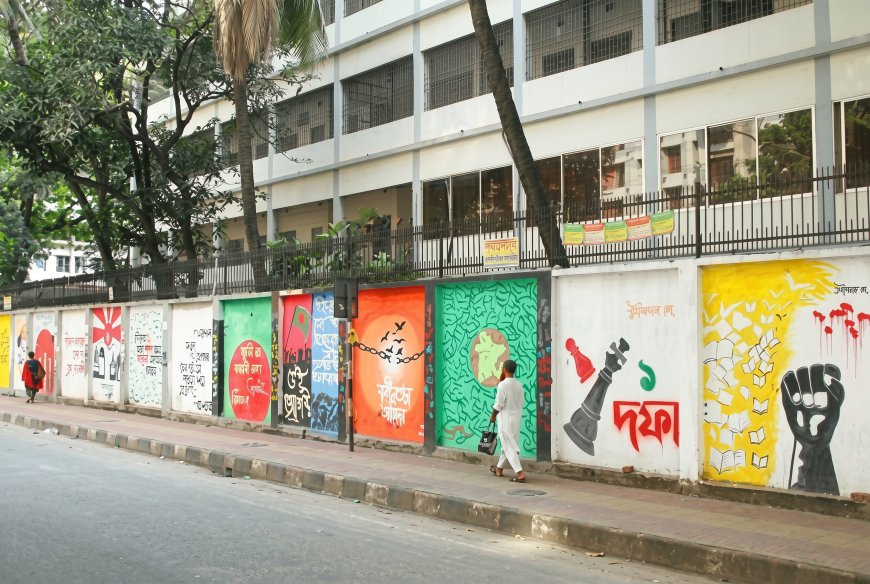
Bangladesh remembers the July Uprising in many ways. It appears on Facebook, television talk shows, graffiti, parliamentary debates, public commemorations, documentaries, and competing political claims over what July meant and who played the central role.
Yet amid this culture of remembrance, one urgent task remains dangerously neglected: Preserving the lived memories of the ordinary people who made July possible.
The July Uprising was not simply an elite political transition. It was not only the fall of a long-entrenched authoritarian regime. It was a mass civic rupture, carried by students, workers, young people, ordinary residents, families, and local communities who entered the streets in the face of arrests, bullets, and death.
Its deepest history is not only in the final outcome. It is in the memories of those who stood in Jatrabari, Uttara, Mirpur, Mohammadpur, Rampura-Badda, university campuses, district towns, alleys, hospitals, homes, and rooftops while the country passed through one of the most violent and consequential moments of its recent history.
If these memories are not recorded now, much of July will eventually disappear. Worse, those who benefited from the old order will have more room to distort, dilute, or erase the history of the uprising.
This is why Bangladesh needs a national oral-history archive of the July Uprising. The government, preferably through the Ministry of Cultural Affairs, the Ministry of Liberation War Affairs, or a dedicated national commission, should establish a professionally designed testimony project in partnership with universities, archivists, historians, civil society groups, survivor networks, families of martyrs, journalists, and existing July documentation initiatives.
The purpose should be simple but historic: To record, preserve, and make accessible the people’s own accounts of July before memory fades, narratives harden, and political interests begin to decide what the nation is allowed to remember.
The urgency is obvious. The July Uprising was one of the bloodiest episodes in Bangladesh’s political history. A UN Human Rights Office report estimated that as many as 1,400 people may have been killed during the crackdown. Thousands more were injured, detained, traumatized, or permanently changed.
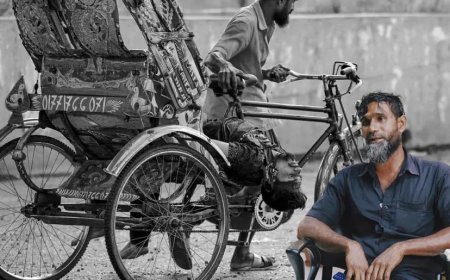
Yet the numbers alone cannot explain what happened. A death toll can tell us the scale of loss, but not the texture of courage. It cannot tell us why a young student left home knowing he might not return, how a rickshaw puller helped wounded protesters escape, how residents in a neighborhood built informal warning networks, how protesters learned to survive repeated attacks, or how ordinary people overcame fear after watching others fall.
Those stories matter because July was not experienced in one way. It unfolded differently in each locality. Jatrabari was not merely a point on a map. It became a symbol of urban resistance, the “Stalingrad” of the uprising. Uttara, Mirpur, Mohammadpur, Rampura-Badda, and other fighting zones across the country each had their own rhythm of confrontation, retreat, regrouping, sacrifice, and survival.
A history written only from above will always carry the limits of what its authors can access, prioritize, or choose to leave out. What we need is a people’s geography of the uprising, built from the voices of those who were there.
Such an archive should begin with a simple method. Trained interviewers should sit with participants and allow them to narrate their experiences from the beginning. The aim should be to preserve why they joined, what they witnessed, how repression unfolded locally, how protesters survived and supported one another, and which memories remain most important to them. The purpose is not to impose a political script, but to preserve the human texture of July as it was lived.
This is important because official history often remembers events through leaders, institutions, dates, declarations, and outcomes. People’s history remembers the moral and human experience beneath them. It preserves not only what happened, but how it felt to live through it.
In July, that distinction is crucial. The uprising was powerful precisely because it exceeded party structures. Opposition parties had failed for years to generate this level of civic rupture. Yet a generation often dismissed as apolitical, self-centered, or absorbed by entertainment suddenly became the face of national courage.
This transformation deserves to be documented not through romantic slogans alone, but through testimony.
An oral-history archive would also protect July from distortion. Every major rupture in history faces a second struggle after the streets fall silent: The struggle over memory.
Some will try to monopolize it. Some will try to reduce it to a partisan asset. Some will try to erase the brutality that made the uprising necessary. Others will remember the martyrs but forget the demands for reform that animated the movement.
If the memories of ordinary participants remain scattered, July will become vulnerable to selective retelling. But if thousands of testimonies are recorded, catalogued, and preserved, no single political group will be able to easily claim ownership over the whole story.
The archive would also keep alive the reformist meaning of July. People did not only rise to remove one government. They rose against a system that had normalized impunity, corruption, humiliation, and the suffocation of democratic life.
The moral force of July came from a larger aspiration: A Bangladesh where power is accountable, citizens have dignity, speech is free, institutions are not captured, economic opportunity is not monopolized, and the state does not treat its own people as subjects.
But political systems have a way of surviving even after governments fall. The beneficiaries of old arrangements rarely reform themselves willingly. If the memory of the uprising fades, so too will the public pressure for meaningful reform.
That is why memory is not only about the past. It is a democratic resource for the future. A society that remembers the cost of freedom is harder to pacify with symbolic gestures. A public that knows what the protesters endured is more likely to ask whether the promises of July are being fulfilled.
The moral shock of July may still feel fresh now, but Bangladeshis have a dangerous habit of forgetting too quickly. In the age of reels, short attention spans, and constant distraction, even the most historic sacrifice can become yesterday’s content.
People move on. Witnesses scatter. Activists grow tired. If we wait too long, many testimonies will become less detailed or even impossible to recover.
That is why the work must begin now.
The first phase does not need to be perfect. It needs to be serious. A national initiative can begin with major protest zones and include recognized July fighters, wounded participants, student organizers, local volunteers, medical workers, journalists, families of martyrs, and ordinary citizens who directly witnessed or joined the uprising.
The project must combine openness with ethical care. This cannot be a careless collection of videos. It must be a serious archive, built with professional standards and public responsibility.
Once preserved, these testimonies can serve as source material for historians, political scientists, journalists, teachers, documentary makers, artists, and future generations seeking to understand how the uprising unfolded from below.
Researchers will one day ask why July succeeded where previous opposition-led movements failed, how repression backfired, how local networks formed, how fear broke down, and how ordinary citizens moved from sympathy to participation.
Without oral testimonies, they will be forced to rely mainly on news reports, official statements, social media fragments, and elite interviews. Those sources matter, but they are incomplete. The people who faced the violence must also become authors of the historical record.
The archive would also serve public culture. Not everyone will read academic books or long historical volumes, but films, documentaries, theatre, animation, and digital storytelling can carry July to wider audiences. For that, future creators need real memories.
A properly preserved archive can allow the next generation to encounter July not as a frozen slogan, but as a living human experience.
Everyone claims to want July preserved. But whose July should be preserved?
A July of official ceremonies only? A July of political ownership? Or a July remembered through thousands of voices from the streets, lanes, hospitals, campuses, and neighborhoods where the uprising was actually fought?
If July was a people’s uprising, its memory must also belong to the people.
Bangladesh still has time to do this properly. The witnesses are alive. The wounds are fresh. The memories are painful but present. The local networks still exist. The stories have not yet fully hardened into myth. But this window will not remain open forever.
As the second anniversary of the July Uprising approaches, the country has a rare opportunity to move beyond ceremonial commemoration and begin the serious work of preservation.
Speeches, murals, prayers, exhibitions, and public tributes will matter. But the most meaningful tribute would be to launch a national oral-history initiative that records the memories of those who carried July on their bodies, in their neighborhoods, and through their grief.
This anniversary should not only be a moment of remembrance. It should be the beginning of a people’s archive.
Before memory becomes myth, Bangladesh must build a people’s archive of July.
Ishfak Farhan Siyam is a graduate of Georgetown University Walsh School of Foreign Service in Qatar with a Bachelor of Science in Foreign Service, majoring in International Politics and minoring in International History.