







































![A Ledger of the Soul: Navigating the Allah-Bhagavant Nexus in a 19th-Century Puruṣākāra Jñāna Caupara [Gyan Chauper]](https://counterpointbd.com/uploads/images/202608/image_430x256_6a93baa3b09a7.jpg)




















The Missing Number in the Budget
The first BNP budget allocates billions for growth, infrastructure, and social protection. But its success will ultimately be judged by whether it creates employment for Bangladesh's growing workforce.


The Budget's Silent Challenge
When Finance Minister Amir Khosru Mahmud Chowdhury presented the national budget for fiscal year 2026-27, attention naturally focused on the headline figures. A Tk 9.38 lakh crore budget, a Tk 3 lakh crore Annual Development Program, a growth target of 6.5% and an ambitious vision of building a trillion-dollar economy captured public attention.
The budget also emphasized economic democratization, deregulation, social protection and investment-led growth. Yet amid all the numbers, one critical figure was missing: A target for employment creation.
This omission is striking because employment remains the most important economic concern for millions of Bangladeshis. Inflation affects households, but a steady job remains the most effective protection against rising prices.
Growth matters, but growth without employment leaves many citizens behind.
Infrastructure is important, but roads and bridges ultimately matter because they support businesses that create jobs. For a government elected on promises of economic revival and opportunity, employment should be at the centre of the budget conversation.
The finance minister's speech contains many initiatives that could contribute to job creation. Increased development spending, support for agriculture, incentives for small businesses, export diversification, skills development, and investments in infrastructure all have employment implications.
The challenge is that these initiatives are presented as separate components rather than as part of a coherent employment strategy. The budget assumes that jobs will emerge from growth. Whether they do depends on the nature of that growth.
Bangladesh's Employment Reality
The employment challenge facing Bangladesh is larger than the unemployment statistics suggest. Official unemployment rates often appear modest by international standards, but they conceal a deeper problem of underemployment, low-productivity work and growing frustration among educated young people.
Many university graduates spend years searching for stable employment. Others accept jobs that do not match their qualifications.
Large numbers of workers remain trapped in informal employment with limited income security and few opportunities for advancement.
Demographics make the challenge even more urgent. Every year, hundreds of thousands of young Bangladeshis enter the labour force.
Many are better educated than previous generations and have higher expectations regarding employment and living standards. They are looking not simply for work but for productive and dignified employment that provides economic mobility.
The economy must therefore create jobs at a pace sufficient to absorb new entrants while also improving opportunities for those already employed in low-productivity activities.
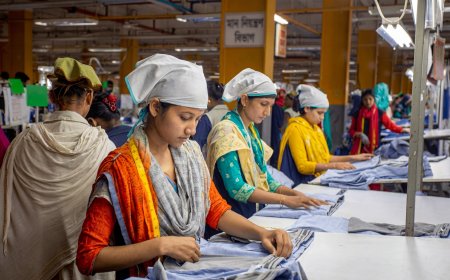
Female labour force participation presents another challenge. Bangladesh has made significant progress in expanding women's economic participation, particularly through the garment industry.
Yet millions of women remain outside the formal workforce. Creating employment opportunities for women is not only a matter of equity; it is also an economic necessity.
No country can achieve sustained high-income status while leaving a substantial portion of its potential workforce underutilized.
Where the Budget Can Create Jobs
Despite the absence of an explicit employment strategy, several budget allocations could generate substantial employment if implemented effectively.
The most obvious is the expansion of the Annual Development Programme. Large investments in roads, transportation, energy systems, water management and public infrastructure create direct employment during construction and indirect employment through increased economic activity.
The government's decision to increase development spending therefore has important implications for labour demand.
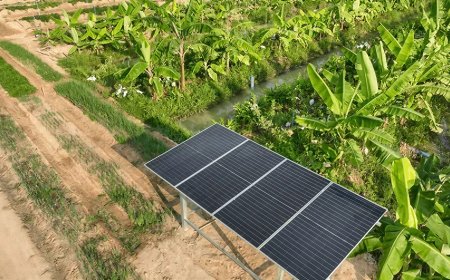
The budget also places considerable emphasis on agriculture and rural development. While agriculture's share of GDP has declined over time, it continues to provide livelihoods for millions of Bangladeshis.
Investments in irrigation, rural infrastructure, agricultural productivity and market access can raise rural incomes while reducing pressure for migration into already crowded urban labour markets.
Rural employment remains one of the most effective tools for reducing poverty and regional inequality.
Support for small and medium-sized enterprises may prove even more important. Around the world, SMEs are responsible for a large share of employment creation.
Large corporations contribute significantly to output and exports, but small businesses often generate more jobs per unit of investment. The government's support for SME financing, entrepreneurship and business development therefore deserves close attention.
If these programs are implemented efficiently, they could generate employment opportunities across both urban and rural areas.
Export diversification is another promising area. Bangladesh's dependence on ready-made garments has created vulnerabilities despite its success.
Expanding into pharmaceuticals, agro-processing, information technology, light engineering and other sectors could create new sources of employment while reducing economic concentration. The budget's emphasis on diversification reflects an understanding that future job growth cannot rely on a single industry.
The Missing Employment Strategy
The difficulty is not the absence of job-creating expenditures. The difficulty is the absence of an explicit employment framework.
Throughout the budget speech, employment is treated largely as an expected outcome of growth. The underlying assumption is familiar: higher investment will produce higher growth, and higher growth will create jobs.
Economic history shows that the relationship is not always so straightforward. Growth can occur without generating sufficient employment, particularly when it is concentrated in capital-intensive sectors or when productivity improvements reduce labor demand.
Bangladesh itself has experienced periods during which respectable economic growth was accompanied by disappointing employment outcomes.
In some years, output expanded faster than job creation. In others, employment increased, but productivity remained low. These experiences demonstrate that growth and employment, while related, are not identical.
A stronger budget would have established measurable employment objectives alongside growth objectives. Just as the government sets targets for inflation, revenue collection and GDP growth, it could establish targets for youth employment, female labour force participation, vocational training outcomes and job creation in priority sectors.
What gets measured is more likely to be managed. Employment deserves that level of policy attention.
Why Growth Alone Is Not Enough
The composition of growth matters as much as the rate of growth.
A 6% growth rate driven by labour-intensive sectors can create far more jobs than a higher growth rate concentrated in activities that employ relatively few workers. This distinction is particularly important for a country with Bangladesh's demographic profile.
Investment choices therefore matter. Public spending that improves labour-intensive infrastructure, supports SMEs, expands vocational education, and strengthens agricultural productivity is likely to have different employment effects than spending focused solely on capital-intensive projects.
Similarly, tax incentives designed to encourage hiring can generate different outcomes than incentives that primarily reward investment in machinery and technology.
This is not an argument against modernization or productivity growth. Bangladesh needs both. The challenge is ensuring that economic transformation remains inclusive.
Development is ultimately judged not by aggregate output but by whether ordinary citizens can participate in the opportunities it creates. Employment remains the most important bridge between economic growth and improved living standards.
What the Government Should Do
The budget provides an opportunity to begin thinking more strategically about employment.
First, the government should establish measurable employment targets and regularly report progress against them. Economic policy should be evaluated not only on growth performance but also on job creation outcomes.
Second, vocational education and skills development need stronger alignment with labour market demand. Too many young people complete their education without acquiring skills that employers need. Better coordination among educational institutions, employers and government agencies could help close this gap.
Third, support for SMEs should remain a central component of employment policy. Access to finance, business services, and digital technology can significantly improve small businesses' ability to expand and hire workers.
Finally, employment considerations should be integrated into major public investment decisions. Every large infrastructure project should be evaluated not only for its financial return but also for its contribution to employment and regional economic development.
The Real Test of the Budget
The first budget of a newly elected government is more than a financial statement. It reflects priorities, values and assumptions about how economic progress occurs.
The 2026-27 budget assumes that growth, investment and development spending will generate employment opportunities. That assumption may prove correct. But assumptions are not strategies.
The real test of this budget will not be whether the deficit remains within target or whether growth reaches 6.5%. Those indicators matter, but they are not what most citizens experience in their daily lives.
What people experience is whether they can find work, whether their children can secure employment after graduation, and whether economic progress translates into rising living standards.
For millions of Bangladeshis, the most important economic statistic is not GDP growth, inflation or export earnings. It is the availability of decent work.
If this budget succeeds in creating jobs, many of its shortcomings will be forgiven. If it fails to do so, few of its achievements will matter.
That is why employment remains the missing number in the budget. It is also the number that may ultimately determine its success.
Dr. Mohammed A Rab is currently a free lunch consultant on Financial Risk Management, Quantitative Risk Modeling and Enterprise Risk Management.