




























Personal Reflections of a Mother, an Artist, and a Lifelong Learner
Today, we understand far more about how children learn, how creativity develops, and how deeply our survival depends on our relationship with nature. Yet our education systems often seem designed for a world that no longer exists.

I have never found it easy to fit neatly into systems.
As a child, I struggled to fit into school. It wasn't because I disliked learning -- quite the opposite. I loved learning.
What I struggled with was being told what to think rather than being encouraged to ask why, to question, to wonder, and to discover how to think for myself.
I was the child who asked too many questions, wandered beyond the textbook, and became fascinated by subjects that were never part of the syllabus. The classroom often felt much smaller than the world itself. That feeling never left me.
Years later, when I became a mother, I found myself standing before that same education system again -- this time through the eyes of my own children.
I enrolled them in two different schools because I wanted to believe that somewhere there existed a place where curiosity was valued as much as obedience.
Instead, I found something different. I met dedicated teachers working tirelessly within the limits of a prescribed curriculum. They taught conscientiously, completed lessons, prepared students for examinations, and did the best they could with the system they had inherited.
I do not blame them. I believe most teachers genuinely care about their students. The problem lies much deeper.
The world has changed. Today, we understand far more about how children learn, how creativity develops, and how deeply our survival depends on our relationship with nature.
Yet our education systems often seem designed for a world that no longer exists. We teach information. But we rarely teach understanding. We reward memorising answers. But we seldom reward asking meaningful questions.
We encourage competition. But rarely nurture compassion.
Most importantly, we have separated education from life itself. Children graduate with excellent grades, yet cannot identify the trees growing outside their own homes.
They know the capitals of distant countries but cannot name the bird whose song wakes them every morning. They memorise dates from history books while remaining disconnected from the living history of their own rivers, forests, soil, communities, and culture.
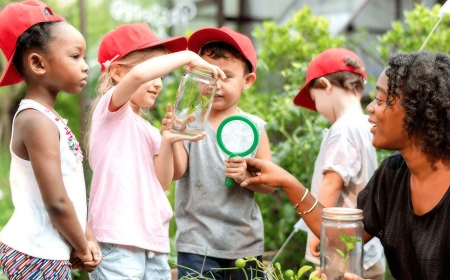
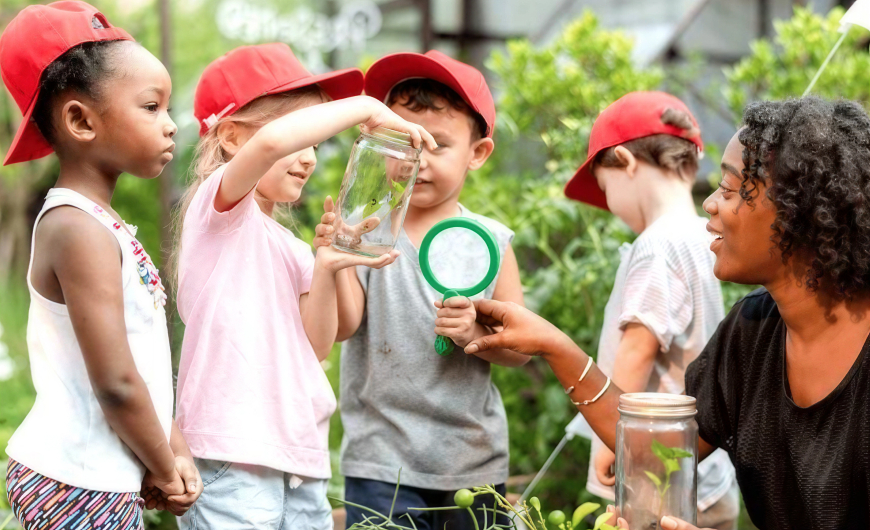
Why don't we take children into forests? Why don't we recognize nature as one of their greatest teachers?
Why don't we encourage them to spend time in fields, sit beside rivers, plant trees, observe insects, smell the earth after rain, and understand that every living being exists within an intricate web of relationships?
If we never teach children to love the world that sustains them, how can we expect them to protect it?
My own education never came only from school. Music was my teacher. Travel was my teacher. People were my teachers. Forests were my teachers. Life itself was my teacher.
Music allowed me to travel across the world and meet people from vastly different cultures. Spending long periods in the Sundarbans transformed my understanding of nature.
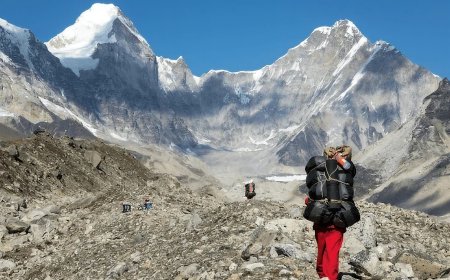
My journeys through Nepal, China, and many other places taught me far more than geography.
I learned about indigenous farming, traditional medicine, local cultures, ecological knowledge, and ways of living that have evolved through generations -- wisdom that often exists outside the pages of textbooks.
That, too, is education.
Our greatest teachers are not always professors. Sometimes they are farmers. Sometimes artists. Sometimes craftspeople.
Sometimes, Indigenous communities that have lived in balance with nature for centuries. Sometimes they are children.
Yet our education systems leave very little room for this kind of learning. I also believe that the responsibility of a nation is not merely to produce workers, but to nurture thoughtful, compassionate, and independent human beings.
No country has the right to raise a generation through fear. Learning about religion, philosophy, ethics, and different belief systems can enrich a child's understanding of humanity.
But raising children to accept one particular interpretation of religion -- especially the Saudi-inspired Wahhabi interpretation of Islam -- as unquestionable truth diminishes the very purpose of education.
Education should never be built upon fear. It should cultivate curiosity.
It should encourage evidence, reason, dialogue, and empathy. It should give young people the confidence to ask difficult questions and the freedom to think for themselves.
The arts suffer from the same misunderstanding. Music becomes an extracurricular activity. Painting becomes optional. Dance becomes something reserved for stage performances.
Poetry becomes an exercise in literary analysis for examinations.
Gradually, children begin to believe that productivity matters more than creativity. I do not believe that. Creativity is not a luxury. It is one of humanity's greatest strengths.
Creative work requires time. A song cannot be rushed. A painting cannot be hurried.
A meaningful idea often needs silence before it can become words. Yet modern life constantly urges us to move faster.
Produce more. Consume more. Scroll more. Swipe more. Move on to the next thing.
But wisdom has never emerged at the speed of notifications.
Neither has art. Neither has love. Neither has deep understanding.
The same question stays with me when I think about artificial intelligence. I am not afraid of technology. In fact, I am continually amazed by what human beings have achieved.
Artificial intelligence is one of the most remarkable inventions of our time. Yet I find myself asking its creators a simple question.
If we possess the intelligence to build machines capable of extraordinary things, why have we not shown the same determination to ensure that these technologies are developed with the well-being of our planet in mind?
If the environmental costs -- the energy consumed, the water required, the pressure placed on ecosystems, and the consequences for future generations -- are treated as secondary concerns, then I struggle to call that true intelligence.
To me, intelligence is not measured solely by what we are capable of creating.
It is measured by whether we are wise enough to take responsibility for the consequences of what we create.
Technology that advances humanity while undermining the natural systems upon which humanity depends is, to me, an incomplete achievement.
Education, science, technology, and the arts should all share the same purpose. To help us become more deeply human. To strengthen our relationship with the living world.
To cultivate wisdom rather than simply knowledge. And to leave behind a planet that is healthier, kinder, and more beautiful than the one we inherited.
Perhaps education is not ultimately about degrees. Nor is it merely about examinations or syllabuses. Perhaps education is learning to remain curious.
Learning to ask better questions. Learning to listen. Learning to admit when we are wrong. Learning from people whose knowledge may never appear in a university curriculum. Learning from nature itself.
And finally, understanding that none of us exists in isolation. We belong to one another. And we all belong to this Earth.
Anusheh Anadil is a Bangladeshi musician, artist, cultural activist, and social entrepreneur.
What's Your Reaction?