












































![A Ledger of the Soul: Navigating the Allah-Bhagavant Nexus in a 19th-Century Puruṣākāra Jñāna Caupara [Gyan Chauper]](https://counterpointbd.com/uploads/images/202608/image_430x256_6a93baa3b09a7.jpg)



















The Future of Work is Already Here
The future of work is arriving faster than many expected. The future of Bangladesh will depend on how effectively its youth are prepared to meet it.


Bangladesh stands at a critical moment in its economic development. Over the past five decades, the country has made remarkable progress in poverty reduction, industrialization, human development, and economic growth.
Yet beneath these successes lies a growing challenge that could shape the nation’s future for decades: Youth unemployment and underemployment.
With more than one-third of the population under the age of 30, Bangladesh possesses what economists call a demographic dividend, a large, youthful workforce capable of accelerating growth, raising productivity, and improving living standards.
A demographic dividend is not automatic; it becomes a burden if young people cannot find productive work, a risk that grows more acute as artificial intelligence, automation, digitalization, and the shift toward knowledge-based industries reshape which jobs exist at all and in what form.
The central question facing Bangladesh is therefore not simply how to create more jobs, but how to prepare its youth for the jobs of the future.
The Current State of Youth Employment
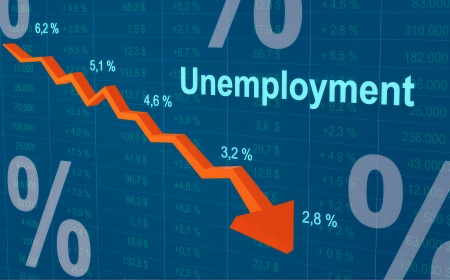
At first glance, Bangladesh’s labour market appears stable. Overall unemployment remains low by developing-country standards: The Bangladesh Bureau of Statistics’ Quarterly Labour Force Survey reported it at 4.63% in the most recent quarter, October to December 2024.
While the World Bank’s modeled ILO estimate puts it lower, at 3.64% for 2024, reflecting different survey methodologies. Yet aggregate figures conceal deeper problems.
The Bangladesh Bureau of Statistics Labor Force Survey 2023 reports youth unemployment (ages 15 to 29) at 7.3%, more than double the national rate. World Bank and ILO modeled estimates, using a narrower 15-24 age band, put it even higher, at 9.4% in 2025.
The gender pattern is more complicated than commonly assumed: Measured unemployment is higher among young men (9.6%) than among young women (4.8%), mainly because far fewer women are counted in the labour force.
Only about 44% of working-age women participate, compared with more than 80% of men.
The real gender gap appears in Not in Employment, Education, and Training (NEET) status: 18.9% of Bangladeshi youth are neither in employment, education, nor training, but the rate is 22.1% for young women versus 15.4% for young men, reflecting household responsibilities and limited options outside the home.
Even employed youth often work in low-productivity, informal jobs. Nationally, 84.0% of all employed people work informally, according to the Labor Force Survey 2024, with little access to pensions, paid leave, or job security.
A university degree no longer guarantees employment. Graduate unemployment reached 13.5% in 2025, nearly four times the national average, even as employers report difficulty filling technical and analytical roles, signaling a deepening mismatch between education and labor market demand.
Beyond the domestic market, more than a million Bangladeshi workers migrate abroad each year, a release valve as large as much of the formal job market at home, though one that carries its own risks and cannot substitute for credible domestic job creation.
Understanding the Skills Mismatch
For decades, Bangladesh’s education system focused on expanding access, an achievement that brought secondary and tertiary education within reach of millions who once had none. The challenge today is different: Employers increasingly want candidates with practical competencies, not just academic knowledge.
Surveys consistently find shortages in technical, digital, communication, analytical, and problem-solving skills, alongside growing demand for adaptability, teamwork, and critical thinking.
Many institutions still emphasize memorization and exam performance over workplace readiness, leaving graduates with strong theoretical knowledge but little exposure to internships, project-based learning, or industry collaboration.
As technological change accelerates, this mismatch risks growing worse.
The Future of Work
Around the world, artificial intelligence and automation are reshaping industries, and routine, repetitive tasks are especially vulnerable. In Bangladesh, manufacturing, administrative support, data entry, bookkeeping, and some customer service functions may change significantly over the coming decade.
This should not be read solely as a threat, since technological change has historically destroyed some jobs while creating others. Demand is also rising for workers who complement technology rather than compete with it.
In fields such as software development, data analytics, cybersecurity, artificial intelligence, digital marketing, e-commerce, fintech, healthcare services, renewable energy, supply chain management, and remote professional and creative services.
Bangladesh has already become one of the world’s notable sources of freelance digital talent, an opportunity unimaginable only two decades ago.
The future of work is therefore not a distant concept; it is already shaping hiring decisions and business strategy today.
A New Complication
This opportunity is not hypothetical. Bangladesh today has more than 650,000 active freelancers, the world’s second-largest such workforce after India, earning over 500 mn US dollars a year in foreign exchange. Broader IT-enabled services outsourcing reached roughly 900 mn US dollars in the first half of 2025 alone.
However, the same automation that is reshaping other industries is now reaching freelancing and entry-level software work. Global employment for software developers aged 22 to 25, the exact age group Bangladesh is training for these jobs, fell by nearly 20% from its 2022 peak by September 2025, as generative AI absorbs tasks once given to junior programmers.
Studies of Bangladesh’s freelance market report earnings falling by 50 to 60% for lower-skilled gig workers, as clients turn to AI tools or leverage AI’s availability to push down rates.
The lesson is not that digital work has no future in Bangladesh, but that the opportunity is shifting toward higher-skill, AI-complementary work and away from the entry-level coding and writing tasks that have so far formed its backbone.
Bangladesh’s readiness for this higher layer of work is uncertain. A UNESCO, UNDP, and European Union assessment in December 2025 found serious shortages of AI computing power and found that AI ethics instruction is largely missing from the education system.
South Asia as a whole hosts only a handful of large-scale AI computing facilities, compared with dozens in Europe, North America, and China. Bangladesh’s draft National AI Policy for 2026 to 2030, which closed public consultation in February 2026, commits to building government AI computing capacity, but this remains a plan rather than a reality.
The opportunity is also fragile in a more immediate sense: The nationwide internet shutdown that followed the political unrest of July and August 2024 cut freelancers off from international clients for days, a reminder that infrastructure and political stability are preconditions for this economy, not optional extras.
The Gender Dimension
Any discussion of youth employment in Bangladesh must address the gender gap. Female educational attainment has improved dramatically, and girls now outperform boys on many indicators, yet women’s labour force participation remains low, held back by social and cultural expectations, workplace safety concerns, limited childcare, transportation barriers, occupational segregation, and hiring discrimination.
Digital work could help overcome some of these obstacles through remote employment and flexible arrangements, but so far, the digital economy has reproduced the gender gap rather than closed it.
Only about 7.7% of Bangladeshi freelancers are women, reflecting unequal access to devices, training, and safe working space at home rather than any difference in ability.
Realizing the sector’s promise for women will require deliberate effort: Targeted training, safer digital infrastructure, and employer practices that do not assume women are unavailable for client-facing or irregular-hours work, rather than merely the passive availability of remote work.
Opportunities in the Digital Economy
The digital economy remains one of Bangladesh’s greatest opportunities, though, as noted above, its nature is shifting quickly as AI reshapes the lower end of the value chain. Government and development programs have increasingly emphasized digital skills, coding, and AI training.
Several factors favor Bangladesh’s prospects: Improving internet connectivity, strong global demand for digital services, and the expansion of remote work into international labor markets. A large English-speaking youth population is often cited as another advantage, but this is narrower than it appears.
Bangladesh’s 2025 EF English Proficiency Index score is 506, only the moderate band and 62nd of 123 countries, behind regional peers such as Nepal, the Philippines, and Malaysia.
The deeper problem is not whether students studied English in school, most have, but whether they can write and speak it with confidence. Many graduates read English passably yet struggle to compose a professional email or hold a fluent client call; the very skills freelance and outsourced work depend on.
Unlike traditional manufacturing, digital industries need relatively modest physical infrastructure. A young programmer in Cumilla, Rangpur, or Barisal can potentially serve clients in New York, London, or Sydney, creating a historic opportunity to decentralize economic growth and reduce geographic inequalities.
Policy Priorities for the Next Decade
Addressing youth unemployment requires a comprehensive strategy, not isolated programs.
Curricula should emphasize critical thinking, problem-solving, communication, and digital literacy, with industry partnerships as standard practice.
English deserves equal priority to technical training, with emphasis on spoken fluency and professional writing rather than exam-focused grammar; as the EF EPI ranking above shows, Bangladesh’s youth are not yet the fluent, work-ready English communicators their reputation suggests.
A graduate who can write a clear email or hold a confident client call in English can access global work regardless of which software platform they know.
Vocational education remains undervalued despite strong demand, and modern technical training can open high-paying paths without requiring a traditional university degree. Internships, apprenticeships, and work-based learning should become a standard part of education so young people gain practical experience before entering the labour market.
Not every young person will become an employee; some will become job creators, and easier access to financing, mentorship, and business support can help youth-led enterprises grow and, in turn, employ others.
Reliable internet should be treated as an economic necessity, not a luxury, since digital connectivity increasingly determines access to education, employment, and entrepreneurship.
Infrastructure for the AI era means more than household connectivity. It includes computing capacity, AI literacy, and ethics education, areas where Bangladesh and South Asia broadly lag far behind East Asia, Europe, and North America. Without this investment, the country risks training young people for digital jobs that AI itself increasingly performs.
Policies should specifically target women and rural youth, the groups facing the greatest barriers to employment, ensuring that the opportunities described above extend beyond urban centers and already-privileged populations rather than concentrating further in Dhaka and a handful of other large cities.
Bangladesh’s youth are often called the country’s greatest asset. Whether that becomes reality depends on decisions made today.
The country is entering an era in which success will depend less on cheap labour and more on skills, innovation, and technological capability, a shift already evident in the decline in entry-level hiring and freelance earnings described above, in sectors that not long ago seemed like Bangladesh’s clearest path forward.
The choice is not whether change will occur, but whether Bangladesh leads it or struggles to catch up. If policymakers, educators, businesses, and civil society work together to equip young people with future-ready skills, including fluent English alongside technical training, Bangladesh can turn its demographic dividend into a genuine engine of prosperity.
If not, it risks producing a generation that is educated but underemployed.
The future of work is arriving faster than many expected. The future of Bangladesh will depend on how effectively its youth are prepared to meet it.
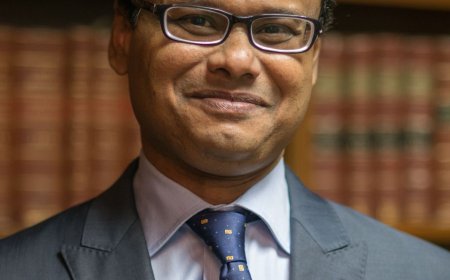
Dr. Mohammed A Rab is currently a free-lunch consultant on Financial Risk Management, Quantitative Risk Modeling, and Enterprise Risk Management.