




























![A Ledger of the Soul: Navigating the Allah-Bhagavant Nexus in a 19th-Century Puruṣākāra Jñāna Caupara [Gyan Chauper]](https://counterpointbd.com/uploads/images/202608/image_430x256_6a93baa3b09a7.jpg)



















The Past Is Not Even Past
Maybe the greatest tribute to July is not in another speech or another procession but to remember that revolutions are not only moments of triumph but also the collective memories of sorrow carried quietly by thousands of ordinary citizens.
Two years have passed since the July revolution. Two years since we won against the fascism, oppression and sufferings for 15 years. Days have passed, months ended and the Sun of August 5 will rise again. The country will celebrate, remember the martyrs, and sing some revolutionary songs. But the wound that we shoved under the time stone is still too raw, too ragged to let out in the sun.
Time, we are often told, heals every wound. But some wounds do not simply heal because the calendar’s pages change and we have to move on. Days pass, our daily life gets busier again, in schools, universities, offices or homes. We try to lead a normal life and think everything will be fine.
Yet, we get startled at some loud noise, and get stuck in our head when we see a police van anywhere. We question every move some politicians make with a suspicion in mind. It's because trauma doesn't work like a physical wound. It creeps behind your mind and comes out when you least expect.
My cousin used to work as a photo journalist and the first thought that used to come to my mind whenever there was some incident happening around was “I hope he is not assigned to that area.” After working in the newspaper industry for the last ten years, I have made a few journalist friends, from my workplace and others. Every incident that occurs in Dhaka, every fire hazard, accident, or terror attack or riot, I pray that I don't have to hear any bad news about them.
In July 2024, I was grateful my brother was not in Bangladesh. I was grateful that my aunty won't have to wait till she gets a call from my brother or he comes back home. I was happy that he was safe, far away from all these terrors. How selfish of me!
Recently, my cousin was visiting Bangladesh and I just thought, what about the mother who is still waiting for her son? What about the children who will never know their fathers growing up? Those students who will never laugh with their friends again. The seats that their classmates used to sit in, do they still try to keep them empty? Do they still look for the friends in the picture when they take photos?
I'm sure I sound very sentimental. No revolution was possible without sacrifice, no victory comes without some loss. The nation once again proved that our youth are fearless and they will stand up for the right thing. But are we ready to forget the pain and really celebrate?
The passage of two years has transformed July into a political milestone. Every group wants to claim its role. Every speech seeks to shape its legacy. Yet somewhere in this competition over memory, the emotional truth of ordinary people is often forgotten.
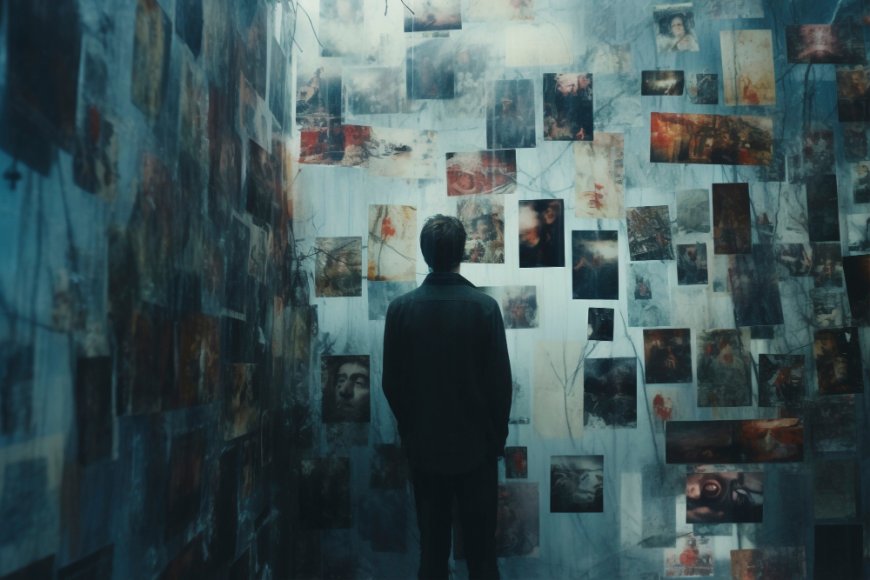
Those who did not live through the days will see July as history. They will remember July through videos, documentaries, photos and memoirs. There might be speeches and debates to decide whether it was a political action or a public reaction turned to revolution. But for us? We remember bloody roads, broken campus, screaming students, and a lifeless body laying on a police tank.
Revolutions are often described like acts of courage and consequence. But those who experienced those nightmares and lived, our memories are messier. For ordinary people like us, July was not a monsoon of political awakening; it was a month of dread, confusion, anger and emotional aftershock.
Our eyes were pasted on social media for any news but we learned to read any breaking news as if we have to de-code the meaning, to recognize silence as a warning, and to measure each day by what it might take from us before nightfall.
In A Tale of Two Cities, Dickens turns revolution into both necessity and nightmare, showing how crowds can become history’s voice and history’s violence at the same time. In One Hundred Years of Solitude, García Márquez reminds us that collective memory is never neat; it circulates through generations like a wound that changes shape but never fully disappears. For me July belongs to that tradition; not only a political event, but a very human one, made of terror, endurance, and lingering grief.
That is why revisiting July still feels so traumatic. As if the mind could not file those events neatly by date. It stored sounds, images, pauses, and losses in a way that can be awakened by almost anything, a headline, a photograph, a familiar place, a phrase spoken too casually. We are told to remember, and we should.
But remembrance without tenderness can become another form of violence, especially for those who still carry the emotional cost in silence.
Maybe the hardest part is not remembering those days. Maybe the hard part is that life demanded us to move on long before we were ready. Bills had to be paid. Offices reopened. Universities resumed classes. Families carried on because they had no other choice. But carrying on is not the same as healing.
Perhaps that is why every anniversary feels complicated. Maybe that’s what makes me angry when I think about the revolution that our young generation fought with life to bring in. The exhaustion suppresses the happiness, the loss shadows the gain, the stolen lives curse the earned future.
And there is an uncomfortable question that lingers in many hearts: have we honoured the sacrifices by building the country our people hoped for?
The answer is not as simple as any slogan of an election campaign. It is more complicated than you can even imagine.
Progress cannot erase pain. Development cannot replace the people who never came back home. Democracy, justice, or reform, however necessary, cannot undo trauma. They can only give those sacrifices some meaning if they are pursued with sincerity.
Two years later, the hardest truth is, time has passed, but not every wound has healed. Some people speak of July with pride. Others speak of it only with a tightening in the chest. Both feelings are real. If a nation wants to learn from its history and wants to move forward to a better future, it must be able to hold both the triumph and the trauma, both the public meaning and the personal wound.
Maybe the best way to honour July is to learn how to remember our history with honesty. Maybe the greatest tribute to July is not in another speech or another procession but to remember that revolutions are not only moments of triumph but also the collective memories of sorrow carried quietly by thousands of ordinary citizens.
Just like William Faulkner said, "The past is never dead. It's not even past", July 2024 still feels like a memory of yesterday. And that is why revisiting those memories still hurts, not because I am unwilling to move forward, but because a part of me never truly left those days.
As the second anniversary passes, let us remember not only the achievement and the victory that changed history but also the invisible scars that they left behind. History records revolutions. People live with them.
Shanim Tasnim is a member of the Editorial staff of the weekly Counterpoint.