










































The Endless Price of Freedom
Behind every martyr stood a family, and behind every survivor often lay wounds that no medal, citation or official recognition could ever heal.

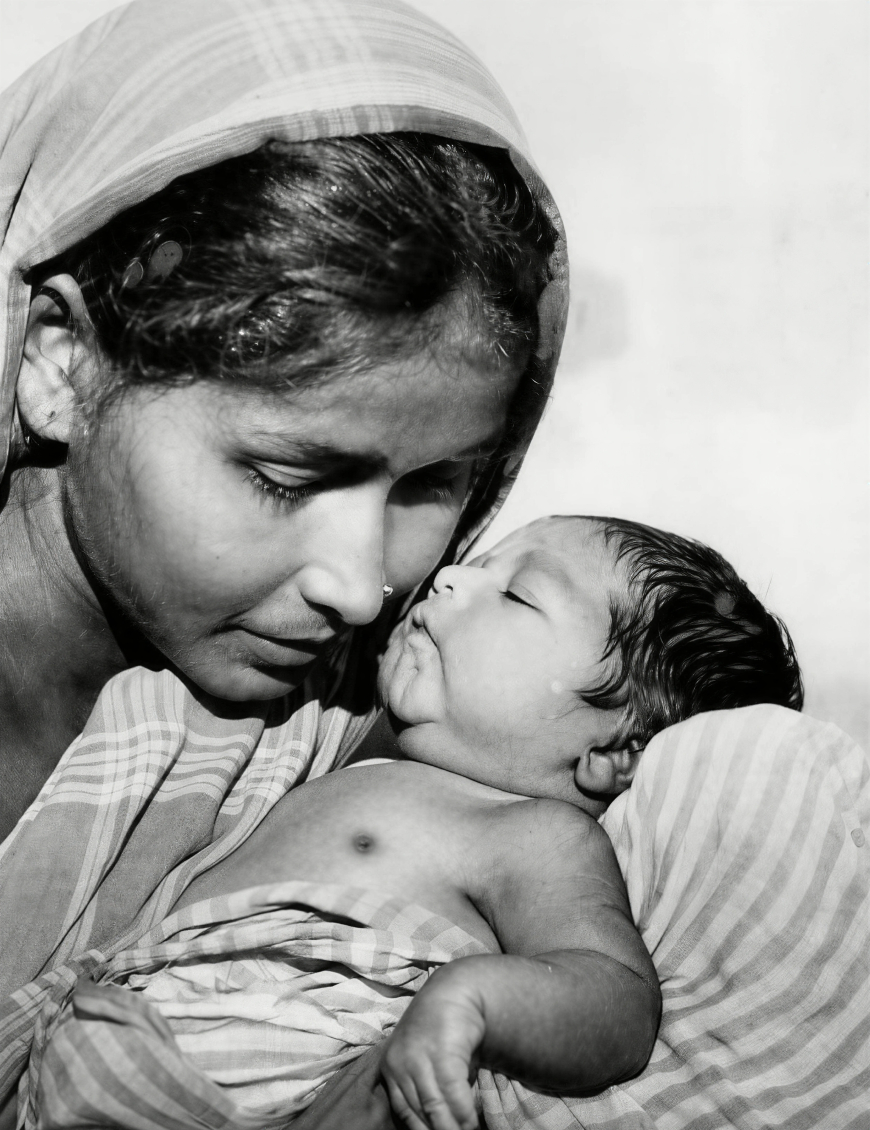
Wars seldom end when the last shot is fired. Their consequences linger for decades, sometimes for generations, leaving indelible scars on individuals, families and entire nations.
Every conflict produces heroes and martyrs, but it also leaves behind countless untold stories of silent suffering -- stories that rarely find a place in history. Bangladesh is no exception.
More than half a century after our War of Liberation, we continue to debate statistics, narratives and even the political ownership of the war.
Governments have changed, lists of freedom fighters have been revised and rewritten, yet we have never succeeded in preparing an incontestable record of those who laid down their lives or of those whose lives were irreparably shattered by the conflict.
That is more than an administrative shortcoming; it is a moral and ethical failure. Behind every martyr stood a family, and behind every survivor often lay wounds that no medal, citation or official recognition could ever heal.
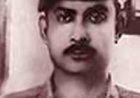
The story of my dear friend and course mate, Col. Aminul Islam (Retd.), is one such forgotten chapter of our national history.
In 1971, Amin was a second-year honours student in the Chemistry Department of Rajshahi University. Inspired by Bangabandhu Sheikh Mujibur Rahman’s historic address of 7 March and the subsequent declaration of Bangladesh’s independence by Major Ziaur Rahman, he abandoned his studies, fully aware that he might never return.
Before leaving home, he sought his mother’s permission. She said nothing. Whether her silence reflected fear, grief or quiet acceptance, only a mother’s heart could have known. Amin accepted it as her blessing and departed for the battlefield.
Even today, I vividly remember my own mother’s face when I left home to join the Liberation War. Looking back, I often wonder whether she too concealed the same silent anguish behind her composure.
After crossing into India, Amin underwent rigorous military training at Murti Camp before joining Sector 6 under Wing Commander Khademul Bashar. During one operation he sustained a serious injury to his collarbone and was evacuated to Bagdogra Hospital.
After recovering, he was selected for the Second Liberation War Course for commissioning as an officer. I had the privilege of being one of his seventy fellow cadets. Bangladesh attained independence before our training concluded.
Like every young officer, Amin looked forward to returning home in triumph. None of us could have imagined that the greatest battle of his life would begin only after the war had ended.
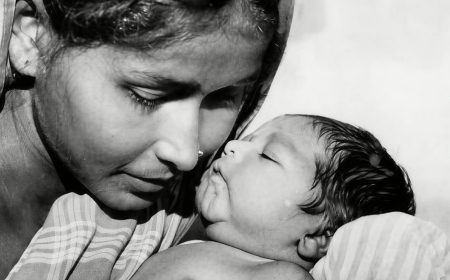
On reaching home, he rushed to embrace his mother. She looked at him with vacant eyes. There was no recognition. No smile. No words.
During the war, false news had reached the family that Amin had been killed in action. The devastating shock had robbed her of her speech and, perhaps, of her grasp of reality itself.
Holding her trembling hands, Amin placed them upon his face and pleaded repeatedly: “Mother, it is I -- your Amin. I have come home.” She remained silent.
Soon afterwards, military duty compelled him to leave again, hoping that time and treatment would restore her health. It never did. One day she quietly disappeared from home.
The family searched desperately but could not find her. Then, just as unexpectedly, she returned. Thereafter, this became a recurring pattern.
She would wander away without purpose, only to reappear days later, oblivious to where she had been or what she had done. Her mind had become a prison from which she could no longer escape.
Whenever Amin came home on leave, he searched for his mother before anything else.
Sometimes he found her. Sometimes he did not. Even when they met, there was never the slightest sign of recognition. The mother he had left behind before the war had vanished forever. She lived for another twenty years before passing away.
Yet even today, unanswered questions continue to haunt Amin. What exactly happened to her mind? Why did no treatment succeed?
Did she remain imprisoned in the belief that her beloved son was still missing, endlessly leaving home in the hope of finding him? Were her solitary wanderings nothing more than a mother’s eternal search for the child she believed she had lost?
These questions have no closure because they have no answers. Many families endure the agony of bereavement. Yet there exists another form of grief -- perhaps even more cruel -- for those who never learn with certainty the fate of someone they love. It is a sorrow suspended in time, denying the wounded heart the solace of acceptance.
History faithfully records battles, victories, commanders and political leaders. Far less often does it remember the mothers whose lives were quietly broken by war, or the sons who spent the rest of their lives carrying wounds that remained invisible to everyone else.
The psychological casualties of war seldom appear in military archives or official commemorations. Yet they constitute part of the true cost of freedom.
Every nation has a moral obligation to remember not only those who died in battle, but also those whose minds, families and futures became collateral victims of history.
Dear Amin, I have long since buried my own parents and know the immeasurable pain of losing one’s mother. Yet I cannot begin to comprehend the torment of watching your mother lose you while you were still alive, nor the lifelong burden of never understanding what became of her mind.
Perhaps this was the unseen, unrecorded and deeply personal price you paid for the freedom of our beloved Bangladesh.
As your friend, fellow freedom fighter and one of your seventy comrades in the Second Liberation War Course, I can only pray that your beloved mother rests in the infinite mercy of Almighty Allah (SWT). Ameen.
The author is a freedom fighter and one of the 70 officer cadets of the Second Liberation War Course who trained alongside Col. Aminul Islam (Retd.).
What's Your Reaction?