






























![A Ledger of the Soul: Navigating the Allah-Bhagavant Nexus in a 19th-Century Puruṣākāra Jñāna Caupara [Gyan Chauper]](https://counterpointbd.com/uploads/images/202608/image_430x256_6a93baa3b09a7.jpg)


















Bhuna Khichuri, Monsoon Memories
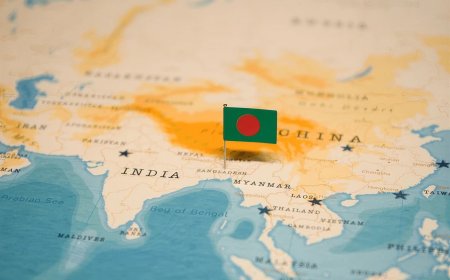
A warm plate of bhuna khichuri is both a memory left behind on a map across oceans, and a treasure brought along in my portable Samsonite suitcase in keeping the monsoon memories alive.

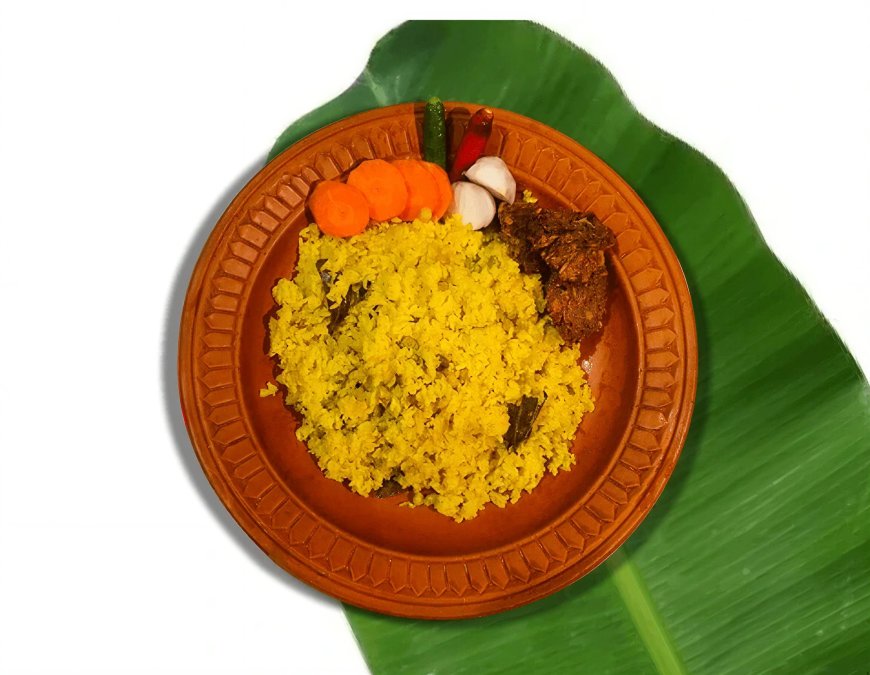
“Nine out of ten,” said my brother as he took another spoonful of bhuna khichuri (roasted lentil rice pilaf) that I served him. He was actually referring to the bhuna khichuri we grew up eating on rainy afternoons.
He didn't explicitly mention our mother. He didn't need to. We both knew what he meant. That l became agonizingly close to recreating the exact recipe of our mother.
He was visiting me from Toronto. Sitting across from one another at the dining table, his casual piece of praise about my khichuri hit me like the ultimate culinary medal. Instead of beaming with delight my eyes started to sting with hot tears.
The tears caught me off guard because they came from a place of deep gratitude. Looking out the window I saw a heavy July downpour blurring the Mid-Atlantic landscape. My gaze drifted back to him, and I smiled holding the tears.
The tears welled up because in his validation I haven’t just cooked a meal; they held a deeper and heavier weight. There was a quiet solace in knowing that our mother’s legacy endures through me in a country miles’ across from the homeland.
It was also an admission that we are forever chasing a home that exists in memory.
That missing tenth point was not a failure of spice or my cooking technique; it was not being able to fully replicate the artistry of our mother’s recipe either.
It was about the phantom ingredient and the invisible touches and irreplaceable warmth of a mother’s hands that keep her elusive flavour enshrined beyond reach.
It felt very comforting to know that the bhuna khichuri ensured I had carried a piece of our mother with me, keeping her memory alive for the two of us a world away.
My brother’s comment also meant that though I managed to capture the rhythm of Amma’s hands it was the unmeasured magic of her recipe in creating the gold of monsoon that belonged to a time that no longer existed.
My house lacks the organic warmth and lively energy of our traditional old home because it is shaped by cautious assimilation and a fragmented sense of belonging.
A compliment from my big brother was more than enough to turn a rainy afternoon into a direct bridge back to my ancestral home.
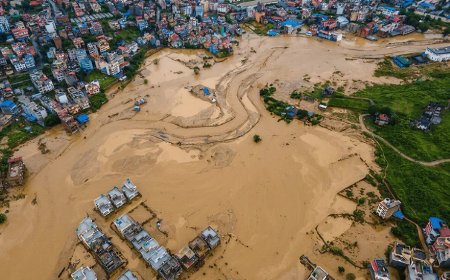
The sudden battering of the rain sounded crisp, yet hollow against the window panes; it didn’t match the monsoon imagery in my head. It lacked the heavy earth-shaking thunderous roar of a true Bangladeshi monsoon flooding the streets.
Sometimes our childhood home became isolated from the world outside.
During summer rain, I find myself looking through the memory of monsoon rains, searching the hidden layers of my mother’s recipes for assurance.
I look for vibrant, soulful warmth that I want to recreate in my suburban kitchen.
In Bangladesh, when a sudden monsoon rain drenches the earth it is an immediate invitation to prepare khichuri in the kitchen. It becomes a loud communal event -- a gathering of family, the sound of rain drumming against the wrinkled tin roofs, and plates of perfect bhuna khichuri with fried fish and eggplants passed around during a mid-day meal.
For the diaspora, however, the rainy day comfort flips; making khichuri becomes a quiet rebellion in a foreign land.
It is a difficult exercise in emotional time travel. It is our way to anchor an identity to a country thousands of miles away.
Through my essays I try to explore the bitter-sweet experience of cultural displacement and sensory lifelines that keeps home alive. I am always struck by the daunting realization of what it means to preserve our heritage from oceans away.
Cooking authentic Bangladeshi dishes for immediate family and occasional out-of-town guests brings me to a place of profound stillness.
My brain momentarily erases the intervening decades, by bringing vivid flashbacks to early life. It is a moment when the physical reality of a quiet kitchen transforms into a sensory bridge back home collapsing distance into a single pot.
It feels like I am back in the animated family kitchen.
This soul-deep resonance is defined by duality -- the comfort of a ritual and the quiet sting of probashi life. In my kitchen, like most of the diaspora, I try to embody living between cultures. The act of cooking bhuna khichuri is that embodiment.
I am utilizing modern appliances and ingredients from an international grocer in keeping two worlds together.
The triple offerings of my hands, my time, and my senses to recreate a dish passed down by my mother are a blueprint of resilience, continuity, and keeping a tradition alive. As long as I can recreate this golden texture (yellow rice) and share with others, the distance vanishes and I am held in mother’s love once more.
The memory of a traditional lakrir chula (mud stove) where you can see the flickering fire cannot be replaced by a modern appliance. The slow dancing heat of the wood fire gave my mother’s khichuri a unique smoky flavor.
On an electric stove it is quite a challenge to replicate that deep rustic aroma by mimicking and improvising the process.
The moment the roasted mug dal hits the ghee and meets the warm scent of ginger paste, and whole garam masala -- the present fades into an echo as the aroma acts as an anchor to my childhood home.
I listen to the hum of a modern refrigerator as I perform the ancient rhythmic motion of washing the rice. Looking out at the landscape and seeing the ingredients on my kitchen counter do not match, but I feel entirely at peace holding them both.
The tightly covered pot of khichuri without needing to seal the edges sitting over low flame for the purpose of dom dea belongs to both worlds.
As the boiled pot of rice changes into a rich dish, the quiet exile of my probashi life stands in stark contrast against the bustling, noisy shared warmth of the past. That sense of loss is something that lasts for a few moments. When I suspend the reality of my current environment and make a simple pot of comfort food I feel whole for an afternoon.
The sky outside my current world carries on indifferent to the liminality of my world.
Years ago, as a lovely wedding gift someone from Dhaka sent me Siddika Kabir’s cookbook titled Ranna Khaddo Pushti to help me discover new recipes.
However, the book went unused. I found myself relying not on the printed instructions of a cookbook, but on memory. I try to recreate the flavors and techniques I had watched my mother use for years.
At the time as a beginner in the kitchen I didn’t realize that my cooking style was an unconscious mimicking of my hands, my spice choices, or the way I watch the pot is that of my mother’s.
In my early married years, cooking khichuri under New England’s gray skies was an adversary reminding me of the physical distance between me and my mother’s kitchen. It was quite an adjustment to come to terms with the cultural distance required to establish the emotional weight of this specific dish.
It was remarkably hard to keep traditional food alive in a diaspora kitchen. Such kitchens often ran counter to deshi cooking. The true challenge in cooking our generational recipes was an exhausting process of compromise. I was caught between adapting and substituting ingredients over strict preservation to keep culinary memories intact.
Amidst a July rain shower, the sight of bhuna khichuri simmering on the stove, a tender memory flashed before me -- of Amma cooking in the kitchen, sitting on a low morah (wicker stool).
In my parents’ home the rannaghar was a detached structure, situated a short distance across the back courtyard away from the main house. To shed heavy tropical rain the kitchen had a thick overhanging roof made of thatched multi-layered rice straws.
Two walls had woven bamboo slats with little square openings for cross-ventilation, allowing cooking smoke to escape easily.
The rear wall and the one behind where there was a row of clay stoves with different dimensions were made of mud to prevent fire. A heavy wooden door completed the structure.
Food was cooked in heavy aluminum or copper pots with flat lids over hand-molded clay stoves fueled by twigs and split woods. To cook our monsoon season khichuri my mother alternated between a copper and aluminum dekchi.
Every element of the dish was uprooted directly from our soil, apart from whole garam masala wrapped within a twisted cone of scrap newsprint bought from the bazaar.
My mother’s kitchen was filled with an intoxicating scent of toasted sona mug dal and delicate chinigura rice, all of it sizzling in pure homemade ghee skimmed from cow milk flooding the air with rich fragrance.
Therefore, the bhuna khichuri turned out to be a delightful dish as everything was made from fresh ingredients.
The faraway kitchen had various sizes of iron korais, copper dekchis, arranged in rows on a rough-hewn wooden shelf that gave it a homey charm. The multiples of wood burning mud stoves, rough cement floor, thick cloth rags to wrap around the hot handles, and mis-matched terracotta boiums holding all kinds of spices is a magical place frozen in time.
The persistent dampness near the washing area where everything was cut and cleaned (boti space) added character to this rustic set up.
Thousands of miles away the kitchen setting here is visibly different. I have to depend on the sleek electric reality around me. The electric range made by GE, and the high pitched whir of a Ninja blender serve as my daily companions while navigating this private space.
The ceramic tiles that stay completely dry require mopping once a day. The bright recessed ceiling lights keep the kitchen perpetually illuminated. The exhaust hood vent sucks away the smoke and sharp smell of the foron (tempering) before it can drift into the rest of the house. While cooking, the heat-proof grips protect my hands from getting burned.
The flawless, smooth countertops are a far cry from my mother’s kitchen. To make fluffy well-cooked bhuna khichuri I use a Le Creuset Dutch oven that looks uniform and neat on the electric stove.
Inside the overhead cabinet the orderly ranks of identical spice jars neatly labeled in English (cumin, turmeric, clove, and cardamom) hold our history.
My kitchen lacks my mother’s copper pots and the earthen stoves. Mentally, I trade modern amenities for the rhythm of the shil-pata (stone slab using a cylindrical stone roller), and I often visualize smoke curling out from those mud stoves.
The dull thud and crush sound of the stone pestle crushing the spices still echo in my ears.
A couple of decades back, it was very difficult to get the deshi ingredients in the sterile international isles of a traditional supermarket. Hunting for the special aroma and the right ingredients stood as a monument of what was missing.
To find substitutions in a foreign grocery store to create a childhood taste is a brilliant metaphor for staying rooted. So I had no choice but to use the generic brand of basmati rice and split moong dal (which had no fragrance) available in standard American grocery stores.
The substitution of enriched basmati for fragrant chinigura or kalijira rice completely changed the taste of dishes like bhuna khichuri. The tiny grains of aromatic sona mug dal were nowhere to be found -- only the generic, stubborn split lentils that took time to become tender under fire.
The frustration of bad substitutes and scarcity of the necessary ingredients in regular grocery stores had to be tolerated. One or two South Asian stores were many miles away.
In the subsequent years, supplies of different varieties of rice came from some unknown places that were packaged in New York and distributed to grocers across New England and Mid-Atlantic States.
The generic provision could never capture the unvarnished heat of home missing every vital ingredient of my memory.
In the present day, it is very easy to get all the ingredients in Bangla Bazaar or Indian grocery stores including the preferred fragrant rice. If not, Amazon always comes to the rescue. But the authentic mug dal is never available.
Looking at the isles of desi merchandise and ingredients is always a strange feeling as I am able to buy everything needed to prepare a culinary dish of my homeland.
But even with the easy availability the emotional weight actually shifted from external obstacles to internal nostalgia. The actual home feels further away and there is a hollow sadness in this automated convenience.
The buildings, streets, and social circles all have been shifted for decades, leaving a quiet grief. I realize how far I have journeyed from the monsoon rain loudly pounding the tin roof of the Bangla ghar where we studied as children.
However, this sadness settles and brings a strange sense of relief. I recognize that I am not failing to recreate my mother's khichuri; I am simply cooking it in a different chapter in my life.
The memory itself is an act of belonging. We do not need the physical house to return home; we carry the home in the friction of the spatula against the enameled cast iron pot where I make my bhuna khichuri.
Time and place haven’t been able to alter the taste and aroma of my dish; certain memories cannot be paved over by distance and remains as an intact piece of the past.
Over decades, home transforms from a physical space into a shifting landscape of memory, identity, and time. The distance may blur the edges of the far-off home, but the essence of that sanctuary never vanishes entirely.
It stays alive, carried quietly inside our being. That tucked away feeling is ready to be awakened at a moment’s notice by the most powerful time machine we possess; the tastes and flavors of our childhood.
A few days ago, on that July afternoon, serving bhuna khichuri to my brother was a profound, emotional ritual. A simple compliment instantly breathed life into decades-old memories as a plate of khichuri effortlessly collapsed years’ of distance from our childhood home.
Our mother’s recipe brought us where we belong: Rooted to a homeland left behind.
Whether cooked in 1985 or 2026, the alchemy of the mother’s recipe remains unchanged. Food remains our sensory bridge -- tethering drifting hearts to home, one bite at a time.
A warm plate of bhuna khichuri is both a memory left behind on a map across oceans, and a treasure brought along in my portable Samsonite suitcase in keeping the monsoon memories alive.
Zeenat Khan is a frequent contributor to South Asia based journals and literary reviews, a culinary enthusiast; she is dedicated to preserving and celebrating the ancestral essence of Bangladeshi cuisine.