











































![A Ledger of the Soul: Navigating the Allah-Bhagavant Nexus in a 19th-Century Puruṣākāra Jñāna Caupara [Gyan Chauper]](https://counterpointbd.com/uploads/images/202608/image_430x256_6a93baa3b09a7.jpg)




















Foreign Currency Bond: A Cart Before The Horse
Without serious commitment to implement reform in financial sector, revenue collection and governance, the initiative of issuing foreign currency bond seems like cart-before-the-horse case.


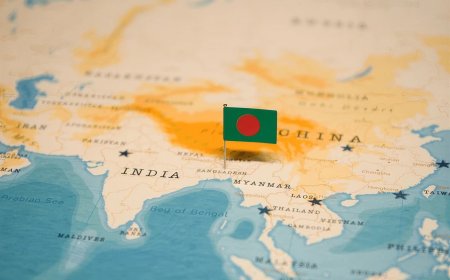
News broke out that Bangladesh government formed committee to issue bonds in foreign currencies across different international markets[1]. Funds raised through such foreign currency bonds will be used to finance development projects.
This is the first time the government is exploring foreign capital markets to finance domestic initiatives. The news also says the government is mulling regulatory changes to allow purchase of such bonds by Bangladeshi nationals who under current regulatory set up cannot purchase such bonds.
Question is whether there is a drastic change in governance and macroeconomic indicators that calls for contemplating launch of such foreign currency bonds.
The very same day this news came out another report says S&P Global Ratings revised Bangladesh's outlook on long-term sovereign credit rating from stable to negative. The agency attributed reasons for the revision to weak banking sector, poor revenue collection, external factors and high likelihood of delayed recovery[2].
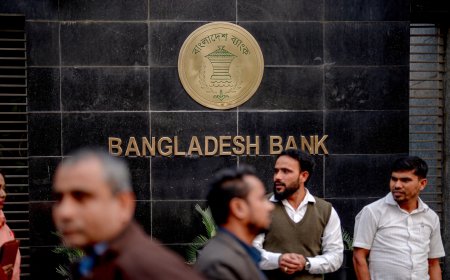
The agency observed that non performing loan in the banking sector reached about 40% of total loans, govt revenue collection accounts for 8%-9% of GDP and interest payments represent 30% of govt revenue.
That means revenue collection is still inadequate and more than a quarter of that revenue goes for paying up the the interest of government debt. In this backdrop, the government is pondering to draw money from foreign debt market.
Government is not increasing the pace of domestic revenue collection to meet the existing debt servicing obligation but embarking on issuing bonds that will require more revenue money to pay the interest/ coupon.
Proper use of the raised fund is another issue otherwise whole initiative will be jeopardized. Indonesia is an example. Foreign investors account for 14% of Indonesian govt debt and 40% of traded stocks[3].
Money raised through foreign bonds often goes to spending on public projects with inefficient outcomes and leakages. One such program, free school meal program, is marred with corruption as vendors ,contractors embezzled funds by submitting swollen bills and delivering poor quality food items that caused illness to the students.
This kind of politically motivated projects plus subsidy already pushed up budget deficits beyond legal threshold of 3% of GDP,worrying foreign investors about sustainability of govt programs.
They pulled out $3.9 billion from Indonesian market this year. Plus $46.1 Bn of government debt comes to fruition this year. This puts tremendous pressure on Indonesian Rupiah,which already witnessed [8%] depreciation against USD[4].
Another issue is the proper management of such funds. Malaysia's 1MDB sovereign wealth fund scam is identified as one of the largest case of state backed robbery,caused by corruption, bribery and stealing.
People involved in management of the fund siphoned off money by creating shell companies and offshore bank accounts. A total of $4.5 Bn stolen from the fund[5].
The point is unaccountable public spending programs coupled with lack of regulatory checks may hurt the very spirit of the funding objective. In addition, when foreign currency bond will mature, it will put pressure on local currency Taka if macroeconomic situation is not in favor.
Any rapid depreciation of Taka may result in worsening the inflation. Foreign investors seek detail and clear information on bond issuer economy. They will certainly not bank on info like Bangladesh never fails to pay back its debt and its low debt-to-GDP ratio(38.9% according to CEIC data).
They will certainly inquire about why the country fails to provide gas to the new factories. They will seek information about banking sector reform,distress asset management.Vital reforms should be carried out to draw attention of foreign investors to foreign currency bonds.
Indonesia's Patriot Bond allows undisclosed wealth to enter the economy. The govt even passed a law that says investors are not obliged to provide any info on investment on the bond that can be used to prosecute them later.
Such provision is a boon for money laundering activity and poses risks for the financial sector[6]. Bangladesh should avoid such provision in issuing foreign bonds. And greater transparency in issuing will thwart money laundering activity.
Without serious commitment to implement reform in financial sector, revenue collection and governance, the initiative of issuing foreign currency bond seems like cart-before-the-horse case.
In this era of free-flow-of-information govt backed assurance will not convince the foreign investors to rest their trust on Bangladeshi foreign currency bonds.
Deeper reform,fiscal prudence and accountable public spending may set the context for any such future initiative.
Rezaul Hoque blogs on economics and governance.
References:
[1] "High Level Panel Formed To Assess Feasibility of Issuing Panda,other Foreign Currency Sovereign Bonds", Abul Kashem & Rafiqul Islam,Daily Business Standard, July 28,2026,https://www.tbsnews.net/economy/high-level-panel-formed-assess-feasibility-issuing-panda-other-foreign-currency-sovereign
[2]"S&P Revises Bangladesh Outlook To Negative On Banking Sector,Fiscal Risks",The Business Standard, July 18,2026,https://www.tbsnews.net/economy/sp-revises-bangladesh-outlook-negative-banking-sector-fiscal-risks-1499791
[3]"Patriot Bonds,An Indonesian Shakedown?", Philip Bowring,Asia Sentinel,October 06,2025,https://www.asiasentinel.com/p/patriot-bonds-indonesia-shakedown
[4]"Why Indonesia's Economy Is Under Pressure", Nik Martin, Deutsche Welle,July 15,2026,https://www.dw.com/en/indonesia-economy-prabowo-emerging-market-status/a-77847180
[5] 1MDB Scandal.Wikipedia.https://en.wikipedia.org/wiki/1MDB_scandal
[6]"The Hidden Amnesty In Indonesia's Cut-Rate Patriot Bond",Ronny P Sasmita,Asia Times,June 24,2026,https://asiatimes.com/2026/06/the-hidden-amnesty-in-indonesias-cut-rate-patriot-bonds/