













































![A Ledger of the Soul: Navigating the Allah-Bhagavant Nexus in a 19th-Century Puruṣākāra Jñāna Caupara [Gyan Chauper]](https://counterpointbd.com/uploads/images/202608/image_430x256_6a93baa3b09a7.jpg)





















Europe's Defence Dilemma in an Era of American Retrenchment
A more self-reliant Europe could also stimulate greater defence-industrial cooperation, increased arms exports, and new opportunities for technological and industrial partnerships with smaller states. It may ultimately contribute to a more multipolar international security environment in which European powers exercise greater strategic influence.
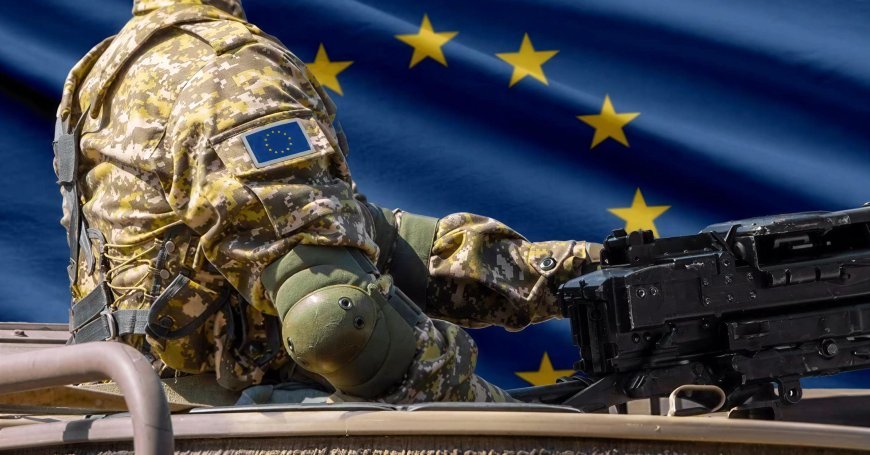
As the world focuses on the new US-Iran deal that has, for the time being, silenced the guns in the Middle East, a new chapter is unfolding in Europe. On June 12, in Brussels, US Defence Secretary Pete Hegseth announced a review of American troop deployments in Europe.
The move signals the possibility of a new European security architecture and a realignment of US military commitments in response to evolving security challenges in Europe, the Indo-Pacific, and other contingencies in Asia.
The North Atlantic Treaty Organization (NATO) was established in Washington on April 4, 1949, as a military alliance of Western democracies based on the principle of collective defence. Under Article 5, an attack on one member is considered an attack on all.
NATO emerged during a period when European security was under severe strain. Following World War II, the Soviet Union consolidated control over much of Eastern Europe, creating a buffer zone to protect itself from future invasions.
The Berlin Blockade of 1948 heightened fears of Soviet expansion towards Western Europe and convinced Western nations of the need for a collective defence mechanism. The United States, Europe's most powerful ally, responded by deploying troops and nuclear capabilities on European soil to deter aggression from the Soviet Union and its allies.
These concerns were reinforced by the spread of communism in Asia, particularly in China in 1949 and North Korea in 1950. Against this backdrop, NATO served multiple purposes: deterring Soviet expansionism, preventing the resurgence of nationalist militarism in Europe, and promoting Western political and military integration.
The deployment of US military assets, including nuclear weapons, close to Soviet borders sent a clear signal that further communist expansion would face a coordinated Western response.
Over the decades, NATO's role evolved significantly. During the Cold War, from 1949 to 1991, it served as the principal deterrent against the Soviet Union, prompting the creation of the Warsaw Pact in 1955. Following the end of the Cold War, NATO shifted its focus towards crisis management and peace support operations, including interventions in Bosnia and Kosovo.
After the September 11 attacks, the alliance invoked Article 5 for the first time and led the International Security Assistance Force (ISAF) in Afghanistan. More recently, Russia's annexation of Crimea and its invasion of Ukraine accelerated NATO's eastward expansion and prompted traditionally neutral countries such as Finland and Sweden to join the alliance.
Today, however, NATO faces a different challenge -- not from Russia alone, but from changing priorities within its most powerful member. The recent US-Iran conflict exposed growing differences between Washington and several European capitals. A number of NATO members openly criticized the Trump administration's decision to launch military action against Iran.
Public disagreements, including exchanges between President Donald Trump and German Chancellor Friedrich Merz, as well as Spain's refusal to permit the use of its air bases for operations against Iran, reportedly contributed to Washington's decision to reassess its role within NATO's security framework.
At the same time, the broader strategic environment has changed considerably. The war in Ukraine, NATO enlargement, renewed great-power competition, and the rise of China have compelled the United States to reassess how and where it deploys military resources. Washington increasingly views the Indo-Pacific as the primary theatre of strategic competition, requiring a redistribution of military assets and attention.
Against this backdrop, Hegseth announced a six-month review of US force posture in Europe, reportedly under the concept of "NATO 3.0." His criticism of some European allies centred not only on defence spending but also on restrictions imposed on US military operations during the Iran conflict.
The review appears designed to accelerate a transition towards greater European responsibility for continental security. The United States has long urged NATO members to increase defence spending, and the proposed target of 5 percent of GDP by 2035 -- comprising 3.5% for core defence and 1.5% for related infrastructure -- reflects this objective. According to NATO Secretary-General Mark Rutte, European allies have already begun increasing their contributions, helping offset reductions in US commitments.
In practical terms, a reduction of US military presence could affect contributions to NATO's high-readiness forces, the NATO Force Model (NFM), as well as American naval and air assets stationed in Europe. The broader objective, as articulated by Hegseth, is to ensure that NATO moves "fast and irreversibly" towards a Europe-led security framework.
The implications are significant. A prolonged crisis in the Middle East or an expanded US strategic focus in Asia would inevitably divert American resources away from Europe. This could weaken deterrence along NATO's eastern flank at a time when tensions with Russia remain high. Such developments would also have broader economic consequences, including disruptions to global trade, rising energy prices, and inflationary pressures.
Europe now faces the reality of assuming greater responsibility for its own defence. NATO members are expected to meet in Ankara in early July to discuss the framework for achieving higher defence spending targets and strengthening European contributions to collective security.
This transition could accelerate Europe's pursuit of greater strategic autonomy while preserving NATO as the cornerstone of transatlantic security. To achieve this, European members will need to increase defence spending, provide more forces to the NATO Force Model, strengthen the alliance's eastern flank, and enhance military readiness and deterrence capabilities.
The objective is not to replace NATO, but to reduce dependence on the United States while keeping the alliance intact.
Another critical issue concerns Europe's reliance on the US nuclear umbrella. In the longer term, European security planners may place greater emphasis on France's nuclear deterrent, enhanced nuclear consultations among European allies, and closer strategic coordination between France and the United Kingdom. While politically sensitive, such discussions are becoming increasingly relevant.
A more self-reliant Europe could also stimulate greater defence-industrial cooperation, increased arms exports, and new opportunities for technological and industrial partnerships with smaller states. It may ultimately contribute to a more multipolar international security environment in which European powers exercise greater strategic influence.
The prospect of a NATO with reduced US participation presents both challenges and opportunities. Europe's success will depend on its ability to develop the political unity, industrial capacity, military readiness, and strategic culture necessary to deter emerging threats.
The coming years may determine whether Europe can transform itself from a security consumer into a security provider while preserving NATO as the foundation of collective defence.
Brigadier General Mustafa Kamal Rusho (Retd) is working as a Research Director with Osmani Centre for Peace and Security Studies (OCPASS).