























































Bangladesh General Election 2026: The Nation at a Crossroads
While turnout may not reach historic highs, it is nonetheless expected that up to 70% of voters will participate. Yet, as election day draws near, a palpable sense of anxiety and security concern has settled over the public.

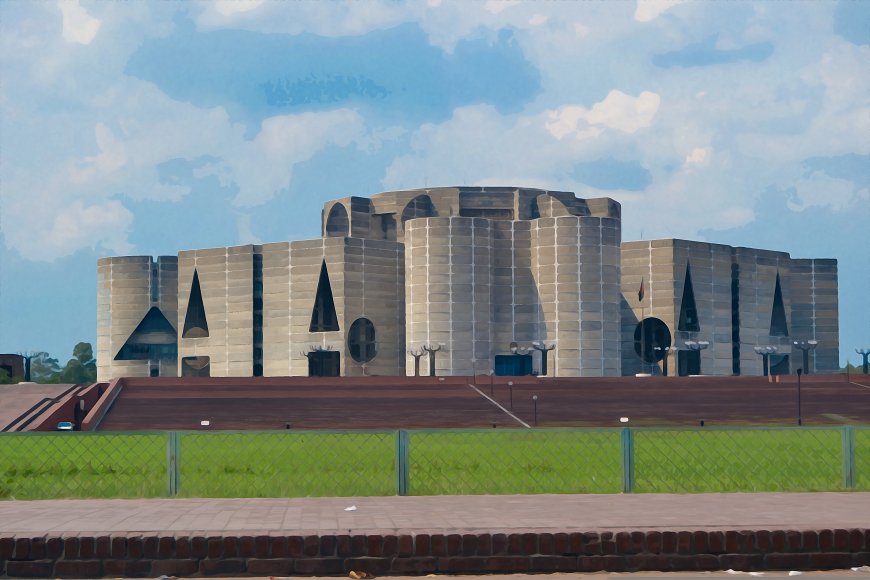
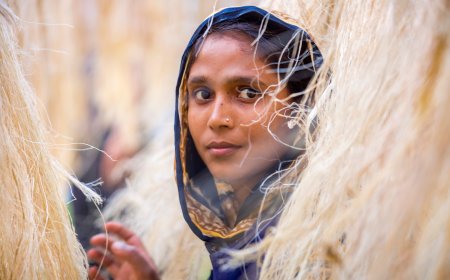
In just two days -- nearly 128 million eligible voters of Bangladesh will go to the polling stations to exercise their democratic right.
Coincidentally, Japan and Thailand are also holding snap elections around this time, offering instructive comparisons in democratic practice, political culture, and institutional maturity.
While turnout may not reach historic highs, it is nonetheless expected that up to 70% of voters will participate.
According to the Election Commission, 42,761 polling centres and 244,469 booths have been prepared nationwide to facilitate voting. Yet, as election day draws near, a palpable sense of anxiety and security concern has settled over the public.
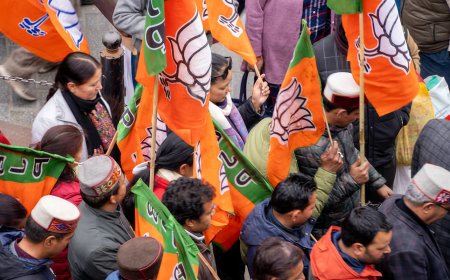
Despite grim predictions from certain quarters about possible election-related violence -- an unfortunate feature that has long characterised elections in this region -- public enthusiasm remains unmistakable. The national mood is animated, even festive: Campaign slogans echo across towns and villages, processions crisscross streets, and canvassers compete loudly for voters’ attention.
Mindful of both the stakes and the sensitivities, the Election Commission has taken extensive measures to prevent any untoward incidents. The Armed Forces, Police, Border Guard Bangladesh (BGB), and auxiliary forces have been deployed across the country to ensure security and maintain public order.
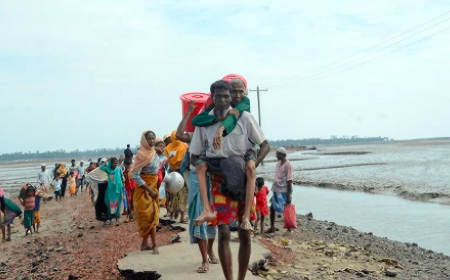
A peaceful, free, and credible election is not merely desirable -- it is imperative. Failure would risk plunging the nation into yet another dark abyss. This election will decisively shape Bangladesh’s internal stability, sovereignty, security posture, foreign policy orientation, geopolitical standing, and overall economic trajectory.
Equally significant, a successful election would ensure an honourable exit for the Interim Government, led by Nobel Laureate Professor Dr. Muhammad Yunus, enabling it to fulfil its pledge to restore democratic governance in line with the people’s aspirations. For the first time in 18 years, citizens may finally savour the genuine experience of voting freely -- without intimidation, manipulation, or coercion.
Notably, nearly 40 million young and first-time voters, many of whom were denied their franchise in the last three deeply flawed elections, will cast their ballots.
The 2026 election is widely expected to be a two-way contest.
On one side stands the Bangladesh Nationalist Party (BNP), which governed the country for four terms -- first under the late President Ziaur Rahman from 1975 until his tragic assassination in 1981, and later under Begum Khaleda Zia during 1991-1996, briefly in 1996 to restore the caretaker government system, and again from 2001-2006 -- altogether more than 18 years.
Debate over the BNP’s successes and shortcomings is both inevitable and legitimate. Yet few would dispute the personal integrity of President Ziaur Rahman or the democratic credentials, fortitude, and moral resilience of Begum Khaleda Zia. She chose to stand by her people rather than flee the country, enduring relentless political persecution, prolonged imprisonment, and sustained intimidation.
The outpouring of public grief and respect -- millions attending her funeral -- mirrored the nation’s response to President Zia’s death some 45 years earlier.
Public perception of political leadership matters deeply. People judge leaders not only by policies and promises, but by demeanour, engagement with ordinary citizens, composure under pressure, and the substance and tone of public address.
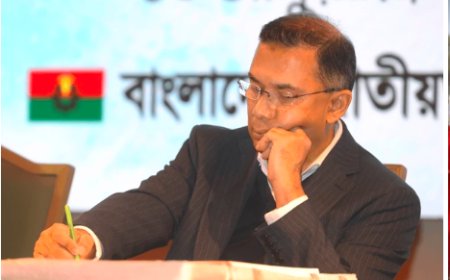
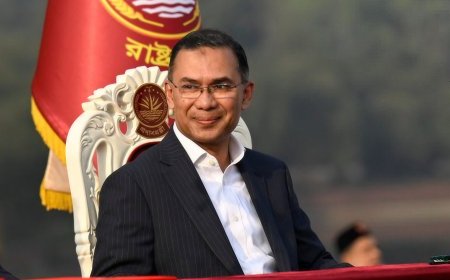
Since his return to Bangladesh, I have closely observed Mr. Tarique Rahman -- his conduct, movements, and body language. To me, he appears a markedly transformed individual, now carrying himself in a manner befitting a national leader.
The composure and restraint with which he dealt with the tragic passing of his mother within days of his return were particularly striking. His manner of receiving foreign dignitaries who came to convey their condolences -- standing alongside his daughter, Barrister Zaima Rahman -- and the brief remarks he delivered in accordance with religious rites at the state funeral, without overt emotional display or public lamentation, reflected poise, maturity, and a distinctly statesmanlike bearing.
On the other side of the contest, the principal challenger, Jamaat-e-Islami Bangladesh, remains an untested and deeply controversial force, lacking experience in governance and burdened with a problematic historical legacy.
Its role in the Pakistan movement of 1947, opposition to the Language Movement of 1952, and, most gravely, its collaboration with the Pakistan army during the 1971 Liberation War, place it in fundamental conflict with the founding values of Bangladesh.
Its current election manifesto appears more aspirational than credible -- an ornate castle built in the air, whose true substance would only be revealed if it ever assumed power. That said, it would be a serious mistake to underestimate Jamaat’s organizational strength and electoral discipline.
Mr. Tarique Rahman, himself a victim of prolonged political persecution and torture, appears to have entered a new phase in his political journey. His return from the UK on December 25 was met with an unprecedented public reception.
As he has since travelled extensively across the country, the popular response has remained consistently enthusiastic, injecting renewed energy and optimism into his party’s ranks.
Strategically significant, too, has been the emergence of Dr. Zubaida Rahman, wife of Mr. Rahman and his daughter Barrister Zaima Rahman, whose strong public appeal -- particularly among women and young voters -- has infused fresh dynamism into the BNP’s campaign. They have articulated youthful aspirations in a way that Jamaat-e-Islami appears notably unable to do.
Various opinion polls conducted by different organisations reveal a consistent trend: BNP leading with 50-70% voter support, Jamaat-e-Islami trailing with under 20%, and the NCP -- an alliance of Gen-Z Monsoon movement activists aligned with Jamaat -- polling around 5-7%.
If these trends hold and the election proceeds without disruption, Mr. Tarique Rahman is likely to emerge as the next Prime Minister of Bangladesh.
Yet, as the saying goes, the proof of the pudding is in the eating. Mr. Rahman’s true test will begin only after assuming office. There are two contrasting paths before any leader: One is to treat the state as a personal fiefdom -- exploiting power for self-enrichment, as witnessed during Sheikh Hasina’s prolonged rule; the other is to emulate President Ziaur Rahman, who regarded leadership as a solemn trust and dedicated himself to serving the nation. Begum Khaleda Zia, too, largely upheld this moral legacy.
Family lineage can be squandered by choosing the wrong path -- or ennobled by choosing the right one.
Mr. Tarique Rahman stands today at a historic crossroads, not only in his own life but in the destiny of the nation. The choice he makes will determine how history remembers him.
Perhaps this is the moment for him to revisit Robert Frost’s timeless poem, The Road Not Taken.
Ultimately, beyond all calculations and contestations, it is the people-through their vote -- who will decide who leads the nation and shapes its destiny.
Ashraf Ud Doula is a freedom fighter, retired Major, former Secretary, and an Ambassador