
































![A Ledger of the Soul: Navigating the Allah-Bhagavant Nexus in a 19th-Century Puruṣākāra Jñāna Caupara [Gyan Chauper]](https://counterpointbd.com/uploads/images/202608/image_430x256_6a93baa3b09a7.jpg)


















The Coordination Crisis of Geoeconomic Strategy
Nothing currently in place would produce a different result this time, and a mechanism, not a further calendar date, is what the Korean and Japanese examples both actually supply.

On 6 February 2026, at the Japanese Ministry of Foreign Affairs in Tokyo, Bangladesh's former commerce adviser Sheikh Bashir Uddin signed the country's first-ever Economic Partnership Agreement, and commerce secretary Mahbubur Rahman told the Daily Star later to make one thing clear: This was "the first EPA Japan has signed with any LDC."
The distinction mattered because Bangladesh is due to leave the LDC category within months, and the deal, which grants duty-free access to 7,379 Bangladeshi products including RMG, was built to survive that departure. Japan eliminated tariffs on Bangladeshi textiles.
Dhaka agreed to phase out its own tariffs on Japanese steel and automobile parts over a longer horizon, according to an announcement from Japan's foreign ministry.
The stakes are not abstract.
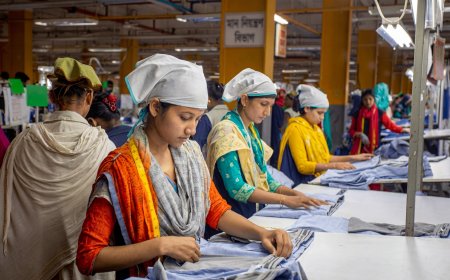
RMG still accounts for more than four-fifths of Bangladesh's export earnings, which is a concentration that has barely moved in a decade, and the country's remaining LDC privileges, tariff-free entry to dozens of markets, are the scaffolding holding that single-sector economy up.
Losing the scaffolding without a replacement is the scenario every Bangladeshi trade official has spent 2026 trying to avoid. The Japan agreement is one replacement.
It will not be the only one Dhaka needs, and it is worth asking whether the country understands the difference between collecting replacements and being protected by them.
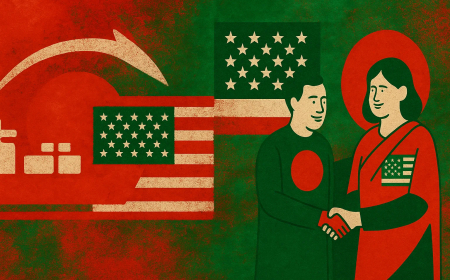
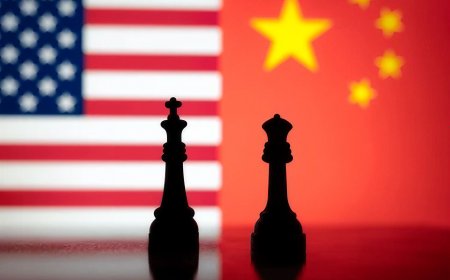
Three days after Tokyo, on 9 February, Bangladesh signed a second and an “uncomfortable” agreement ever, and this time with Washington. The United States Agreement on Reciprocal Trade (ART) cut the American tariff on Bangladeshi exports from 20% to 19%.
A single percentage point, in exchange for commitments reaching well past trade: Roughly $15 billion in liquefied natural gas purchases over 15 years, at least $3.5 billion in American agricultural imports, an order for 14 Boeing aircraft for Biman Bangladesh Airlines.
An undertaking to increase purchases of American military equipment, and language restricting Bangladeshi procurement from countries classified as non-market economies, understood by nearly everyone who read it as aimed at China. Professor Selim Raihan, executive director of the South Asian Network on Economic Modeling, did not treat the coincidence of timing kindly.
The deal was signed by an interim government days before a national election, and in his reading, "Bangladesh is actually giving special and differential treatment to the United States."
Two trade agreements inside a single week, one warmly received and one heavily criticized, look at first like inconsistency. They are not. They are the same country doing the same thing twice: Trading market access and political goodwill for insurance against a graduation date it can no longer be certain it controls.
Whether that insurance was well-priced is a separate question, and on the American deal, the honest answer is probably not! But the pattern extends beyond these two agreements.Singapore is simultaneously negotiating its own free trade agreement with Dhaka and pursuing an estimated $800 mn to $1 bn investment in the Bay Terminal at Chittagong port.
And South Korea is negotiating a Comprehensive Economic Partnership Agreement of its own. Bangladesh is assembling a portfolio for Japan, the USA, Singapore, South Korea, four relationships on four different sets of terms, arriving inside a single calendar year.
Has Dhaka therefore discovered geoeconomic strategy?
Only in the sense that it has discovered the deals. The other Asian economies running comparable diversification exercises right now were not simply accumulating agreements. Each built a domestic mechanism to decide which agreements to pursue and on what terms before signing anything.
India's approach, which the Brookings Institution's Tanvi Madan has described as denial, indigenization and diversification, restricts Chinese vendors from sensitive sectors while funding Indian manufacturing through the Production Linked Incentive scheme and pursuing new agreements with Australia.
The European Free Trade Association, the United Arab Emirates and Britain. It has not solved India's underlying problem.
According to India's own Ministry of Commerce and Industry, the country's trade deficit with China grew from $53.57 bn in 2018-19 to $112.16 bn in 2025-26, the year China overtook the United States as India's largest trading partner, even after five years of restrictions.
If a four trillion dollar economy with the diplomatic weight of the Quad cannot outmaneuver its China dependency through denial and incentive alone, a much smaller economy built overwhelmingly on one export sector should not expect to either.
Japan offers a cleaner lesson, and one Bangladesh has already, if quietly, been folded into. Since April 2023, Japan's Ministry of Foreign Affairs has run a program called Official Security Assistance, restricted at launch to four "like-minded" countries: the Philippines, Malaysia, Fiji and Bangladesh.
On 15 November 2023, Tokyo signed a 575 million yen grant with Dhaka for patrol boats and surveillance equipment for the Bangladesh navy, part of a program whose budget has since grown from roughly $14 million in its first year to nearly $56 million by fiscal 2025, with recipient countries expected to reach around a dozen in fiscal 2026.
Most commentary on Bangladesh's foreign policy this year has treated the EPA as evidence of a new Tokyo relationship. But it is not new. Bangladesh has been inside Japan's economic security architecture, in a small but real way, for close to three years.
The trade agreement reads better as the second stage of that relationship than the first. South Korea supplies the institutional model Bangladesh conspicuously lacks.
After successive Chinese and Japanese supply disruptions, Seoul's Ministry of Economy and Finance stood up a Supply Chain Stabilization Committee under the Framework Act on Supply Chain Stabilization Support for Economic Security, which took effect on 27 June 2024.
The committee, which is chaired by the former Deputy Prime Minister Choi Sang-mok and comprises twenty-five members including outside experts, functions as what Korean officials call a control tower.
It is a single body authorized to bind the finance, trade and industry ministries to one decision when a shock hits, rather than each ministry responding on its own clock.
Its stated target is to cut Korea's import dependence on any single country, for a designated list of critical items, from an average of 70% in 2022 to 50% or lower by 2030. Whether it hits that target is uncertain. That it exists, has a legal basis, and meets on a schedule is not.
Bangladesh has nothing resembling it. A joint conference of the Ministry of Foreign Affairs and the BIDA proposed, in mid 2026, a National Economic Diplomacy Council under the Prime Minister's Office, bringing the finance, commerce and industries ministries, Bangladesh Bank and the National Board of Revenue under one coordinating roof.
It remains a conference proposal. It has no statute behind it, no standing chair, and no ministry bound to attend. Korea did not build its committee out of foresight. It built it after successive urea and semiconductor material shortages made the absence of one too costly to ignore.
Bangladesh has not yet had its own equivalent shock, though its foreign exchange reserves have fallen from $46 bn at the end of 2021 to $30 bn by April 2026, and its tax-to-GDP ratio sat at just 6.6% in the last fiscal year, among the lowest anywhere in the world! Whether that counts as a shock already underway is a matter of definition rather than fact.
Which brings the argument to the word doing the heaviest lifting in Dhaka's own paperwork: Smooth. The government's guiding document for the whole graduation process is formally titled the Smooth Transition Strategy, and the word recurs, largely unexamined, across ministerial statements.
Smooth is doing two jobs in that sentence. It names an intended outcome, and it quietly asserts that the outcome is already secured. Dr Fahmida Khatun, executive director of the Centre for Policy Dialogue (CPD), has been the most consistent voice puncturing that second claim, writing that Bangladesh's original five-year preparatory window was granted after an earlier pandemic-related extension.
That was meant for reform and institution building but was instead absorbed by a run of overlapping crises: A change of government in mid 2024, instability in the banking sector, and macroeconomic pressure that left preparation for graduation itself incomplete.
So Does the Extension Fix that?
Bangladesh asked for three more years in February 2026, and on 21 July the Economic and Social Council forwarded the request to the General Assembly with a recommendation, adopted by consensus, that the matter be settled before the current graduation date of 24 November 2026. Approval looks likely.
It is not yet confirmed, and Dr. Fahmida Khatun's own verdict on whether it would be enough does not wait for that confirmation: "Without credible reforms, deferment would merely postpone the crisis."
The line lands because it describes exactly what happened the first time an extension was granted. Bangladesh's graduation was originally set for 2024, and a pandemic-related shock pushed that date back to 2026, the two-year window that, by Dr. Fahmida Khatun's own account, was spent managing a political transition and a banking crisis rather than building the institutions the extension was meant to fund.
Nothing currently in place would produce a different result this time, and a mechanism, not a further calendar date, is what the Korean and Japanese examples both actually supply.
What would have to change is not complicated to describe, even if it is evidently hard to do. Bangladesh needs a coordinating body with the legal standing Korea's committee has, and the proposed Bangladeshi council does not.
A single chair senior enough to bind the foreign affairs, finance, commerce and industry ministries, Bangladesh Bank and the revenue board to one negotiating position, so that the Japan agreement, the American one, the pending Singapore deal and the pending Korean one stop being four separate files run by four separate teams and start being read against each other, the way Seoul reads its own agreements against Tokyo's and Brussels's before signing its own.
Whether this happens before the next external shock, rather than after it, is the actual question. Everything in Bangladesh's institutional record this year- a proposal without an act, a strategy called smooth that has not yet earned the word- suggests the answer is after.
Md. Alif Ifteker Seaum is a Research Officer at the Bangladesh Enterprise Institute (BEI), working on politics, foreign policy, and international affairs.