









































































The Truth About the US Tariffs
When viewed through the lens of the so-called Walmart Effect, the outcome is not necessarily one-directional and may even create certain opportunities for a low-cost producer like Bangladesh.

The recent decision by the United States to impose an additional 10% tariff on imports from Bangladesh and several competing countries has triggered widespread concern in policy circles and the media.
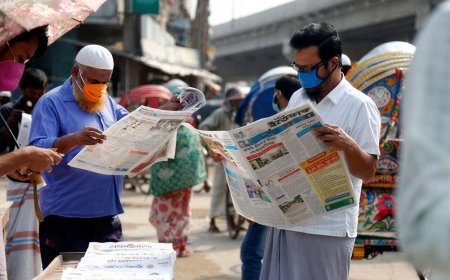
Reports largely frame the development as negative, highlighting risks to Bangladesh’s export competitiveness -- particularly in the ready-made garments (RMG) sector. However, a deeper economic analysis suggests that the impact may be more nuanced.
When viewed through the lens of the so-called Walmart Effect, the outcome is not necessarily one-directional and may even create certain opportunities for a low-cost producer like Bangladesh.
The Walmart Effect, often associated with the retail strategy of Walmart, refers to the tendency of consumers -- especially during economic downturns -- to shift toward cheaper goods.
This phenomenon was clearly visible during the Global Financial Crisis of 2008-09, when falling incomes and economic uncertainty led consumers in developed countries to prioritize affordability over brand value or quality.
As a result, demand for low-cost products surged, benefiting discount retailers and low-cost manufacturing countries.
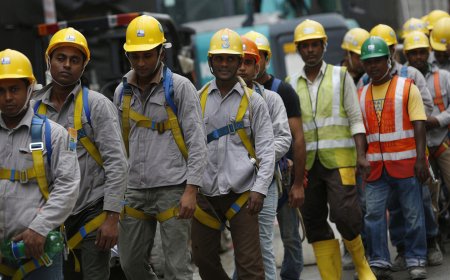
Bangladesh’s export structure fits squarely within this framework. The country has built its global competitiveness on the ability to produce large volumes of low-value garments at extremely competitive prices.
Unlike countries such as China or Vietnam, which have gradually moved up the value chain into higher-end apparel and diversified manufacturing, Bangladesh remains heavily concentrated in basic, price-sensitive segments of the market.
This structural positioning is often seen as a weakness -- but under certain global conditions, it can become a strength.
A useful historical parallel is the phase-out of the Multi-Fiber Arrangement (MFA) in 2005.
At the time, many analysts predicted that Bangladesh’s apparel exports would collapse due to increased competition from China, which was expected to dominate global markets once quota restrictions were removed.
Contrary to these predictions, Bangladesh not only survived but expanded its exports significantly.
Buyers continued sourcing from Bangladesh because of its unmatched cost advantage in basic garments and their need to diversify supply chains.
This historical experience is important when analyzing the current tariff situation. The core argument presented by many commentators is that higher US tariffs will reduce demand for imports and thus harm Bangladesh’s exports. While this is true in a general sense, it overlooks an important mechanism: relative price shifts and substitution effects.
When tariffs increase, the immediate effect is a rise in import prices in the United States. This reduces consumers’ real purchasing power. In response, consumers often adjust their consumption patterns by trading down -- from higher-priced goods to more affordable alternatives.
In the apparel sector, this could mean shifting from premium brands or higher-quality garments to basic, low-cost items. In such a scenario, Bangladesh’s export profile aligns well with changing demand patterns.
However, this does not mean that tariffs are unequivocally beneficial. The impact depends on several interacting factors.
First, tariffs apply not only to Bangladesh but also to its competitors. According to the reported policy, countries such as India, Vietnam, Indonesia, and Cambodia are also subject to similar tariff increases, ranging from 10-12.5%.
This suggests that Bangladesh’s relative competitive position may not change significantly. If all major suppliers face similar cost increases, buyers may continue sourcing based on existing relationships, production capacity, and reliability rather than shifting dramatically from one country to another.
Second, tariffs can reduce overall demand in the market. While some consumers may switch to cheaper goods, others may simply cut back on consumption altogether. Apparel is often a discretionary purchase, and in times of higher prices or economic uncertainty, consumers may delay or reduce spending.
This means that even if Bangladesh captures a larger share of the low-end segment, the total size of the market could shrink, limiting export growth.
Third, the role of buyers -- large retailers and brands -- is critical. In global supply chains, buyers often have significant bargaining power. When faced with higher tariffs, they may try to maintain retail prices to avoid losing customers.
To do so, they pass cost pressures back to suppliers by negotiating lower prices. For Bangladeshi exporters, this translates into tighter margins rather than higher revenues. In effect, the benefit of increased demand for low-cost goods may be offset by declining profitability.
Fourth, there are structural challenges within Bangladesh’s export model. The country’s heavy reliance on low-value products limits its flexibility. While it can benefit from a shift toward cheaper goods, it struggles to capture value when market conditions favor higher-quality or differentiated products.
Over time, this dependence on low-margin segments can constrain income growth, investment, and technological upgrading.
The media’s negative framing of the tariff issue largely reflects these broader concerns. Reports emphasize uncertainty, potential demand contraction, and the risk of additional trade restrictions.
They also highlight ongoing investigations by US authorities into issues such as forced labor and overcapacity. These factors introduce an element of unpredictability that can affect buyer confidence and long-term sourcing decisions.
At the same time, export data cited in the report shows that Bangladesh’s exports to the US have continued to grow, even after earlier rounds of tariffs. In the 2025-26 fiscal year, RMG exports increased by 2.63% compared to the previous year.
This suggests that the relationship between tariffs and export performance is not straightforward. Other factors -- such as global demand conditions, supply chain adjustments, and Bangladesh’s cost competitiveness -- play an equally important role.
Industry leaders quoted in the report also provide a more balanced perspective. They note that as long as tariff rates remain similar across competing countries, Bangladesh is unlikely to face a significant disadvantage.
However, they express concern about declining demand and the possibility of further tariffs arising from ongoing investigations. This reflects a pragmatic understanding of the situation: the immediate impact may be manageable, but future risks remain.
In evaluating the overall impact, it is useful to distinguish between short-term and long-term effects. In the short-term, the Walmart Effect may indeed support demand for Bangladesh’s low-cost garments, especially if US consumers respond to higher prices by trading down.
In the long-term, however, persistent reliance on low-value segments and exposure to external policy shocks could limit the sector’s resilience.
Ultimately, the key question is not whether tariffs are purely good or bad, but how Bangladesh positions itself within a changing global trade environment.
The current situation highlights both the strengths and vulnerabilities of its export model. Its ability to produce at scale and at low cost remains a powerful advantage. But to sustain growth and improve profitability, there is a need to gradually move up the value chain, diversify products, and strengthen compliance with international standards.
In conclusion, the conventional narrative that US tariffs will simply harm Bangladesh’s exports is incomplete. While there are clear risks -- such as reduced demand and margin pressure -- there are also mechanisms that could mitigate or even offset these effects.
The Walmart Effect provides a useful lens for understanding how consumer behavior may shift in response to higher prices.
However, the final outcome will depend on a complex interplay of factors, including relative tariffs, buyer strategies, global demand trends, and Bangladesh’s own structural evolution.
A balanced assessment requires acknowledging both sides of this equation rather than focusing solely on negative or positive interpretations.
In the meanwhile, exporters need to be efficient in negotiating prices with foreign buyers so that they can be price-makers, rather than price-takers.
Nasrin Sheely is an analyst and commentator based in Dhaka, Bangladesh, specializing in banking, economic policy, and international trade.