




























































What did February 12 Tell Us?
The immediate challenge before Prime Minister Tarique Rahman is to slow down the gyration of the turning wheel and to set us on a straight path. To assess such possibilities we need to clearly understand the political lessons from the recent elections and to explore the pitfalls which lie ahead.
The Historical Context
The elections on February 12, represent yet another turning of the political wheel in Bangladesh which was set in motion with the landmark elections of December 1970 which culminated in the emergence of an independent Bangladesh.
Landmarks in the cycle of events include:
December 16, 1971: The Liberation of Bangladesh
August 15, 1975: The Assassination of Bangabandhu
November 1975: The Assumption of Power by Ziaur Rahman
May 30, 1981: The Assassination of Ziaur Rahman
March 24, 1982: The Assumption of Power by H.M. Ershad
December 1990: The Downfall of Ershad
March 1991: The Beginning of the Era of Caretaker Government
January 11, 2007: 1/11 and the Phase of Cantonment Rule
June 30, 2011: The 15th Amendment and the Autocratization of the Sheikh Hasina regime
August 5, 2024: The Exit of Sheikh Hasina
February 12, 2026: Elections to the 13th Jatiya Sangsad
Each of the above landmark events has kept the wheel of politics gyrating. After 55 years of national existence we have failed to stabilize the turning wheel so that the political history of Bangladesh can move forward along a straight line towards a predictable future.
The immediate challenge before Prime Minister Tarique Rahman is to slow down the gyration of the turning wheel and to set us on a straight path. To assess such possibilities we need to clearly understand the political lessons from the recent elections and to explore the pitfalls which lie ahead.
Political Lessons from the Elections
Predicting winners
There was much speculation over the outcome of the elections. In the early stages of the Interim government (IG) headed by Nobel Laureate Prof. Muhammad Yunus there was a universal belief that the BNP would win the election. The only issue related to the size of its victory.
Following the overwhelming victory of the Islami Chattro Shibbir (ICS), the student front of the Jammat-e-Islami party (JI), in the student union elections to four public universities, a clearer appreciation emerged of the growing strength of the JI amongst the youth of Bangladesh.
A series of massive public meetings mobilized by JI across the country provided further evidence of their widening political support.
Once an election date was declared the JI could, at an early date, announce the names of prospective candidates in all 300 constituencies whilst all other parties had not even begun to apply their minds to such a possibility.
With such evidence of the organizational capacity and public support for the JI, backed by evidence of some polls, JI was viewed as an increasingly strong challenger to the electoral domain of the BNP.
As the election date was declared there was growing speculation that the JI may indeed emerge with the largest plurality. Political elements within the US embassy, presumably based on their intelligence reports, even talked of a potential JI electoral victory and indicated that the US government (USG) would not be averse to doing business with a JI-led government.
Upto February 12, the outcome of the election remained uncertain, with most analysts reckoning that the JI would at least emerge with a strong presence in the 13th Sangsad.
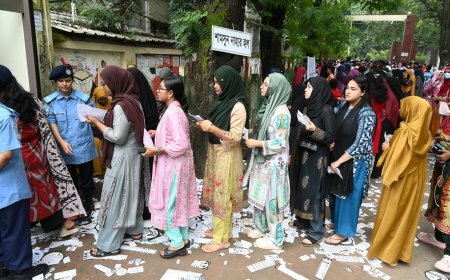
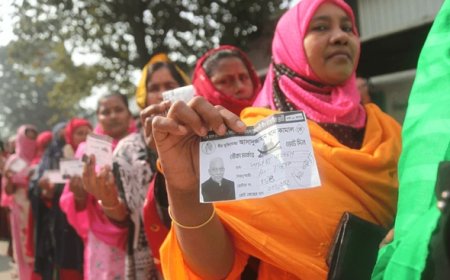
The voting on February 12 belied the optimism projecting the JI’s electoral fortunes. The BNP led alliance won an overwhelming victory with a 211 seats, giving them a commanding two-thirds majority in the house with a vote share of 50%.
The JI-led alliance won 73 seats of which 6 seats accrued to its electoral ally, the NCP. The vote share of their electoral alliance was 31%.
The regeneration of the BNP
The BNP victory indicated that the party retained a strong presence throughout the country. 14 years of persecution by the AL regime, with thousands of its workers jailed, many killed or disappeared, with limited opportunities of convening public meetings, did not inhibit the BNP from maintaining a sizeable support base across the country.
The regeneration of the BNP as a political force may in some measure owe to the tribalization of Bangladesh’s politics. Bangladesh’s increasingly confrontational politics polarized the polity into two exclusive camps, with a progressive distancing between the AL and BNP at all levels.
Within this polarized universe a winner-take all culture further widened the divide. This growing polarization, with perpetual apprehension of persecution backed by threats of physical violence, had a strong unifying influence within the BNP ranks at all levels. The tribalization of the political process, with political identity assuming the properties of an ethnic divide, reduced the scope for opportunistic behavior within the BNP ranks through seeking to build alliances with the AL at the local level and to even desert their party to join the AL.
Little evidence remained of the questionable hypothesis of a political settlement between the two parties.
In the years before the 2024 election, the BNP demonstrated its resilience and political strength through its capacity to convene large public meeting inspite of many roadblocks placed before them by the AL government.
The imprisonment of the BNP president, Khaleda Zia, on flimsy charges of corruption, her ill health and house arrest kept the party under relentless pressure.
The courage and leadership qualities demonstrated by its Secretary General, Fakhrul Islam Alamgir, and his senior allies under such adverse circumstances should also be recognized in keeping the BNP alive as a visible political force.
Hasina’s long term goal of marginalizing the BNP from Bangladesh’s politics turned out to be a complete failure and indeed became counter-productive through strengthening unity within the BNP at the grassroots level as a survival strategy.
The emergence of a 21st century leader
In this extended period of oppression on the BNP, Tarique Rahman, the son of Ziaur Rahman and Khaleda Zia, emerged as the heir apparent but he remained in absentia, ensconced in Richmond, an upscale London suburb.
It was believed that his absence distanced him from the rank and file and weakened the leadership of the party which remained dependent on his remote leadership, particularly after Khaleda Zia was incarcerated and her health deteriorated.
This view about Tarique has been contested by some BNP leaders. They have argued that even though he was legally embargoed by the AL regime from establishing a public presence in Bangladesh, in this virtual age he was in daily touch with not just the party leaders in Dhaka but with the rank and file.
After the fall of Hasina on August 5, when this embargo no longer prevailed, Tarique engaged in daily public conversations with his supporters where he projected a clearer image of the leader who remained in waiting to take over the reins of power.
Whatever may be the truth behind these varying assumptions, Tarique’s long absence and even his surprisingly late return to Dhaka when his mother Khaleda Zia was on her death-bed, evidently did little to diminish his popularity and hold over the BNP.
This was demonstrated in the massive reception accorded to him when he returned to Dhaka after 17 years on December 25, 2025 along with his wife, Zubaida Rahman and daughter Zaima Rahman (and cat Zebu) who, by their presence, further reinforced his public image.
Tarique’s subsequent high intensity election campaign across the country, his capacity for articulate public speaking, his command over the issues of the day and the concerns of his voters, indicated that a leader of consequence had indeed emerged out of this long period of hibernation in London.
Tarique’s new persona projected sobriety, good sense, tolerance and a clear liberal-democratic consciousness which was very different from the unscrupulous image he projected in the days when he presided over Hawa Bhaban, during the 2001-2006 term of Khaleda Zia in power.
Today as Tarique steps into office as Prime Minister of Bangladesh, he arouses considerable public expectation that much of what he has so far projected of a reconstructed political leader may hold promise for the future. The world will now be able to observe, over the next several months, whether a new leader of consequence has indeed emerged.
The emergence of a third force: The rise of the Jamaat
If Tarique projects an image of a renovated and mature leader ready to take over the reins of power, the perhaps more dramatic political transformation needs to be ascribed to the JI.
In the aftermath of August 5, the JI, in the public mind had not yet disassociated itself from its collaborationist role with the Pakistani army in their war against the Bangladesh liberation struggle and the genocide inflicted on our people.
This historic image has, over the years, superseded its persona as an Islamist party committed to draw upon Sharia law to govern Bangladesh.
Ever since the JI was restored into the political area of Bangladesh by Ziaur Rahman in 1979, the party has maintained a low key but visible presence in Bangladesh politics.
It participated with the AL and BNP in the anti-Ershad movement, allied with the BNP during and after the 1991 elections, and participated with the AL in the campaign against Khaleda Zia’s regime in 1994/95 for elections under a caretaker government.
The JI eventually coalesced with the BNP in its victorious 2001 election campaign and held two cabinet positions in the Khaleda regime from 2001-2006. It again contested elections as an ally of the BNP in the 2008 elections.
In this extended period, the JI has projected itself as an active presence in democratic politics, willing to change alliances when convenient, without explicitly articulating Islamist issues in its political campaigns.
It has remained quiet about its role in 1971 and only tended to be drawn out on this issue if it is compelled to do so by a particular interrogator.
During the recent 17 year tenure in power of Sheikh Hasina, the JI’s political fortunes experienced a sharp downturn where it was exposed to severe repression.
Its three decades of engagement in Bangladesh politics including a five year tenure in the cabinet of Khaleda Zia between 2001-2006, did not restrain Sheikh Hasina from committing herself to eviscerating the JI as a political force.
Using the instrument of War Crimes trials to try the JI leaders for their collaboration in the genocidal acts of the Pakistani army in 1971, several of their top leaders including their Ameer, Matiur Rahman Nizami, were convicted and executed.
The party’s political activities were blocked through various legal and unofficial actions by the AL regime, its leaders at various levels were detained or driven underground, its funds were seized and its offices closed down.
It is remarkable that under such conditions the JI kept itself alive as an underground force, retained the loyalty of its workers, the support of its followers, and maintained its capacity to raise the funds needed to support its social activities.
The JI’s social programs were not only continued but expanded under the radar screen and played an important role in sustaining its support base across the country. Where needed, its workers took shelter in various parties including the BNP and even the AL, or within their student organizations in the universities.
When the opportunity presented itself in July 2024 the JI’s student front, the ICS, could play an active role in the student mobilization against the Sheikh Hasina regime and emerge as a victorious vanguard element in the mass uprising.
Its rapid and large scale re-emergence in the public sphere after August 5 demonstrates its strategic thinking and organizational efficiency.
If it can extrapolate its political skills, demonstrated in the uprising and the recent election campaign, into constructing a positive and effective role as the principal opposition party in the 13th Sangsad, the prospect of the JI emerging as a serious challenger for electoral office in 2031 appears a realistic possibility.
How it will reposition itself in office, both politically and ideologically remains to be seen.
The JI remains committed to the long game. Even though it has won just over one fifth of the seats in the 13th Sangsad it commands the electoral support of a third of the electorate, a strong base among the youth of the country, manifested through its electoral alliance with NCP and victories of the ICS in public university elections.
In its electoral campaign, the JI projected itself not through Islamist issues but as a party committed to good governance, particularly targeting corruption.
The JI is now clearly entitled to proclaim itself as a third force in Bangladesh politics which can now challenge the political duopoly exercised by the AL and BNP ever since the restoration of democracy in 1991.
The future of the National Citizen Party (NCP)
The future of the JI’s partner, the NCP, remains more problematic. The election of six NCP candidates including three of its leaders was a commendable performance. Two of its leaders, were narrowly defeated by BNP stalwarts but accumulated sizeable votes.
The 3% vote share of the NCP, accumulated across only 30 constituencies, is a creditable performance for a new party made up largely of young people. It remains to be analyzed as to how far the NCP’s electoral fortunes owed to JI’s active support at the constituency level and how much of this vote was actually a vote for JI. Such a psephological exercise will provide a more accurate assessment of the NCPs ownership of the youth vote compared to the JI.
The JI has made a firm political investment in the NCP through the active support of its cadres in the 30 constituencies allocated to the NCP during the elections. It is unlikely that the JI provided a similar level of ground support to its other allies, mostly Islamist parties, who could thereby win only three seats.
The JI’s investment in the political fortunes of the NCP is further manifested in its decision to assign the politically important position of Chief Whip, in its parliamentary alliance, to Nahid Islam the leader of the NCP.
This move indicates that the JI-NCP alliance is more than an alliance of convenience and has longer term implications.
Given the growing contribution of the JI to the political growth of the NCP, its autonomy being progressive narrowed. It is not clear if the NCP can even reclaim its potential as a vanguard party for students and the youth of Bangladesh.
On the student front it is the ICS which has emerged as the leading force whilst some student groups once expected to be associated with the NCP have either opted not to join the party or have abandoned it, once its chose to ally itself with the JI.
As a result, the NCP is now very much seen as a junior parter of the JI whereby its distinctive political identity erodes by the day.
It remains to be seen how far the NCP can survive as an autonomous political force during the tenure of the 13th Sangsad.
Rehman Sobhan is an eminent economist and founder of the Centre for Policy Dialogue.