



































The Paradoxes of Bangladesh’s Qawmi Madrasa System
Bangladesh is now an independent, Muslim-majority country where Islam enjoys constitutional recognition, and as of now, the Deobandi leadership has a strong understanding with the running government.

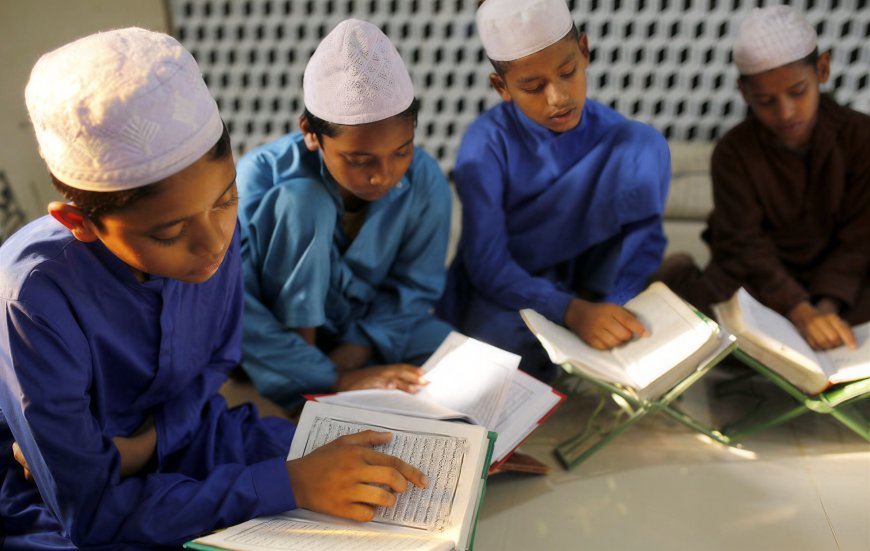
Religious scholars occupy a distinctive position in Bangladeshi society. They command a degree of reverence that few other professions enjoy. For many Muslims, an alem is not simply an educated individual but a custodian of sacred knowledge whose learning confers considerable moral authority.
The Qawmi madrasa system, which produces many of the country’s traditional Islamic scholars, has long benefited from this respect.
Yet two controversies increasingly complicate this relationship. The first concerns the assertion of religious authority over public space, particularly through waz mahfils whose amplified sermons disrupt surrounding communities.
The second is more disturbing: Recurring reports of children sexually abused in madrasa institutions, sometimes by the very teachers entrusted with their religious and moral education.
Beyond these controversies lie contradictions in the historical, educational, and socioeconomic foundations of the Qawmi system. They offer an explanation for how institutions that have traditionally commanded public reverence may themselves be contributing to its erosion.
The Paradox of Religious Authority
The Qawmi tradition emerged from the Deobandi movement in nineteenth-century British India, when colonial rule was transforming Muslim political and intellectual life. Its founders sought to preserve Islamic scholarship through an independent, community-funded educational network.
This autonomy helped sustain religious learning across generations but also contributed to an educational system whose priorities and professional pathways remained substantially separate from mainstream institutions.
Historically, Islamic scholars across much of the Muslim world enjoyed considerable financial resources, institutional autonomy, and social influence, sometimes more than the sultan. Colonial transformations eroded many of these foundations.
Yet the aspiration to exercise broad religious influence survived, reinforced by a scholarly tradition that regards religious scholars as inheritors of prophetic knowledge and custodians of society’s moral direction.
Herein lies the paradox.
Qawmi students spend years acquiring knowledge that confers considerable religious authority within their communities, cultivating a conviction that they possess a divinely sanctioned responsibility to guide society. Yet their specialized training provides limited access to the professions and institutions through which much of contemporary social influence is exercised.
They are educated to regard themselves as moral authorities over society without necessarily acquiring the institutional means to exercise that authority.
This tension offers a revealing perspective on the familiar waz mahfil. Although these gatherings might serve genuine devotional and communal purposes, organizers sometimes install powerful loudspeakers far beyond their venues, broadcasting sermons across entire neighbourhoods, occasionally late into the night.
Students preparing for examinations struggle to concentrate, patients lose their rest, and households find their routines disrupted. Yet the broadcasts continue. What constitutes religious devotion for participants becomes an involuntary burden for others.
But the objection extends beyond noise pollution. Why must a sermon intended for those attending a gathering reach people several streets, sometimes kilometres, away?
Sound scholar R. Murray Schafer’s concept of sound imperialism offers a revealing perspective: Amplified sound can become an instrument of domination over acoustic space.
In this context, however, the practice carries a deeper psychological significance. Unable to exercise the social influence they believe religious scholars deserve in a Muslim-majority society, some religious actors may find in amplified preaching an alternative means of asserting their authority.
By projecting sermons across entire neighbourhoods, they feel that they command the surrounding public space, compelling even unwilling residents to hear their voices.
This offers a form of psychological gratification: The reassurance that, despite their limited influence within mainstream institutions, they can still assert their presence and make their authority felt across society.
The Paradox of Abuse in Institutions of Moral Education
A more disturbing contradiction emerges within the madrasas themselves. Institutions dedicated to cultivating Islamic morality have repeatedly appeared in reports of child sexual abuse, sometimes involving the very teachers responsible for their students’ ethical formation.
According to a November 2026 report by JusticeMakers Bangladesh in France, 158 boys were identified as victims in 100 reported incidents of sexual violence occurring in madrasas during the first ten months of 2026. Madrasa teachers were among the accused in 93 incidents involving 131 boys. This is a reported number only. Many such cases remain unreported in the country.
The contradiction is difficult to ignore. How do institutions devoted to teaching religious morality become environments in which children suffer such violations?
Understanding the institutional conditions that may enable abuse requires examining the socioeconomic cycle through which parts of the Qawmi system sustain themselves.
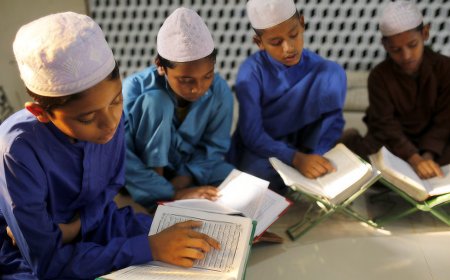
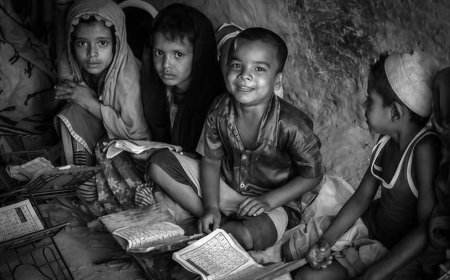
For economically disadvantaged families, Qawmi madrasas often provide an accessible educational pathway, particularly through lillah arrangements offering food and accommodation through charitable contributions.
Some families also regard religious education as an alternative for children considered less academically promising, reflecting a familiar social calculation: If a child is unlikely to succeed in duniya, perhaps he can succeed in akhirah.
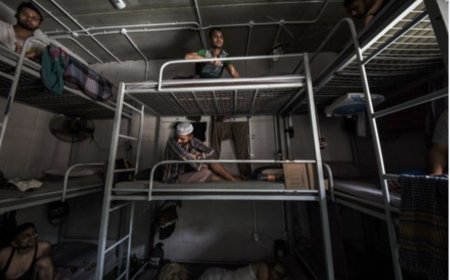
For many of those children, disadvantage continues inside the institution. Donation-dependent madrasas may involve students in fundraising, exposing them to rejection or humiliating encounters. Limited resources can also mean congested accommodation, inadequate privacy, and few recreational opportunities.
Research by Abdullah Al Hussain documented students sleeping in classrooms converted into dormitories, illustrating the constraints under which some institutions accommodate vulnerable children. Such conditions can diminish opportunities to develop confidence, dignity, and a secure sense of self.
But the more consequential problem is that these limitations may follow students into adulthood.
Despite the 2018 recognition of Dawra-e-Hadith as equivalent to a master’s degree in Islamic Studies and Arabic, many Qawmi graduates continue to face restricted mainstream employment opportunities.
Using Bangladesh’s 2022 Household Income and Expenditure Survey, economist Rubaiya Murshed found an approximately seven-percentage-point employment disadvantage for Qawmi-educated individuals relative to their general-educated counterparts after accounting for observed characteristics.
Average hourly earnings among employed respondents were Tk 53.9 for Qawmi graduates, compared with Tk 80.5 for those with general education. These associations do not establish that schooling alone causes the disparities, but they reveal significant socioeconomic disadvantages.
The implications extend beyond individual livelihoods. Graduates unable to access mainstream professions may return to the same educational sector as teachers or establish their own community-funded madrasas. For some, this is less a carefully prepared educational vocation than one of the few accessible livelihood options.
New institutions operating with limited resources may then reproduce the same narrow professional pathways, leaving successive generations facing comparable constraints.
This resembles what sociologists Pierre Bourdieu and Jean-Claude Passeron described as social reproduction: Education can perpetuate existing inequalities rather than overcome them. An educational system established to preserve just religious scholarship may thus become a mechanism for reproducing its own socioeconomic limitations.
The consequences are visible in teachers’ livelihoods. An October 2026 investigation by The Daily Campus reported monthly salaries of approximately Tk 7,000–15,000 for many Qawmi teachers, sometimes accompanied by prolonged payment delays. One residential teacher reportedly left after seven months without receiving his salary. Religious reverence, evidently, does not necessarily translate into professional dignity or financial security.
Here, the relationship between institutional environments and human behaviour becomes particularly important.
Consider Bangladesh’s public buses and the Dhaka Metro. Passengers encounter damaged seats and defaced interiors on many poorly maintained buses, sometimes contributing to the deterioration themselves, yet may behave differently aboard the cleaner, more orderly Metro.
The contrast illustrates how surroundings can shape behavioural expectations, encouraging either further neglect or greater responsibility.
Now consider someone who spends his formative years in poorly equipped residential institutions, experiences humiliation while collecting donations, lacks meaningful recreation, and graduates into a labour market offering limited alternatives. He may eventually return as an underpaid teacher, carrying substantial responsibilities while struggling with financial insecurity, diminished self-worth, and limited opportunities for personal fulfilment.
Criminologist Robert Agnew’s General Strain Theory helps explain how accumulated deprivation, humiliation, and blocked opportunities can generate frustration and resentment, sometimes encouraging harmful coping behaviours.
In an institutional environment where teachers exercise considerable authority over dependent children, these pressures raise questions about how psychological distress might interact with the pursuit of gratification and the misuse of power, sometimes by sexually abusing the students.
This does not empirically establish that deprivation causes sexual offending, but it provides a framework for examining how adverse environments may influence individual behavior.
The contrast with better-resourced residential institutions, such as Bangladesh’s cadet colleges or better-managed boarding schools, is instructive. Although these institutions are also residential and do not derive their legitimacy primarily from religious instruction, they generally offer structured routines, better facilities, recreational opportunities, professional stability, and recognized educational pathways.
Such conditions can cultivate dignity, discipline, and clearer expectations of institutional conduct. Well-resourced madrasas can provide similar advantages, while many underfunded institutions struggle to do so.
Although reliable comparative data on sexual-abuse prevalence across these institutional settings are not readily available, these differences raise important questions about how institutional environments affect children’s vulnerability and the accountability of those entrusted with their care.
Here lies the deeper paradox: Institutions that emphasize moral instruction most intensely may nevertheless provide weaker material and institutional foundations for protecting children in accordance with the values they profess.
Reform Before Respect Becomes Resentment
Bangladesh’s Qawmi leadership stands at a crossroads. Religious authority can no longer be sustained indefinitely through inherited reverence. Those seeking an influential position in contemporary society must increasingly earn it through intellectual credibility, educational excellence, and meaningful engagement with the wider public rather than expecting unconditional deference.
The internet has accelerated this transformation. Younger Muslims can now encounter religious scholars from across the world, comparing their intellectual approaches, communication skills, and engagement with contemporary questions. Thus, traditional authority increasingly faces competition from voices capable of speaking the intellectual language of a changing generation.
But the stakes extend beyond influence. An educational system that continues to produce graduates facing substantially weaker employment prospects and lower earnings risks perpetuating socioeconomic disadvantage across generations.
Combined with controversies surrounding intrusive public preaching and failures to protect children, this threatens the social standing that religious scholarship has historically enjoyed.
The responsibility for reform rests primarily with Qawmi educational leadership. The matter is too sensitive for the state to interfere.
The Deobandi tradition of institutional independence emerged under colonial rule, but its leaders must recognize that the circumstances that justified that strategy have fundamentally changed.
Bangladesh is now an independent, Muslim-majority country where Islam enjoys constitutional recognition, and as of now, the Deobandi leadership has a strong understanding with the running government.
Thus, persisting with a defensive, rejectionist approach toward mainstream institutions risks turning a historical strategy of preservation into an obstacle to progress.
So rather than treating institutional autonomy as an end in itself, Qawmi leaders should rethink their strategy, preserving rigorous religious scholarship while embracing general education, technological literacy, and transferable professional skills. Choosing religious education should not unnecessarily foreclose other professional futures.
The Deobandi tradition survived colonial transformation through institutional adaptation. Its successors now face a different challenge: Preserving religious scholarship without defending arrangements that increasingly compromise its credibility.
Unless reform accompanies the preservation of tradition, the respect that has sustained Qawmi influence for generations may gradually give way to resentment.
Ishfak Farhan Siyam is a graduate student in Islam and Global Affairs at Hamad Bin Khalifa University and a graduate of Georgetown University’s Walsh School of Foreign Service in Qatar.