









































































Why Institutional Trust Matters for Investment in Bangladesh
Bangladesh's capacity to attract the necessary investment for its forthcoming development phase will depend in part on whether investors trust the implicit contract.


When an entrepreneur elects to establish a manufacturing facility in Bangladesh, the considerations extend far beyond the mere costs of land, wages, electricity, or taxes. Such a factory may operate for fifteen or twenty years, or even longer.
Consequently, the investor is making a long-term wager not only on the business venture itself but also on the country's stability and reliability.
Questions arise regarding the foreseeability of regulatory frameworks: Will they remain relatively stable? Will contractual obligations be honored and enforced?
In the event of disputes, will the judiciary provide an impartial remedy? Will regulatory approvals granted today remain valid in the future? Might a more influential competitor alter the existing regulations? Could an unforeseen administrative decision suddenly affect the investment's economic viability?
Although these considerations are challenging to quantify on a balance sheet, investors nonetheless assign a monetary value to them, known as the risk premium.
In environments marked by high institutional trust, investors are typically willing to accept lower expected returns owing to reduced uncertainty.
Conversely, in settings where rules are unpredictable, contract enforcement is unreliable, and administrative discretion is extensive, investors require higher returns as compensation for these elevated risks. Some may shorten their investment horizons, while others opt to invest elsewhere.
This underscores the importance of institutional trust as more than an abstract political notion; it carries an economic cost.
The investment landscape in Bangladesh exemplifies this dilemma.
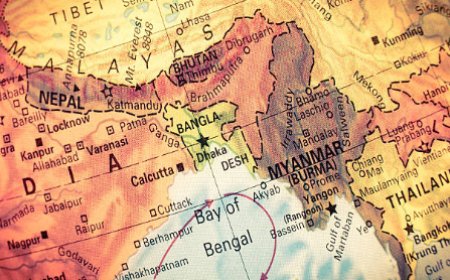
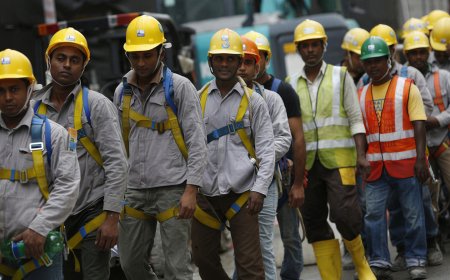
The nation possesses numerous attributes that should render it appealing to investors. It has a population of approximately 170 million, a sizable workforce, an established manufacturing sector, access to the Bay of Bengal, and a strategic position between South and Southeast Asia. Notably, its garment industry has demonstrated Bangladeshi firms' capacity to compete effectively in global markets.
Nevertheless, the level of investment remains below the ambitions Bangladesh has for its developmental trajectory.
The International Monetary Fund (IMF) estimates private investment at 24.1% of GDP for fiscal year 2025, projecting about 23% for fiscal year 2026.
Foreign direct investment (FDI) remains particularly modest. The United Nations Conference on Trade and Development (UNCTAD) estimates that FDI inflows recovered to approximately US$1.77 billion in 2025 following several challenging years.
While this improvement is promising, its composition warrants scrutiny. Much of this recovery stems from reinvested earnings and intracompany loans rather than a substantial influx of new foreign investments.
Therefore, the pertinent question is not solely why investors are absent but rather why these opportunities have not translated into significantly larger commitments of long-term capital.
Several factors contribute to this phenomenon, including energy shortages, infrastructure limitations, challenges in accessing finance, skills shortages, logistical issues, customs procedures, exchange-rate fluctuations, and the overall macroeconomic climate. However, the predictability of institutions must also be recognized as a critical component.
The World Bank has recently characterized private investment in Bangladesh as subdued, highlighting regulatory uncertainty, infrastructural deficiencies, and constraints on firms as significant barriers to private-sector development.
It specifically advocates for improvements in the business environment, reduction of regulatory ambiguities, and the creation of conducive conditions for business expansion.
This issue is crucial because investors generally can assess typical business risks, such as labor costs, transportation expenses, exchange rate fluctuations, and anticipated demand. However, what proves substantially more challenging to quantify is the uncertainty surrounding institutional behavior.
Consider a foreign enterprise contemplating the construction of a manufacturing facility in Bangladesh. Such an undertaking may involve expenditure of hundreds of millions of dollars on land, machinery, facilities, and workforce training.
Once established, much of this investment cannot simply be relocated; it becomes a sunk cost. Economists refer to these costs as sunk costs, which underscore the importance of institutional credibility.
Prior to committing capital, the enterprise effectively questions whether it can rely on the stability of the regulatory framework governing that investment over the coming decade or two.
If such trust is uncertain, the required return on investment increases. A project that might have been profitable under predictable institutional conditions may fail to meet the investor's hurdle rate once political, regulatory, and contractual risks are incorporated.
Thus, institutional weaknesses do not necessarily outright prohibit investment but may render it more costly by increasing associated risks.
The enforcement of contractual agreements is central to this issue. Modern economies depend on transactions among individuals who do not possess personal relationships or mutual familiarity.
A manufacturer purchases materials from suppliers, borrows from financial institutions, employs workers, leases warehouses, contracts transportation services, and markets to domestic and international buyers. Each of these interactions relies on formal agreements that cannot depend solely on personal trust.
Formal contracts make these relationships possible because the parties know that if something goes seriously wrong, there is a legal mechanism to resolve the dispute.
But a contract is only as valuable as the institutions that support it.
A judicial system, even if sluggish, can support substantial economic activity provided that businesses trust in the impartiality and enforceability of eventual decisions.
Delays incur costs; however, a more detrimental issue arises when firms perceive that delay, influence, or administrative discretion can be exploited strategically by more well-connected parties. At this juncture, the issue transitions to one of trust.
A small enterprise might conclude that pursuing litigation against a larger corporation is futile due to the larger corporation's greater political or administrative influence. A foreign investor could be concerned that disputes with a well-connected local partner may not be resolved impartially.
Additionally, a lender may require additional collateral, fearing that enforcing a standard contract might be protracted or yield uncertain results.
In response, businesses adapt by relying less on formal institutions and more on personal relationships, family networks, political ties, repeated interactions, and informal guarantees. Such arrangements can prove remarkably effective within small, trusted circles.
However, these methods do not scale effectively. A firm engaged solely in transactions with known entities risks missing opportunities with unfamiliar suppliers who might offer superior products or more competitive prices.
Financial institutions become hesitant to fund entrepreneurs lacking established connections or significant collateral. Similarly, foreign companies tend to be more cautious in establishing partnerships with unfamiliar local firms.
Consequently, the economy becomes segmented between insiders adept at navigating the system and outsiders who must contend with the uncertainties involved. This division carries implications far beyond isolated commercial conflicts.
Economic development increasingly depends on transactions among strangers. A contemporary economy cannot function predominantly on personal trust; rather, it necessitates what can be termed 'institutional trust' -- the confidence that contracts, regulations, and property rights will function effectively even in the absence of personal relationships.
This is how enterprises expand beyond familial networks. It illustrates how small enterprises evolve into medium-sized entities, how entrepreneurs secure financing, how supply chains become more sophisticated, and how foreign investors gain confidence in collaborating with domestic partners.
Trust, in this context, does not serve as a substitute for contracts; rather, it renders contracts economically advantageous.
This distinction is particularly significant as Bangladesh endeavors to attract investment beyond the ready-made garment sector.
Electronics, pharmaceuticals, engineering, information technology, logistics, renewable energy, and other high-value industries often require substantial initial investments, more complex supplier relationships, intellectual property protection, and extended planning horizons.
Such investments are notably susceptible to institutional uncertainty.
Low wages may attract labor-intensive factories. However, as Bangladesh advances towards more capital-intensive and technologically sophisticated production, mere inexpensive labor becomes less decisive.
Investors are increasingly concerned with regulatory consistency, dependable infrastructure, resolution of commercial disputes, availability of skilled labor, and the predictability of government institutional operations.
Encouraging developments are evident. Bangladesh has undertaken efforts to streamline and digitalize regulatory procedures, and UNCTAD has acknowledged progress concerning investment-related reforms.
Nevertheless, institutional reform yields tangible results only when businesses perceive improvements in daily transactions.
A new online approval system holds limited significance if investors still believe that informal connections are necessary for obtaining approvals. The effectiveness of a commercial court is diminished if enforcement remains uncertain.
An investment law, even if well drafted, is of little consequence if administrative interpretations are unpredictable.
Institutional credibility is cumulatively built through repeated positive experiences.
Each instance where a regulator applies consistent rules to both politically connected and unconnected firms contributes incrementally to trust. Every impartial resolution of a commercial dispute by a court enhances trust. Each time an investor receives approval without resorting to political influence, additional institutional capital is accrued.
Conversely, a single arbitrary decision can influence more than the immediately affected company. Businesses communicate regularly; foreign investors seek opinions from existing investors before entering a market; banks monitor contract enforcement; multinational corporations compare operational experiences across locations.
Consequently, institutional reputation spreads.
This underscores why Bangladesh ought to consider investment policies that extend beyond incentives, tax holidays, or special economic zones. While such policies may affect investors' location choices, the level of institutional trust ultimately determines whether they are willing to commit their capital.
An investor might accept slightly higher wages if contract enforcement is reliable. A company might tolerate elevated taxes if regulations are predictable. It may even endure infrastructural deficiencies if credible improvements are perceived to be in progress.
What remains considerably more difficult to compensate for is uncertainty regarding the rules themselves.
Bangladesh does not need perfect institutions before investment can grow. No country has them. Nor does every commercial dispute need to be resolved immediately.
What investors require is reasonable confidence that rules will be understandable, decisions will not be arbitrary, and disputes can ultimately be resolved through institutions rather than connections.
That confidence reduces the hidden costs associated with doing business.
The relationship between investment and institutional trust also operates in a reciprocal manner. When firms consistently encounter predictable contracts, neutral regulation, and dependable dispute resolution, they become more inclined to make long-term commitments. Such investments generate employment, supplier relationships, skills, and confidence within the economy.
A virtuous cycle can thus be established.
Therefore, Bangladesh's challenge in attracting investment is not merely about securing additional capital. Capital is available, both domestically and internationally. The true challenge lies in creating conditions that encourage investors to commit capital for 15 or 20 years, rather than for the next transaction or political cycle.
Ports, electricity, interest rates, and tax policies are significant; however, trust is equally essential.
Ultimately, each long-term investment entails an implicit contractual agreement with the host country: The investor commits capital now, anticipating that future regulations will remain sufficiently fair and predictable to ensure a return on the investment.
Bangladesh's capacity to attract the necessary investment for its forthcoming development phase will depend in part on whether investors trust the implicit contract.
Unlike many investment incentives, institutional trust cannot simply be declared; it must be earned, one predictable decision at a time.
Dr. Mohammed A. Rab is a US-based economist and a freelance consultant specializing in economic policy, banking, and financial risk management.