



































The Prime Minister Is Caught Between a Rock and a Hard Place
Tarique enjoys the goodwill of Bangladeshis who understand the burden he inherited. However, with every passing month, the BNP will find it harder to attribute its shortcomings to the failures of previous administrations. Bangladesh has every stake in Tarique's success. But the honeymoon period is long over. It is time for the PM to take command of the government he was elected to lead.
There is sympathy across Bangladesh for the circumstances in which the PM finds himself.
Bangabandhu Sheikh Mujibur Rahman was arguably dealt the most difficult hand of any Bangladeshi Head of Government. Over nine months in 1971, the Pakistani military regime and its local collaborators, among them Jamaat, perpetrated genocide against Bengalis.
Among those systematically murdered throughout the war were over 1,000 intellectuals, with the campaign culminating in the targeted killings of December 14: A calculated attempt to deprive Bangladesh of its intellectual capital on the eve of victory.
Sheikh Mujib inherited a devastated economy and a virtually non-existent state apparatus. Even accounting for the extraordinary conditions in which he assumed office, his tenure as an administrator from 1972 to 1975 can hardly be deemed a success.
Viewed as part of a continuum, the administrations of Dr. Muhammad Yunus and Tarique Rahman have faced what may well be the second most daunting set of challenges since independence.
The 2024 mass uprising brought down an authoritarian regime whose security forces and affiliated non-state actors unleashed a brutal crackdown. According to UN estimates, as many as 1,400 people may have been killed in a campaign of state-sponsored terror.
Sheikh Hasina fled the country following her ouster, as did many of her colleagues, while others associated with her administration went into hiding. Over 15 uninterrupted years in power, the AL had bludgeoned public institutions that were already underdeveloped.
The party left its successors with a peculiar administrative problem: The Herculean task of undoing its legacy through the very institutions it had compromised. Even replacing the old guard of civil servants entails navigating procedures administered by some of the officials earmarked for removal. Much of the BNP's policy agenda hinges on overhauling a bureaucracy accustomed to the AL's methods of governing. Where is its blueprint for doing so?
Compounding these domestic woes are conflicts abroad over which Bangladesh has no influence but which have aggravated its energy insecurity. The macroeconomic fundamentals paint a grim picture: High inflation, sluggish growth and rising unemployment. The law and order situation is far from satisfactory. Politically, the AL question remains unresolved.
All this is unfolding at a time when the rules-based international order is on life support and the terms on which nation-states cooperate and compete are being rewritten.
Bangladeshis appreciate the enormity of the undertaking before their PM. Repairing the damage will take years, making incremental progress a reasonable yardstick against which to assess his leadership of a wobbly state apparatus.
Even by that measure, several aspects of Tarique's premiership warrant closer scrutiny.
The PM Is Everywhere and Nowhere at Once
Bangladesh has swung from one extreme to another in the exercise of executive authority.
Hasina subscribed to a “my way or the highway” style of governance: She inserted herself into almost every conversation, micromanaged the affairs of the state and made herself indispensable to its functioning. Mr. Rahman's frequent public engagements give the impression of a busy PM, but the extent of his involvement in the substantive business of running the country is difficult to discern.
His Ministers seem to enjoy considerable autonomy. Given the centralization of power under Hasina, there is merit in empowering them. Effective delegation, however, requires the PM to set objectives for each Ministry, evaluate his appointees, coordinate decisions across portfolios and resolve disagreements within the Cabinet.
The departures of State Minister Ishraque Hossain and MP Ferdousy Ahmed Mishti, reportedly at Tarique's direction, demonstrated his readiness to intervene when the conduct of his colleagues became a source of embarrassment. How closely he monitors the performance of the rest of his team remains unclear.
Inexperience may partly explain this. By most accounts, Tarique is courteous, soft-spoken, and well-intentioned. He is also a first-time MP who had never held public office before assuming the premiership.
In quick succession, he returned to Bangladesh after 17 years in exile, lost his mother, contested an election, and entered the PMO. During his absence, Begum Khaleda Zia had stood as a solitary bulwark against Hasina, keeping the BNP and her son's prospects alive.
The learning curve extends well beyond the PM: 82% of the original 50 Cabinet members had never held ministerial office, while about 76% of the MPs elected in February were newcomers to Parliament.
The influx of fresh faces offers an opportunity for a reset. Much depends on Tarique's ability to instill discipline across the executive and legislature while coming to grips with the demands of his own office. As to whether he is succeeding in this endeavour, the jury is still out.
Hasina Is Still Setting the Agenda From Exile
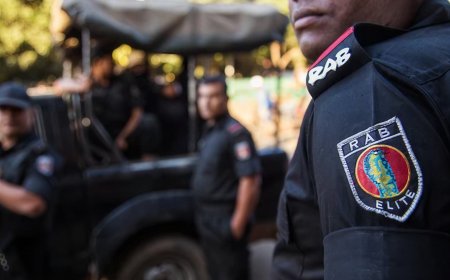
The government's handling of law and order raises further questions about the PM's command of the machinery of the state.
One encouraging feature of Tarique's tenure has been his apparent reluctance to resort to state-sponsored violence. If this reflects a conscious departure from the practices of the AL, it speaks well of his democratic instincts.
There is also a less reassuring explanation: His administration may be struggling to exercise operational control over law enforcement agencies.
Respect for civil liberties is entirely compatible with rigorous policing. Upholding the constitutional rights of citizens while ensuring public safety is an exercise in statecraft.
On November 18, Tarique described the AL in Parliament as a terrorist organization and called on the forces behind the mass uprising to unite against its activities. His message the following day was blunt: Enough is enough.
His intervention was overdue. The test will be whether the police can apprehend those orchestrating and perpetrating acts of violence and bring them before the courts.
Looking at the bigger picture, the back-and-forth between the AL and the BNP over Ms. Hasina's return is a textbook case of mutual political bluffing. The latest development is the ousted autocrat's stated intention to arrive on December 16, Victory Day. Both sides publicly insist on her return, but neither appears prepared to accept the other's terms.
Dhaka is hardly going to entertain Hasina's audacious demand that it arrange her grand homecoming aboard the national carrier. Equally implausible is the prospect of her walking into the Bangladesh High Commission in New Delhi and handing herself over.
In the battle to define the narrative, Hasina has the upper hand: She has placed herself at the centre of the news cycle, with domestic and foreign media paying attention to her every pronouncement. The publicity has helped keep the spirits of AL activists high and sustain their mobilization amid recurring acts of arson attributed to party loyalists.
Officials in Dhaka, meanwhile, continue to issue confused and often contradictory statements that hardly inspire confidence in those at the helm.
The BNP has boxed itself into a corner: Having publicly insisted on securing Hasina's extradition, it lacks the political capital to manage the headache her arrival would entail.
Conspicuously quiet amid this exchange is the stakeholder with the greatest influence over the outcome: India. New Delhi has largely confined itself to noncommittal remarks, indicating that extradition is a legal process that will take time. Its messaging in the months ahead deserves closer attention than the rhetoric emanating from the BNP and the AL.
There is a cruel irony here: The responsibility for pursuing reconciliation rests with a man whose principal adversary appears hell-bent on wreaking havoc in the country he is trying to govern.
Irrespective of Hasina's whereabouts, the PM will eventually have to answer a fundamental question: What place, if any, will the AL occupy in mainstream politics?
There are two principal options.
An Outright Ban on the AL Will Open a Pandora's Box
The first would be to go beyond the existing restrictions on the AL's activities and permanently outlaw the party through legislation.
Among advocates of this proposition, an analogy with Nazi Germany has gained currency: If the Nazi Party could be banned, why cannot the same be done to the AL?
The comparison overlooks the nature and scale of the crimes committed by the Third Reich: It waged a war of annihilation, pursued racial supremacy as official doctrine and perpetrated genocide on an industrial scale. Its atrocities helped lay the foundations of modern international criminal law and inform the contemporary understanding of war crimes, crimes against humanity, genocide and ethnic cleansing.
The UN found reasonable grounds to believe that members of Ms. Hasina's regime and its security apparatus committed violations during the 2024 uprising that may amount to crimes against humanity. These findings provide ample justification for pursuing criminal accountability.
Permanently dissolving the AL on the basis of crimes committed by its leadership, however, would invite an uncomfortable question: Why is Jamaat entitled to participate in politics?
Many Jamaat members actively aided the Pakistani military during the Liberation War. Several of the party's senior leaders were subsequently convicted for their involvement in the atrocities of 1971.
There are legitimate concerns about the fairness of those trials, but Jamaat would be hard-pressed to dispute the documented participation of its members in the genocide.
Crimes against humanity rank among the gravest offences under international law. What distinguishes genocide is the specific intent to destroy, in whole or in part, a national, ethnic, racial or religious group. Given the magnitude of what transpired in 1971, the rationale for banning the AL would make an even stronger case for banning Jamaat. If the gravity of historical offences alone is the determining criterion, there is no logically consistent justification for treating the two parties differently.
Beyond this contradiction, there are three reasons why a permanent ban would be ill-advised.
First, excluding an organization of the AL's size, historical standing and geographical reach from the political process risks driving its grassroots networks further underground. Comparative research on party bans points to the dangers of radicalization and instability.
Bangladesh can ill afford parallel centres of power: An establishment operating via constitutional channels and an outlawed movement seeking to exert influence through unlawful means.
Second, such a measure would set a dangerous precedent that successive governments could exploit to eliminate their opponents. International democratic standards regard party dissolution as a measure of last resort, subject to necessity, proportionality and judicial oversight.
The BNP would struggle to defend the indefinite exclusion of a major electoral constituency before foreign partners who would naturally advocate for an inclusive democracy.
Third, Bangladesh currently lacks a viable secular, progressive front with a nationwide presence. The AL, at least on paper, represented that ideological tradition. With the BNP occupying centrist to centre-right territory and Islamist groups enjoying renewed prominence, the absence of such a counterweight is unhealthy for a pluralistic society.
Whether a reconstituted AL, a coalition of like-minded forces or an entirely new organization eventually fills that vacuum is for the electorate to decide.
An outright ban would, at best, be a band-aid.
The BNP Already Has an Alternative in Its Election Manifesto
The second option would be for the BNP to honour one of its own electoral pledges: Establishing a Truth and Healing Commission.
Central to this exercise would be distinguishing between three groups that sustained the AL throughout its rule.
The first comprises Hasina and her inner circle: Politicians, business oligarchs and senior bureaucrats whose fortunes were tied to the survival of the Sheikh dynasty. Among them are the architects, financiers and enforcers of authoritarianism. Those implicated in serious offences belong before the courts.
The second consists of opportunistic in-betweeners: Mid- to low-ranking officials and activists whose allegiances were driven primarily by financial enrichment, social advancement or self-preservation. Some have already defected or are seeking refuge within the BNP, Jamaat or NCP. Their culpability varies according to their complicity in the former regime's abuses.
The third, and likely the largest, group is the AL's traditional support base: Bangladeshis whose loyalties to the party span generations, those who genuinely subscribe to its professed ideals of secularism and Bengali nationalism, and individuals who identify more with Mr. Mujib the liberator than with Ms. Hasina the dictator.
Merely supporting or voting for a political party is no crime.
Even among those whose actions warrant investigation, pursuing prosecution in every instance would overwhelm Bangladesh's dysfunctional criminal justice system. As of November 23, prisons housed nearly 117,000 inmates against an official capacity of about 45,000. According to the Law Minister, the judiciary had a backlog of over 4.6 million cases as of March 31.
Blanket prosecutions would also risk perpetuating a practice that Ms. Hasina institutionalized and that has survived her ouster: Indiscriminately naming scores of individuals in criminal cases without adequate investigation.
A transitional justice mechanism would allow the authorities to establish individual culpability, determine appropriate penalties and offer victims avenues for redress.
Pitching a Proposal for Reconciliation Need Not Await an Apology From Ms. Hasina
South Africa's post-apartheid experience offers a starting point.
Established in 1995, its Truth and Reconciliation Commission operated through three specialized committees: One documented human rights violations and collected testimonies, another examined applications for conditional amnesty, and the third formulated recommendations on reparations and rehabilitation.
Drawing on this model, Parliament could enact legislation within six to eight months establishing an independent Truth and Healing Commission with a mandate to investigate financial abuses, electoral misconduct and human rights violations in Bangladesh.
Its members could be drawn from the legal profession, human rights organizations, academia and civil society through a transparent appointment process agreed upon by the forces behind the 2024 uprising.
The Commission could proceed along three tracks.
First, hold open hearings at which victims would recount their experiences and civil servants would testify about the inner workings of Ms. Hasina's regime: How orders were issued, elections were manipulated, dissent was suppressed and private interests financed authoritarianism.
Evidence of grave offences not already subject to legal proceedings would be referred to the relevant authorities for prosecution. Existing judgments, such as Ms. Hasina's conviction for crimes against humanity, would remain subject to the established judicial process, while ongoing prosecutions would continue independently of the Commission.
Second, assess applications for conditional amnesty for eligible lesser offences. Applicants would be required to disclose their conduct in full and acknowledge their wrongdoing. Amnesty provisions would operate within the limits of international law and exclude mass atrocity crimes.
Third, organize community-based reconciliation initiatives and develop a compensation and rehabilitation programme for those who suffered under the previous administration.
The legislation could require quarterly updates to Parliament, an interim report within 12 months and a final report within two years. The findings could inform institutional reforms beyond those outlined in the July Charter, with lawmakers overseeing their implementation.
Canada's efforts to address the historical mistreatment of its Indigenous peoples offer further lessons on preserving victims' accounts and translating recommendations into action long after the formal proceedings conclude.
In parallel, the BNP ought to implement, at the very least, the provisions of the July Charter to which it has submitted no notes of dissent and, importantly, make concessions to Jamaat and NCP where disagreements persist to demonstrate that it is taking the reform process seriously.
Truth is a prerequisite for reconciliation. Ms. Hasina and her closest associates have shown little inclination to accept responsibility for their actions: That is highly unlikely to change.
But establishing the Commission would create a forum for those within the AL who are prepared to come forward, putting the ball in the party's court. It would also give the BNP grounds to argue that, despite the turmoil AL activists continue to create, it is still offering them an off-ramp: An opportunity to break with Ms. Hasina and bring their party back into the political process.
Bangladesh Needs a National Settlement on Its Historic Figures
Reconciliation could extend to questions of national identity that have poisoned relations between rival political camps for decades.
Chief among them is the recognition accorded to figures who helped lay the foundations of Bangladesh's statehood, such as Abul Kasem Fazlul Huq, Huseyn Shaheed Suhrawardy and Maulana Abdul Hamid Khan Bhashani, alongside those who led the struggle for independence in 1971: Sheikh Mujibur Rahman, Tajuddin Ahmad, Syed Nazrul Islam, Muhammad Mansur Ali, Abul Hasnat Muhammad Qamaruzzaman, Ziaur Rahman, and Muhammad Ataul Gani Osmani, among others.
Hasina did immense damage to her father's reputation by treating the Liberation War as the exclusive property of the Sheikh family and the AL.
A national settlement, enshrined in the Constitution if necessary, could end the partisan appropriation of these leaders. Bangladesh has expended far too much energy fighting over its past at the expense of addressing problems that bear directly on the lives of ordinary citizens.
For Tarique, pursuing reconciliation would serve three strategic purposes.
First, it would enable him to articulate a coherent position at home and abroad: Existing convictions would remain subject to the judicial process, outstanding criminal allegations would be investigated, and AL activists who have not been convicted of criminal offences and are not under investigation would have a pathway back into mainstream politics.
Having extended an olive branch, the BNP could make a credible case before the international community. The onus would be on those rejecting that gesture to explain themselves.
Second, it could weaken Hasina's hold over the AL by giving those disillusioned with the Sheikh dynasty a reason to break with her. As long as the wider membership remains isolated, the former PM will retain much of her leverage.
Third, it would allow Tarique to build on his mother's legacy.
In her first public address following Hasina's ouster, on August 7, 2024, Begum Khaleda Zia called for an end to the politics of revenge and vengeance, advocating a society founded on peace, knowledge and equality.
Here was a woman who had endured years of imprisonment and confinement at the hands of her principal adversary and lived to witness her downfall. At a moment when she could have called for retribution, Begum Zia chose to preach national unity. It was an act of magnanimity that defined the final chapter of her political life.
Giving institutional expression to his mother's message would enable Tarique to distinguish himself as a statesman.
For far too long, Dhaka has been playing Hasina's game. The BNP commands a parliamentary majority and has a manifesto commitment to pursue national healing.
It has the means to change the script.
The PM Needs to Strike a Balance Between His Long-Term Policy Aspirations and the Country's Economic Realities
Finding a durable resolution to the AL question would free up some of the PM's time and energy to pursue the policy areas that interest him: Perhaps the core of the plan he alluded to in his now-famous “I have a plan” declaration following his homecoming in late 2025.
Tarique's enthusiasm for early childhood development, preventive healthcare and the role of sports and music in education deserves recognition. There is something admirable about a Head of Government who thinks in generational terms and appreciates the dividends of investing in people.
The problem is one of sequencing.
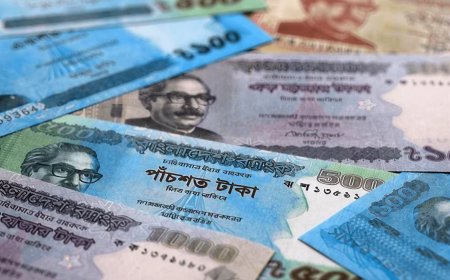
Take the BNP's fiscal policy. At Tk 9.38 trillion, the FY2026-27 budget is the largest in Bangladesh's history in nominal terms, with a projected deficit of Tk 2.43 trillion. Allocations for the Family Card and Farmer Card programmes stand at Tk 14,500 crore and Tk 1,062.5 crore, respectively. The bottom line: These are expensive programmes.
Government borrowing from the banking system exceeded its revised annual target by over Tk 47,500 crore in FY2025-26. During the first two months of the current FY, borrowing from commercial banks was five times as high as in the corresponding period last year.
Expanding social protection is a legitimate policy objective. But how prudent is it to introduce recurring spending commitments of this magnitude when revenue collection remains weak and the government increasingly relies on bank borrowing to finance its day-to-day operations?
The question of sequencing extends beyond fiscal policy. A factory owner struggling to maintain production amid fuel shortages, a university graduate unable to find employment and a family finding groceries unaffordable have more immediate expectations of their PM.
Tarique's ability to generate enthusiasm for his long-term ambitions depends on what he can deliver for Bangladeshis today: Easing the cost of living and improving public safety would be a start. That reality ought to inform both his policy priorities and the allocation of public resources.
The PM's Reluctance to Face the Press Is a Liability of His Own Making
Even when finding solutions takes time, the PM can explain to Bangladeshis what his administration is doing to alleviate their difficulties.
Nine months into Tarique's premiership, journalists have not had a single opportunity to question him at length about his government's record at an open press conference.
Whatever one's assessment of Dr. Yunus' tenure, he understood the importance of engaging with the international media from the outset. Foreign correspondents have expressed interest in interviewing Tarique. Why has he been so slow to oblige?
His Ministers have done little to fill the void. Their limited exchanges with reporters suggest a Cabinet keeping its head down in the hope that its problems will somehow sort themselves out.
Even an admission from the PM that certain challenges have proved tougher than the BNP anticipated would be welcome. Bangladeshis deserve a candid account of the difficulties his administration is encountering and what it intends to do about them.
The irony is that the BNP spent years in opposition struggling to reach the population through a hostile media environment. It now has the state's communications machinery at its disposal and is making remarkably little use of it.
Every grievance that goes unanswered gives the AL ammunition in its efforts to regain political relevance. This complacency will come back to haunt the government.
The BNP Cannot Indefinitely Attribute Its Shortcomings to Its Predecessors
Tarique need only revisit the criticisms the BNP has directed at Sheikh Mujib to understand how unforgiving history can be.
The party has long judged the country's founding leader by his economic mismanagement, the breakdown of law and order under his watch and his failure to establish an effective democratic system of governance. The exceptional circumstances in which he took office have carried relatively little weight in that assessment.
There is a lesson in this for the incumbent.
Tarique enjoys the goodwill of Bangladeshis who understand the burden he inherited. His parliamentary majority affords him the legislative latitude to undertake reforms his predecessors neglected or resisted.
With every passing month, the BNP will find it harder to attribute its shortcomings to the failures of previous administrations.
Bangladesh has every stake in Tarique's success. But the honeymoon period is long over. It is time for the PM to take command of the government he was elected to lead.
Mir Aftabuddin Ahmed is a Canada-based Public Policy Columnist with more than 150 published articles across Bangladeshi and Canadian media and policy outlets. He currently serves as a Policy Development Officer with the City of Toronto. He can be reached at [email protected]. The views expressed are his own.