



























































Why the Ganges Water Treaty Demands a Climate-Era Overhaul
At the heart of the current diplomatic impasse lies a striking paradox: Both Dhaka and New Delhi are invoking the climate crisis to justify diametrically opposed negotiating positions.

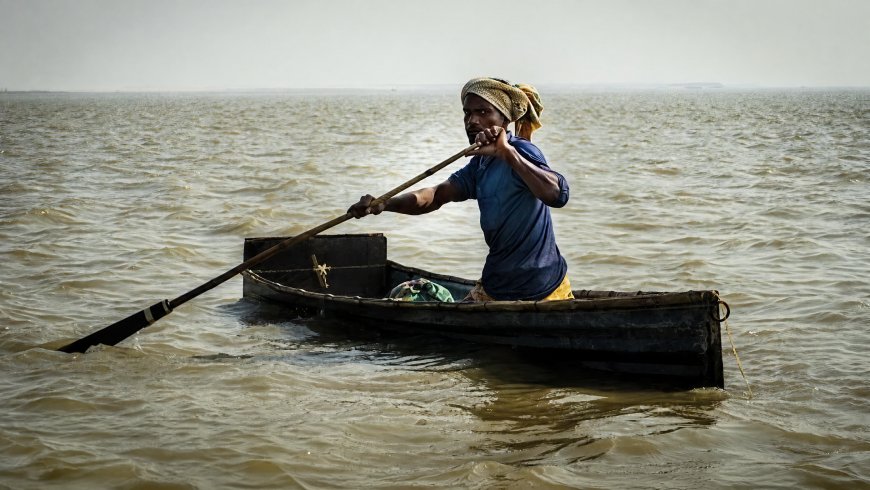
When the ink dried on the Ganges Water Sharing Treaty between Bangladesh and India in December 1996, the mood across borders was one of guarded optimism.
The architects of that historic accord harboured no illusions about its permanence. They deliberately tethered it to a thirty-year lifespan, operating under the assumption that three decades would provide ample time for the two neighbours to cultivate mutual trust, establish transparent hydrological data-sharing, and build the institutional maturity required for a permanent, basin-wide arrangement.
With the treaty’s expiration in December 2026 now upon us, history has delivered a sobering verdict. That envisioned trust remains elusive, institutional mechanisms remain anaemic, and most critically the accelerating realities of the global climate crisis have rendered the 1996 framework not merely inadequate, but dangerously obsolete.
For Bangladesh’s policymakers and citizens, an existential question now takes centre stage: What comes after 2026? Will Dhaka and New Delhi settle for a bureaucratic rubber-stamping of a broken system, or will they summon the political will to forge a science-based, climate-resilient compact?
The Anatomy of a Three-Decade Deficit
To grasp the gravity of this deadline, one must stop viewing transboundary rivers as mere cartographic lines and recognize them as the living circulatory system of the Bengal Basin.
For Bangladesh, the Ganges known downstream as the Padma is far more than an agricultural lifeline; it is the hydrological backbone of the entire southwestern and northwestern regions. Yet the empirical record of the past three decades tells a grim story of chronic deprivation.
Hydrological analyses of the critical dry-season months between 1997 and 2016 reveal that Bangladesh received less than its treaty-guaranteed share of water an astonishing 65 percent of the time. This is not a marginal statistical anomaly; it is a systemic failure occurring precisely when freshwater is most urgently needed to stave off drought, sustain irrigation, and hold back the encroaching sea.
The root of this failure lies in the treaty’s own architecture. The 1996 formula was anchored to historical flow averages recorded at a single measurement point the Farakka Barrage between 1949 and 1988. It treated a dynamic, living river system as a static, predictable pipeline. Worse still, the treaty lacked an ironclad minimum guarantee clause during periods of extreme low flow, leaving Bangladesh to absorb the brunt of upstream diversions and seasonal variability.
From the Barind Tract to the Sundarbans
The cost of this sustained hydrological deficit is etched deeply into Bangladesh’s landscape and its economy.
In the northwest, the Barind Tract long a vital pillar of the nation’s food security faces the quiet advance of desertification. As surface water from the Ganges system dwindles during the lean season, farmers are forced to extract groundwater at unsustainable rates. Aquifers are plummeting to alarming depths, driving up irrigation costs and threatening the long-term viability of agriculture in the region. Further south, the crisis manifests with even greater ferocity.
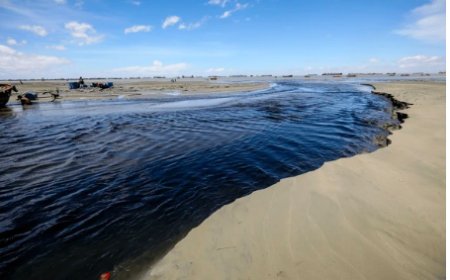
The Sundarbans, the world’s largest contiguous mangrove forest and Bangladesh’s primary natural shield against devastating cyclones from the Bay of Bengal, is slowly suffocating. Mangrove ecosystems depend on a delicate equilibrium between upstream freshwater and coastal saltwater. As dry-season freshwater flows from the Ganges have receded, saline water has intruded further inland than ever before. This creeping salinization is altering soil chemistry, killing off native freshwater flora such as the Sundari tree, and dismantling coastal agriculture.
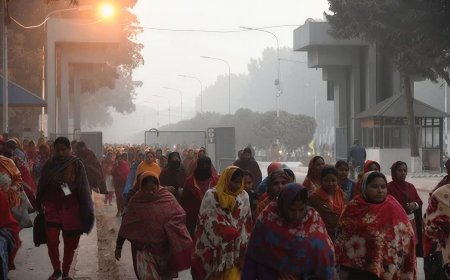
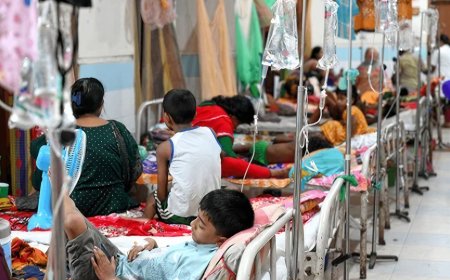
The human toll is equally severe. Across the southwestern coastal belt, heightened salinity has contaminated drinking water sources, triggering a silent public health crisis most acutely reflected in rising rates of hypertension, preeclampsia, and severe reproductive health complications among coastal women. Unable to farm or secure potable water, entire communities are being pushed into slow-onset climate displacement.
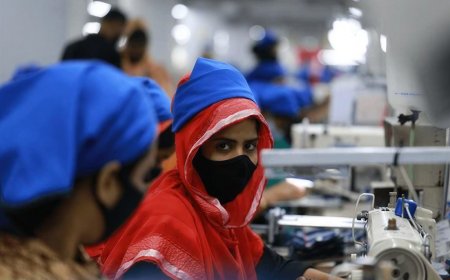
The macroeconomic burden is staggering. Bangladesh is currently compelled to spend an estimated six to seven percent of its GDP annually on climate adaptation and disaster management. In effect, a lower-riparian developing nation is paying a steep fiscal penalty to manage downstream ecological emergencies heavily compounded by upstream water management.
The Climate Paradox in Hydro-Diplomacy
At the heart of the current diplomatic impasse lies a striking paradox: Both Dhaka and New Delhi are invoking the climate crisis to justify diametrically opposed negotiating positions.
Bangladesh, bearing the brunt of downstream vulnerability, rightly argues that accelerated Himalayan glacial melt and increasingly erratic monsoon patterns have fundamentally altered the river’s hydrology. Paper commitments drafted in the 1990s are meaningless if the river itself is shrinking. Dhaka’s position is rooted in survival: Iin an era of hydrological unpredictability, the treaty must transition to a dynamic, flow-responsive mechanism that guarantees a non-negotiable minimum ecological flow and “e-flow”, regardless of upstream fluctuations.
India, however, deploys the same climate reality to argue the opposite. New Delhi contends that overall basin flows have declined so sharply, and domestic agricultural and urban demands in upstream states like Uttar Pradesh, Bihar, and West Bengal have grown so steeply, that honouring fixed volumetric commitments from 1996 is mathematically untenable. Furthermore, Indian policymakers frame large-scale upstream storage and river-interlinking projects as essential climate adaptation measures to safeguard their own food security and mitigate monsoon flooding.
In this zero-sum framing, climate science is stripped of its potential to foster collaborative problem-solving and instead weaponized as diplomatic ammunition. Because the 1996 treaty is an inflexible document blind to modern river behaviour, it offers neither country a constructive off-ramp from this deadlock.
The Institutional Vacuum
South Asia does not need to look far to understand what separates a resilient water accord from a fragile one. For all the geopolitical volatility between India and Pakistan, the 1960 Indus Waters Treaty stood for decades as a benchmark of institutional durability, surviving multiple wars and prolonged periods of hostility. While it faces its own contemporary political strains, its historical longevity was no accident: It was built on a robust institutional foundation featuring a permanent technical commission, clearly defined data-exchange protocols, and structured mechanisms for neutral, third-party arbitration.
Disputes were designed to be resolved through engineering and law before they metastasized into political crises.
The Ganges Water Sharing Treaty possesses no such armour. It relies on the Joint Rivers Commission, a body that lacks independent authority, binding enforcement power, and a credible dispute-resolution mechanism. Over the decades, this commission has functioned less as an autonomous scientific arbiter and more as a bureaucratic echo chamber, perpetually hostage to the shifting political winds between Dhaka and New Delhi. Without institutional teeth, even the most well-intentioned water-sharing formula is destined to falter when the dry season bites.
Blueprint for a Living Treaty
Treating the December 2026 deadline as a routine diplomatic formality and settling for a simple rollover of the 1996 text would represent a historic failure of statecraft. What the region requires is not a patch, but a complete architectural overhaul.
First and foremost, a climate-era Ganges treaty must abandon static allocations based on forty-year-old averages in favour of real-time, percentage-based sharing anchored in automated hydrological telemetry verified jointly by both nations, ensuring that both surpluses and deficits are distributed equitably.
Because climate change is a moving target rather than a static baseline, the new compact must also embed a mandatory five-year review mechanism that automatically recalibrates flow formulas based on the latest peer-reviewed climate modelling, glacial melt projections, and sediment data.
Crucially, the ecological survival of the Sundarbans and the groundwater tables of northwestern Bangladesh can no longer be treated as residual afterthoughts; minimum environmental flows required to sustain downstream ecosystems and hold back salinity intrusion must be legally codified into the core text.
Above all, the Joint Rivers Commission must be restructured into an empowered, science-led technical commission with binding dispute-resolution protocols, while the post-2026 framework sheds its rigid bilateralism. The Ganges is a transboundary basin, not a two-country canal, and bringing Nepal into a trilateral framework to develop joint Himalayan monsoon storage reservoirs remains the only viable way to augment dry-season flows for both India and Bangladesh while mitigating devastating downstream floods.
Beyond Diplomatic Inertia
The December 2026 expiration of the Ganges Water Sharing Treaty is not a mere administrative milestone; it is a generational inflection point for South Asian water governance. The rivers have shifted, the climate has rewritten the rules of hydrology, and our diplomatic contracts must evolve accordingly. Rolling over an archaic, demonstrably flawed agreement without modern adaptive safeguards and strong institutional architecture would be a profound strategic error.
The water security of South Asia and the long-term habitability of vast swathes of Bangladesh cannot be secured through endless recriminations over broken volumetric promises. It can only be safeguarded by visionary, science-driven institutions capable of managing shared scarcity.
For Bangladesh, securing a fair, living, and climate-resilient treaty is not a matter of diplomatic prestige; it is a matter of existential survival. At this negotiating table, there is simply no room for complacency.
Dr. Md Habibur Rahman is a Development Specialist, Folklorist and Professor of Folklore and Social Development Studies at the University of Rajshahi, Bangladesh. He may be contacted at [email protected].
Md Shihab Uddin is an independent researcher and a student of Folklore and Social Development Studies at the University of Rajshahi.He may be contacted at [email protected] Social Development Studies at the University of Rajshahi.He may be contacted at [email protected].