
























































When Graduation Outpaces Reform
Tax reform should be framed as a new social contract, not merely a technical exercise in increasing rates. Broadening the tax base, reducing arbitrary exemptions, and digitizing risk-based administration can enhance both fairness and predictability.

While the United Nations still lists November 24, 2026, as the scheduled date for the country to graduate from least developed country (LDC) status, its request for additional preparation time is awaiting a decision by the General Assembly.
It's tempting to frame this situation as a conflict between national pride and national caution, but that's the wrong dilemma.
The more consequential question is whether the institutions that convert investment into productivity, credit into enterprise, and growth into secure employment are ready for the next phase.
A label can change through an international decision; an economy changes through millions of decisions made by firms, workers, banks, and public agencies.
Graduation is a status; productive capacity is a system. Confusing the two risks making a diplomatic deadline do the work of development policy.
The more crucial question is whether Bangladesh's institutions are prepared for the next phase specifically, whether they can effectively convert investment into productivity, credit into enterprise, and economic growth into secure employment.
An international decision can change a country's label, but an economy transforms through millions of decisions made by businesses, workers, banks, and public agencies. LDC graduation is a status; productive capacity is a system.
Conflating these two risks allowing a diplomatic deadline to overshadow the necessary work of development policy.
What Do the Latest Numbers Reveal?
The World Bank's Bangladesh Development Update, released on October 6, projects GDP growth of 3.4% in both FY2026 and FY2027, and only 3.9% in FY2028. These projections are contingent on improved energy availability and accelerated reforms.
While these are forecasts, not definitive judgments on the country's long-term potential, they nonetheless represent a significant shift away from the assumption that past growth momentum can be taken for granted.
The same update estimates that approximately 2.1 million additional people fell into poverty in FY2026. It also highlights stalled job creation, employment losses among women, weak investment, and pressure on household purchasing power.
Each of these findings points to a common issue: macroeconomic activity is not reliably translating into widespread economic security.
External resilience offers a crucial counterpoint to this assessment. Remittance inflows and the replenishment of foreign exchange reserves have provided support, demonstrating Bangladesh's enduring strengths.
However, remittances serve as a vital household lifeline, not a replacement for domestic productivity growth. An economy cannot perpetually outsource the creation of opportunity to its citizens working abroad.
The Politics Behind a Weak Growth Bargain
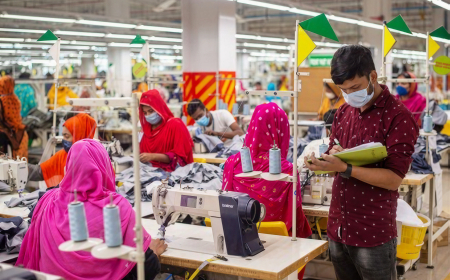
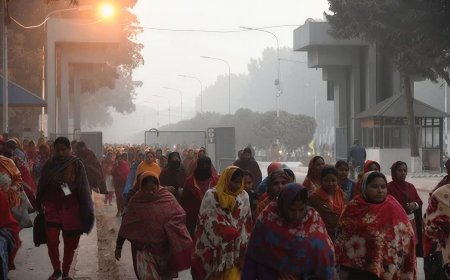
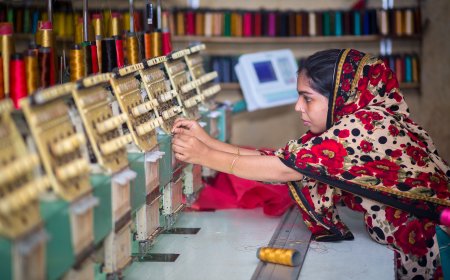
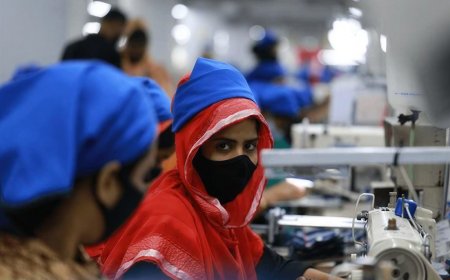
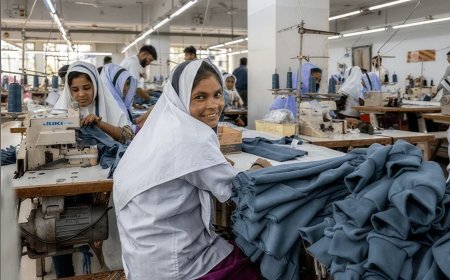
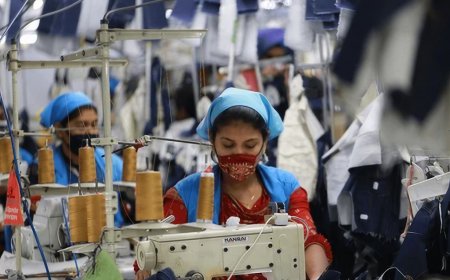
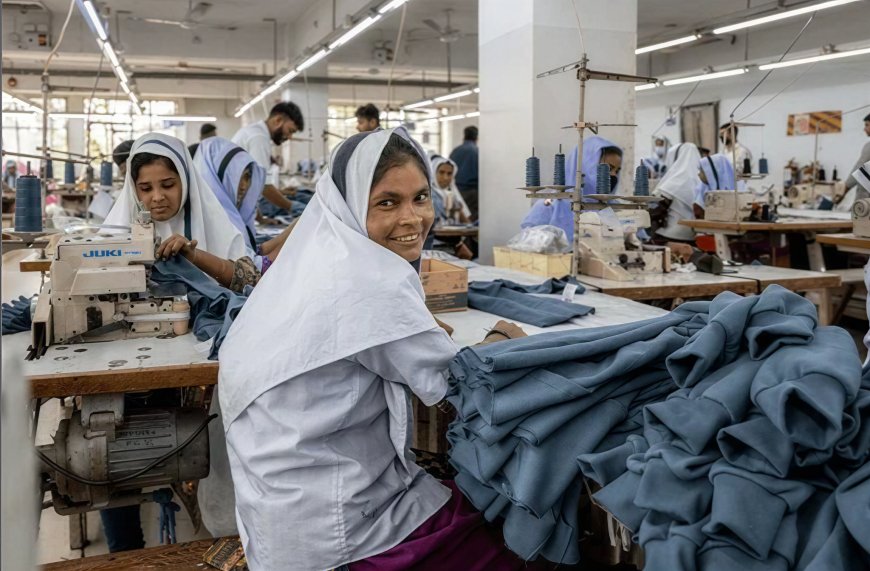
Bangladesh's development successes were never accidental. They stemmed from an interplay of private initiative, state support, and global markets, which fostered competitive garment production, increased female participation in factory employment, boosted remittances, and improved basic social indicators.
However, the institutional frameworks that facilitated this initial catch-up phase may not automatically lead to diversification, technological advancement, or the creation of high-productivity jobs.
The core political-economy challenge lies in incentives. When access to essential resources such as permits, finance, land, or public contracts is determined more by discretionary decisions than by predictable rules, firms tend to prioritize investing in relationships over productive capacity.
This dynamic favours incumbent businesses over new entrants, and public agencies face pressure to maintain existing allocations rather than evaluating their broader social returns.
This isn't to say that every project or firm is compromised, but rather to explain how institutional quality profoundly influences economic outcomes.
Why Finance Cannot Remain an Insider Market
The World Bank's October update reported that the non-performing loan ratio increased from 30.6% in December 2025 to 33.2% in June 2026. This rise signals a potential issue, though its full implications depend on any changes in how these loans are recognized and classified.
When banks have troubled balance sheets, their capacity to assess new ventures, provide working capital, and finance investments on standard commercial terms is limited.
Banks unable to accurately price risk cannot effectively finance economic transformation. If lending losses are consistently socialized and decisions regarding those loans lack proper accountability, taxpayers and responsible borrowers end up bearing unchosen costs, driving up the cost of capital for viable small and medium-sized enterprises.
At the same time, firms with privileged access may still secure funding. Ultimately, this isn't just a banking issue; it distorts industrial policy.
Bank resolution, therefore, requires more than just fresh liquidity or a change in management. A comprehensive strategy, such as the one explicitly called for in the IMF's January 2026 Article IV consultation, must connect independent asset-quality reviews, transparent loss recognition, credible resolution powers, and protection for small depositors to a robust funding plan.
Without visible consequences for connected lending and weak governance, recapitalization efforts risk perpetuating the same cycle of problems.
Can the state finance the next transition?
The fiscal constraint is significant. The World Bank projects revenue collection at an exceptionally low 8.3% of GDP in FY2026, which is insufficient for Bangladesh's extensive social and infrastructure needs.
This narrow fiscal space creates intense competition among essential public expenditures, including electricity subsidies, debt service, bank recapitalization, climate adaptation, and education. Postponing decisions on these allocations does not eliminate their costs; it merely obscures how those costs are distributed.
Tax reform should be framed as a new social contract, not merely a technical exercise in increasing rates. Broadening the tax base, reducing arbitrary exemptions, and digitizing risk-based administration can enhance both fairness and predictability.
However, such reforms will gain legitimacy only if citizens observe tangible improvements in public services, procurement processes, and the equitable treatment of influential taxpayers. The state must demonstrate not only its capacity to collect more revenue but also its commitment to reducing waste.
This dynamic is especially pertinent when governments justify a subsidy as pro-poor, even when a substantial portion of its benefits disproportionately accrues to higher-consuming households or inefficient suppliers.
While universal energy support may offer political convenience, targeted compensation can more effectively protect vulnerable consumers while simultaneously maintaining incentives for reliable supply.
The critical question is not whether all subsidies are inherently flawed, but whether each taka spent achieves its intended distributional objective.
When the power system prices out investment
Industrial competitiveness depends on dependable energy at an economically transparent cost. Outages, uncertain fuel supply, and accumulated financial liabilities raise production costs even when the official tariff appears manageable.
To reduce uncertainty for manufacturers, energy-sector obligations should be rationalized, procurement disclosure improved, and medium-term tariff and subsidy pathways published. Efficiency is a development policy, not merely an accounting adjustment.
Where have the good jobs gone?
A development model's success should be measured not only by export revenues or infrastructure built but also by the quality of employment accessible to households.
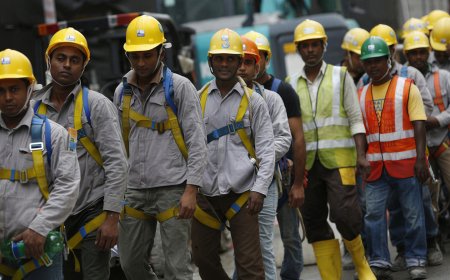
A March 2026 International Labour Organization study highlights concerning trends, including underemployment, informality, declining real wages, and a problematic shift toward self-employment and agricultural work.
These indicate a labor market that is absorbing workers without adequately increasing their productivity.
This does not diminish the importance of infrastructure; ports, transmission networks, and transport corridors remain crucial public goods. However, their effectiveness hinges on complementary institutions such as competitive logistics, robust contract enforcement, serviced industrial land, and training programs aligned with employer demand.
For instance, a road that reduces travel time but connects businesses to unreliable electricity and costly credit will yield fewer benefits than its engineering projections suggest.
Therefore, Bangladesh should transition from a project-focused development narrative to one centred on firms and workers. Public investment should be assessed by its impact on logistics costs, private capital mobilization, female labour market participation, formal payroll jobs, and export diversification.
While these metrics may be less suitable for inauguration ceremonies, they more accurately reflect the true meaning of development in everyday economic life.
The Protection Paradox
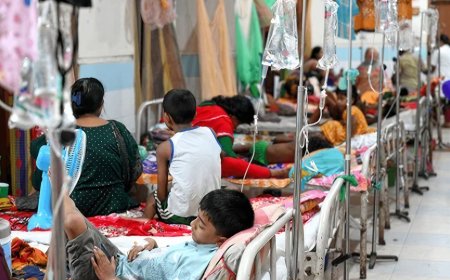
The World Bank's October update reveals that approximately half of the poorest households lack access to social protection programs. The report suggests that by improving targeting and streamlining overlapping food and cash benefits, significant progress could be made in poverty reduction.
The key takeaway is not to compromise the safety net for fiscal discipline, but rather to ensure that limited funds reach those most vulnerable.
Social protection initiatives should prioritize vulnerability over political expediency. A dynamic social registry, coupled with transparent eligibility criteria, appeals processes, and payment audits, could effectively reduce both exclusion and duplication.
While digital identification and payments can facilitate this, technology must not create additional barriers for rural populations, women, or individuals with inconsistent internet access.
" Social protection should follow vulnerability, not political visibility."
Furthermore, a robust protection system enhances the political viability of reforms. Households are more inclined to accept changes to tariffs or subsidy structures if the government can demonstrate that compensatory transfers will be provided before any adverse impact, not months later.
Recognizing this cyclical relationship is crucial: Low trust hinders reform, and poorly designed reforms further erode trust.
Why trade preferences are not a strategy
The graduation debate is not about symbolism but about real exposure. UN Trade and Development has cautioned that without transitional arrangements and productivity gains, the erosion of preferences could significantly diminish Bangladesh's export competitiveness.
The extent of any eventual loss will depend on various scenarios and the availability of partner-specific preference extensions. However, simply postponing graduation will not address the underlying issues of a narrow export basket or low firm-level innovation.
The appropriate goal is to leverage any transition period to negotiate better market access, thereby reducing reliance on privileged access. This necessitates strengthening product standards, improving customs predictability, enhancing skills, fostering technology adoption, and developing suppliers.
Export policy should prioritize enabling new, capable firms to enter international markets, rather than solely preserving the advantages of existing ones.
What can Bangladesh learn from others?
Experiences elsewhere in Asia suggest that competitive exports can accelerate structural change when infrastructure aligns with supplier networks, capable administration, and a stable investment climate.
Vietnam's deeper integration into manufacturing value chains, for example, illustrates the importance of production ecosystems over isolated investment incentives.
This comparison is instructive but not a blueprint, as Bangladesh's industrial structure, institutions, and social obligations differ.
There is also a lesson from countries that have treated graduation as a transition rather than a mere ceremony. While international support measures can be negotiated and phased in, domestic administrative capacity is not easily borrowed.
Trade diplomacy may buy time, but predictable rules determine how effectively the economy uses that time. The policy test, therefore, is not about preferring one date over another, but whether a credible program accompanies either decision.
The path forward
First, establish a time-bound compact for banking sector reform. This compact should include independent reviews of systemically important banks, transparent disclosure of aggregate capital gaps, robust protection for small depositors, and enforceable recovery and resolution procedures.
Any fiscal support provided must be subject to parliamentary or equivalent public scrutiny, with clear reporting on beneficiaries and outcomes.
Second, implement a revenue-for-results framework. This involves broadening the tax base, simplifying compliance, and publicly publishing searchable procurement data, detailed subsidy accounts, and project performance dashboards.
Crucially, selected spending increases should be directly linked to independently monitored improvements in key areas, including learning outcomes, primary healthcare, local infrastructure maintenance, and access to public services.
Third, prioritize job creation as the core principle of industrial policy. Export support should focus on enhancing standards, technology extension, logistics, and supplier development, with access determined by transparent criteria.
Success will be measured not by the announced value of investment proposals, but by increases in formal employment, real earnings, female participation, and the survival rate of new exporting firms.
Fourth, approach graduation negotiations pragmatically while safeguarding the country's capacity for adjustment. While seeking predictable post-graduation market access and appropriate intellectual property transition arrangements, the government should also introduce a domestic readiness scorecard.
This scorecard will outline milestones for critical reforms in customs, skills development, energy reliability, and social protection. Any request for an extended preparation period must be contingent on public, independently verifiable progress against these milestones.
The most compelling argument for reform is not that Bangladesh has failed; rather, it is that the very achievements that have brought the country to the brink of graduation now necessitate a new institutional framework to sustain progress.
A developmental state must possess the capacity to both discipline and support capital, to collect revenue as effectively as it spends it, and to protect households while fostering productive change.
Regardless of whether the country graduates in November or is granted more time, the fundamental question persists: can policy forge a fairer and more productive economy than the one inherited?
A ceremony in New York will not determine this outcome, but rather the credibility of institutions in Dhaka and the opportunities they create across Bangladesh.
Dr. Munshi Muhammad Abdul Kader Jilani, holding a PhD in Knowledge Management from Wuhan University of Technology, is an Assistant Professor at the Bangladesh Institute of Governance and Management (BIGM), University of Dhaka (Affiliated), and Associate Editor of the BIGM Journal of Policy Analysis.