






























The AI-Proof Jobs of the Future
AI excels at optimization whereas humans excel at adaptation. And in our world, we really need both. But the people who will thrive in the next 30 years or so are the people who can use AI to handle stuff like data and pattern recognition, so that they can focus on doing the work that’s uniquely human.

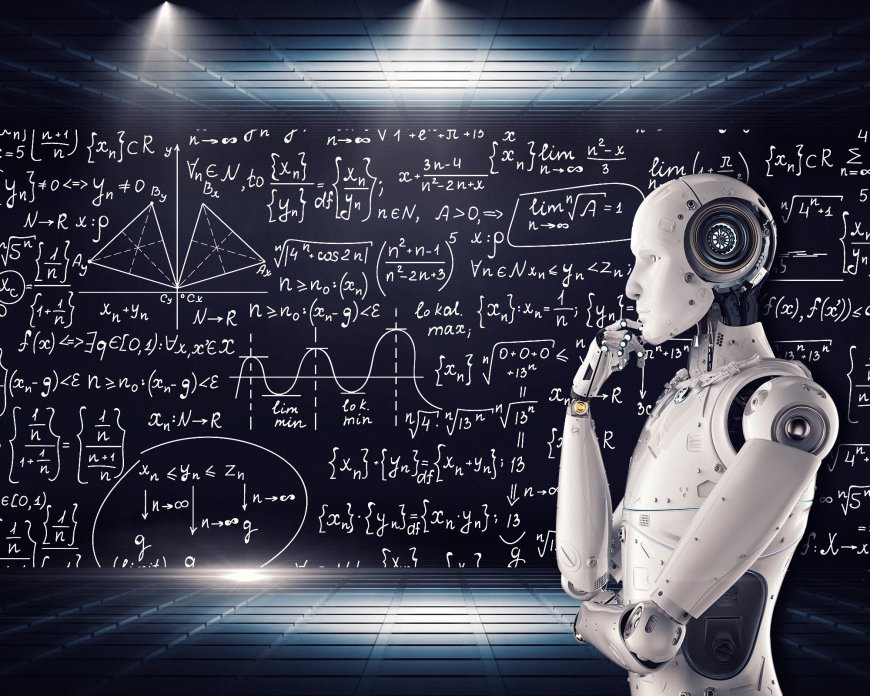
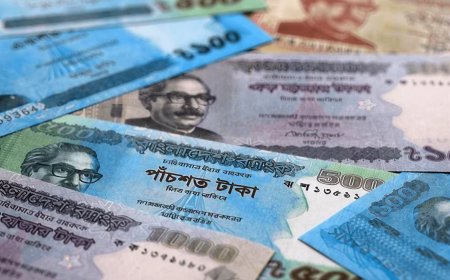
In this essay, I explore how AI isn't just taking over jobs. But also what it’s revealing about what’s valuable in light of the human project. I'm breaking down five career categories where humans have an unfair advantage, from skilled trades facing massive shortages to creative directors commanding 3 lac Taka monthly salaries.
These are the fields where removing the human makes the job impossible, and I'm showing you exactly how to position yourself now.
So, let’s get started.
(0.5 second pause)
AI has no possibility of doing all of what we do. There are many reasons why AI will never replace humans. But let's be honest here. A lot of that is just untrue because AI is getting better at all of this every single day. So, I'm not here to tell you what AI can't do.
Because while everyone out there is just panicking about AI taking their white-collar jobs, we need to stay calm and collected.
We cannot panic. So that we can dive deep, and rationally talk about the five AI-proof career categories where AI will assist and enhance, but won’t replace human capacity.
So, before we jump into these careers, I want to set straight a prevalent, widely accepted, yet completely untested myth here.
See, when Chat GPT launched, everyone panicked about the wrong thing. People thought AI would replace creativity, writing, even coding.
And in some ways, it has. But what I’ve seen working with tons of creators and entrepreneurs is that AI didn't kill the valuable roles in their projects. It only revealed them at a deeper level.
Because the jobs that got disrupted first, those were the ones that were built on things like pattern recognition and data processing. Those were the things that we thought required human intelligence, but they're actually just complex calculations.
So, the careers that will not only survive in the future, but I think they will thrive instead -- they all share this one thing in common that they all require human capabilities.
These are the jobs where if you remove the human from the process, the job becomes impossible. And when you understand fundamentally what makes these categories AI-proof, then you'll know how to position yourself for the future.
So, the first category here is what I think is the most ironic out of all of this AI revolution. You see, for the last two decades or so, we see many parents pushing their kids towards things like computer science boot camps.
These are paid coding boot camps designed for us to learn to code in an immersive social environment. But AI flipped everything on its head. We have co-pilots that write code for us now.
Chat GPT, Claude, Vibe Coding, and what we see is that the junior developer roles are shrinking because AI handles 80% of what they do.
Meanwhile, on the other end of this, you got the blue-collar jobs. That's what educated society uncritically thought was going to get killed.
You got the plumbers, the electricians, and the trades jobs. These jobs are actually doing well and will continue to do well. So, there's this concept called Moravec Paradox that comes from robotics. It's the idea that things that we think are hard like playing chess or medical diagnosis or computer programming are easy for the computers while things that we think are easy, like walking up the stairs or fixing a leaky pipe -- are actually really hard for machines to do. And we've been seeing this all over the news recently that manual labor is safe, at least for now. It's actually the architects or the staff in the back office who are starting to feel the pressure.
So, when you step back and think about this, it becomes pretty clear that AI thrives in controlled digital environments. But in the chaotic physical world -- that really requires human adaptation. AI is not doing so well for now at least.
And look, coding is always going to matter, but the landscape has really changed because junior developers are competing with AI.
On the other hand, the skilled trades are facing the opposite problem. They're facing a massive shortage, especially in the Global North with declining populations and high indigenous labor costs. According to the US Bureau of Labor Statistics, the average age of an electrician or a plumber in the US is 55.
That means that over the next decade or so, millions of people are going to retire. And there just aren't young enough people to come in and fill in those roles.
And licensed electricians, they can earn anywhere from USD 80 to 150K a year. Master plumbers in major urban areas can make 100 to 180K. HVAC business owners or people who’re specialized welders, can earn 200K plus a year. And compare that to junior developers who are facing a really declining entry-level salary in those job markets.
Now, we’ll look into human judgment and adaptation. So, the next category here is healthcare. This one's really personal for a junior friend of mine in Berkeley, because she was a doctor before all of this. And she remembers when she was in residency, she started to see a lot of how AI was coming up, but also a lot of the limitations.
And yes, AI is great. It can help you diagnose cancer sometimes better than human doctors can. And we've seen studies where AI can actually detect patient deterioration before symptoms even appear.
So, at the time she was thinking many doctors may be replaced. But then she graduated and started working full-time as a hospitalist.
And what she saw changed her mind. The AI could tell us what the stage was, survival statistics, the best treatment plan, and all the data was clear. But what the AI couldn't tell us was the human side of the situation.
A patient lived alone. She had a daughter who lived on the other side of the country and was going through aggressive treatment for cancer.
This would take months in and out of the hospital, and the treatment would just debilitate her. It would make her completely unable to care for herself. And she didn't want her family and her friends to see her like this in her final days. She was actually more terrified of losing her independence than dying.
So, my friend met this patient and her family and they talked about and mapped out everything. The pros and cons, what her idea of quality of life was, what their financial situation is going to be after treatment, what are her values at the end of her life.
They sat there for a long time over multiple sessions. I mean, it And she really had to read the body language. She had to adjust and manage her explanations based on what they were ready to hear, and help them process this grief while making really tough decisions.
And she realized that diagnosis is just the beginning. The real medicine is navigating human suffering. It's more about making ethical decisions together, often in gray zones.
It's really about building trust with people who are at their most vulnerable, because every patient is different. Two people might have the same disease, but they're in completely different personal, social, and economic situations.
The treatment approach must be different, their values [music] are different, support system different, life goals are different, and they have different fears. And that whole picture is not a data set problem that an AI can solve.
And she may be biased because she’s a doctor, but AI will never replace doctors because medicine isn't just a science. It's a deeply human art form informed, tempered, and driven by human connection. Now, some of the highest paid medical roles aren't the ones focused on diagnosis.
They're actually the ones that require the most human empathy and judgment, especially in complex situations.
For example, specialized neurosurgeons, cardiac surgeons, and orthopedic surgeons are making USD 400 to 600K a year. Psychiatrists are making USD 200 to 350K a year.
And it's not just doctors in healthcare. It’s also nurses and physical therapists making USD 80 to 120K, while pharmacists make USD 120K to 170K a year. And it's not only the medical side.
You also have the healthcare administration side. The business people who work behind the scenes of the hospital where they have to balance things like financing, ethics, and economics of patient care across the entire system. So, healthcare administrators can make USD 250 to 500K per year.
Healthcare AI doesn't replace healthcare workers. It just allows them to focus more on the human work. Now I know that not everyone out there wants to spend years studying healthcare.
It took my friend over 10 years to become a doctor. So, the next category here doesn't require that kind of time, and it's actually one that I'm in right now. It has to do with storytelling and content creation.
You don’t have to quit your day-job to start a website integrated with a YouTube channel and a social media platform on the side while working full-time as a consultant.
Such an integrated platform can take off and allow you to quit my job and work for yourself. So, now a big part of what I do is research-driven creative work. That changed my life. It gave me a better work-family balance. That is a big reason why I'm helping people through our content.
Content creation is probably one of the most valuable skills that you can learn for the future. Content creation amplifies your knowledge and it puts your product in front of the entire world. Your content is the new resume. Now, a lot of people think that AI has replaced creators and artists.
Sure, AI can write articles, it can create images, it can even generate full videos now. So, you would assume that AI killed all the creative jobs, but that's just not true. Actually, the opposite is true. When Photoshop was invented in 1990 followed by CorelDraw, neither killed all the artists.
They created more artists. More people wanted to learn art. Now, same thing with video editing software. It didn't kill all video editors. It actually created more video editors. And the same thing happened for all other creative industries.
Right now, AI allows more people to join the creator economy, and allows more people to make money with their own content and work for themselves. And what I've seen working directly with creators is that whilst AI can generate the content, it fundamentally cannot imagine creatively.
That’s the most important component of today’s cultural resonance. Stories that emotionally connect with people and expand the intellect. Each one of the billions of people have story to tell, that AI can make more compelling. You got a creator, you got their audience.
The content that you make is just a vehicle. It's a vehicle for two people to have a connection with one another. But if there's no one behind the content, then there's no connection.
A Stanford university study found that all this AI-generated slop has been costing companies millions of dollars to clean-up every single year.
The content looks fine at a glance, but if you look at it really closely, it lacks lasting substance. There's nothing in it that adds differentiated value to the lives of the audience because of the meaningless content.
But the problem is when people have to go out and redo it, that's when it gets really expensive.
What I’m noticing is that the AI is just optimizing for patterns. It’s looking for patterns from other successful content and just copying and reiterating those patterns. But knowing patterns is not the same as truly understanding something.
Let's say you're studying for an exam. If you just go and memorize all the answers to the exam without actually knowing why those answers are correct, then it doesn't really help you in the long run. So real creative direction requires something that AI fundamentally does not have. That's human intuition.
See, when I am developing a creative strategy for one of my clients, I'm not just looking at data. I'm not just looking at analytics. I'm reading their industry. I’m asking, “What is the zeitgeist?” And I'm really trying to understand the psychology behind their target audience.
So, the truth is while AI generates the content, humans generate the passion to create. So, that's the bottom line.
Now, zooming out a bit.
What’s the actual difference between a creator who makes a little bit of money versus a creator that makes a full-time income?
It's not technical skills. It's not how well you can edit this video. The difference is in the cognitive-creative skillsets.
Storytelling, understanding human psychology, and being able to lead a creative team -- that's the difference between a creator and a creative director.
Now, I really think that this career category is going to explode in the future because every single business, whether it's Google, whether it's OpenAI or DeepSeek, Harvard or Berkeley, or even your local bakery in your town, every single business is going to need some sort of creative director.
They need to tell their story. They need to do their marketing, and they need to build a loyal audience.
And so, creative directors are going to be in such high demand, and their salaries are easily hitting six figures. If you're a creative director who can lead a team, you’re likely to make USD 150 to 300K per year.
Or if you're someone who can lead brand strategy for big companies, you can make USD 180 to 400K. So, while AI can help you execute faster, it can't tell you what stories to tell your audience right now.
It can't be directly motivating and leading creative teams, and it can't bring a cohesive vision to life by connecting multiple perspectives from within that team.
Now, let's move on to the next category, business and entrepreneurship. To give you some context, something like 10 to 20% of the population are entrepreneurs and business owners in the US.
Significantly more in Bangladesh due to unemployment and under-employment. And with AI, we're about to see this number explode. I used to think that starting a business was a risky and scary thing.
You have to go and raise millions of dollars. You have to go and build the next Facebook or build the next Airbnb. Otherwise, you'd be a failure in business. But that's not true at all. I just had a limited mental model. Businesses come in all different shapes and sizes.
Many people in my family made the transition from service holders and academics to successful business owners. They didn’t invent Facebook by any means, but they started their own little shops together and are doing very well.
I would say that right now, probably for the first time in the history of the global capital order, you don't need a huge team or a massive capital to start a real business.
AI has democratized entrepreneurship in a way that we've never seen before. Think about what it used to require an entire team. Operations, you got customer support, you got finance and bookkeeping, you got HR, and the really big one here, you got marketing, content creation, creatives for running ads.
Each of these used to require you to hire someone or at least you know how to spend years of your life learning the skill yourself. But now AI can handle 80% of all this work.
This means that as the business owner, you can focus on the one thing that AI can't do, and that’s making the strategic decisions that define your business, its value proposition, and its winning gameplan. I see this happening every single day working with young creators and entrepreneurs.
These are people that never thought they would own their own business. Now they're making six figures a year, and the reason is because AI has removed all the time-consuming barriers.
For Example, I worked with this university student who didn't really have business knowledge per se, but he didn't really need it because he knew how to solve a very specific problem. He knew to help doctors work more efficiently so that they can see more patients.
What he did was he used AI to learn how to build systems for these doctors, and he went from zero to USD 5,000 in his first month, while still studying hard.
Another example, I was talking to one of my online students. He was a pharmacist who actually left pharmacy because he started a service to help business owners use AI. He would help them use that to get more customers, and he built this entire service while working full-time as a pharmacist.
In today's world, we don't really need to go to business school to start our own business. We can skip that entirely jump straight to solving people's problems with the help of AI.
That's why we see people who left the traditional career path to help teach and bring up more entrepreneurs, and more content creators into the world. It's why we see people like Alex and Leila Hormozi who left their traditional jobs to start a business education company.
So, the playing field has been leveled, and if you have the ambition to learn and explore then you can easily design, execute, and build a career where you work for yourself.
And the beautiful thing about entrepreneurship today is that AI has inverted the economics and optimizes processes. You used to need like USD 100K in capital.
Now, you just need a team of three to five people just to test a business idea. But now you can validate an entire business model using AI tools that costs USD 100 a month.
And let's not forget the income potential. It's something that I call asymmetrical. We’re seeing in record numbers solo entrepreneurs and small business owners regularly hitting six figures now, especially content creators who are treating their work like a social business and not like an influencer.
But I personally think that the real priceless value here is that you own your business and the social responsibilities that come with it. No one's going to take that away from you, there's no cap to your salary, and what you can do to include and empower the subaltern.
There's no waiting for an exploitative boss to recognize the value you create, and give you a promotion or a raise. You decide your schedule. You decide who you get to work with and who you want to partner with.
The final category covers law and politics. Technically that's two different but deeply interconnected fields with a lot of overlap. So, just bear with me.
Look, humans already struggle with creating, legislating, and implementing just laws among themselves. We have entire governments dedicated to ruling in the name of public service and good governance.
And we still have these bureaucratic gridlocks, irrelevant binaries, pointless arguments, and ethical disagreements that last years on end.
Without universal moral principles framed by the Golden Rule, we can't even agree on what's fair in our own societies. And that's with human lawmakers who share our culture, and claim to share our values. So, at least right now, it's really hard to imagine any AI stepping in and making laws and governing us with our consent.
But the even deeper issue here is accountability. Think about it. When a judge makes a bad ruling, you can appeal that. You can even sue a lawyer for malpractice. When a policy fails, you can hold direct elections and you can vote in qualified new leaders.
But the bottom line is that people can be held accountable, but you can't really sue an algorithm. You can't revoke a license from an AI.
You can't take it to court. You probably go after the companies who created the AI. Then that gets really complicated and becomes another conversation.
My point is the AI has already done the damage, and yet it has no accountability. But the entire civilizational system is built on human accountability.
That's why the symbol of civilization itself is a balance of ethics, fairness, and justice tempered by shared prosperity and public peace.
The idea that people who are making decisions about universal human dignity, justice and equal agency, opportunity, and treatment under duly legislated laws designed to protect people and communities from ethical corruption and material harm, can be held responsible for their actions.
So, I think that AI is not going to replace, but it does have the ability to boost these sectors pretty significantly.
Because just like healthcare, AI can handle all these tasks that involve things like data analysis, research, and reporting, all these things that will make your job easier, especially in today’s world of politics where there’s so much information and molding of narratives to manufacture consent.
So, AI is really going to help us cut through a lot of factchecking, and help us discover the truth. And as a result, this frees up a lot of our time for the legal and political leaders to not do the routine paperwork, because they're more focused on handling those more complex high stakes practices such as ethics and empathy, and negotiations.
Let’s look at some numbers. We got trial lawyers. They can make USD 200K plus. We can see all the way up to USD 800K in some of the top firms.
We have legal consultants. They can do USD 180 to 500K. We have policy advisors making USD 120 to 340K. We have elected officials making anywhere from USD 100 to 400K.
And so, I've listed a bunch of high paying careers with mostly six figure salaries. But to be honest, I don't really know where this is going to be headed in the future. But I can see this is getting a lot more competitive. And it's already competitive enough in some of these fields, but now that everyone has access to AI in school to learn faster, it's going to get more competitive.
Then again, we're going to have people who are just going to use AI to just get by with the bare minimum, but we're also going to see people use AI to get really far ahead.
And so, the gap is going to get enormous. And that's precisely why I think that these salaries are going to grow even higher in the future. And every single one of these categories that we covered require humans to operate in messy, unpredictable, emotionally complex situations where there isn't a clear answer.
And the way I think about it is that AI excels at optimization whereas humans excel at adaptation. And in our world, we really need both. But the people who will thrive in the next 30 years or so are the people who can use AI to handle stuff like data and pattern recognition, so that they can focus on doing the work that’s uniquely human.
So that's what you want to do, right? Focus on building those skills. Those are the skills that cannot be outsourced and cannot be automated. And I'm going to say it again, one of the best skillsets to develop in the future is content creation, storytelling, and building human communities.
Sohel Nadeem Rahman is an Industrial Psychologist specializing in Neurocognitive Systems, Behavioral Finance, and Strategy.