

































































How to Fix Education
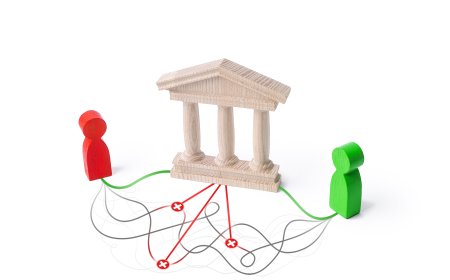
I write not to add another idea to the pile, but to argue for changing how we decide which ideas deserve the limelight. The answer lies in redesigning the system of decision-making itself -- clarifying who decides, how decisions are made, and how public money is allocated.

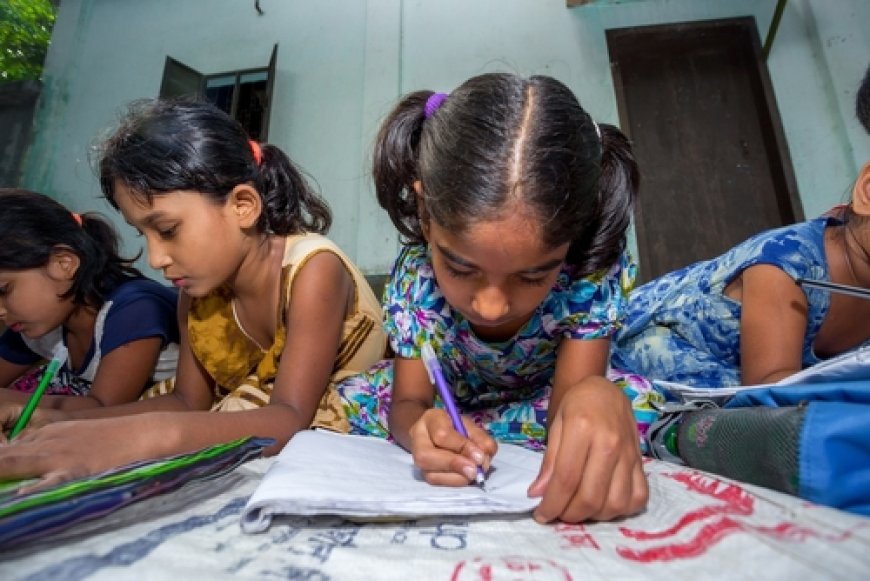
Imagine a family of ten: Two parents and eight children. Like most families who have neither the fortune nor the misfortune of inheriting empires, these parents cannot spend without constraint. Every taka matters. The real question is not how much they spend, but how they allocate it to benefit all their children.
It is not about dividing resources equally. Equality is not the same as efficiency. Efficiency is about achieving the best possible outcomes from limited means. Each child has different needs; some require more attention than others.
If decisions are made whimsically or at random, some or all children suffer. Investing in a child’s future is not like buying a lottery ticket. Outcomes are uncertain, but the costs of poor decisions are real.
Now imagine this same decision-making problem at the national level. Think about the people we elect -- those who occupy seats of power and make decisions on our behalf. The same trade-offs that exist within a household reappear, magnified, in parliament, in ministries, and around policy tables where laws are debated and passed.
Every government decision -- directly or indirectly, immediately or over time -- shapes our lives as citizens and those of future generations. None more so than decisions about education.
Many describe our education system as broken. I disagree. I believe it never became strong enough to break in the first place. It is incomplete -- like a staircase that was never finished, with steps leading in different directions, making completion increasingly difficult.
Students who manage to survive the system often do so by somehow leaping across gaps to reach their destinations. And while we speak year after year about fixing education, the staircase barely moves. Change remains elusive. We must ask: Why?
With the national elections having naturally been in focus, the past few weeks have been filled with political promises, manifestos, and ideas. Education features prominently across parties -- often linked to employability, girl’s education, and technology-driven initiatives.
Take, for instance, elements of the BNP education manifesto. Some proposals are genuinely promising.
The idea of introducing a unique digital ID for every student could significantly improve tracking of enrolment, attendance, learning progression, and dropout risks -- if implemented with strong data governance and privacy safeguards.
Similarly, the emphasis on improving education for children with special needs deserves recognition.
Global research suggests that AI-enabled adaptive textbooks, text-to-speech tools, speech recognition software, and real-time translation technologies are helping make learning more inclusive for students with visual, hearing, and learning disabilities.
Overall, some of the party’s intentions are well-received, but only as long as there is transparency about how these goals will be achieved.
But remember, good intention alone doesn’t justify spending taxpayer money on a solution that is not tried and tested. And regardless of the intension, some ideas and proposals require more careful scrutiny than others. Consider the recurring promise of distributing tablets or devices to teachers.
The global evidence is clear: Simply providing hardware rarely improves learning outcomes. Large-scale ICT initiatives -- from Peru’s One Laptop per Child program to multiple device-distribution schemes across developing countries -- have shown limited or no sustained gains in student achievement when not accompanied by intensive teacher training, curriculum integration, and pedagogical reform.
Existing research suggests that technology is not a shortcut; it amplifies existing capacity. If teaching quality is weak, devices alone do not fix it.
Similarly, the call for “technical education for all” reflects what some scholars describe as a skills fetish -- the belief that expanding vocational training automatically translates into employment and economic growth.
Labour market evidence suggests the story is more complex. Skills generate returns when aligned with labour market demand, when firms are expanding, and when institutional quality supports productive absorption.
Expanding technical streams without parallel industrial strategy, employer engagement, and rigorous tracer studies risks producing credential inflation rather than genuine opportunity.
So, you see, the problem, then, is not disagreement about the challenges. There is broad consensus: Weak foundational learning, inequity, unemployment, digital gaps. The real question is whether proposed solutions are grounded in evidence about what works.
Before scaling nationwide tablet schemes or universal vocational tracks, we must ask: Has this been piloted? Under what conditions did it succeed? What was the cost per additional learning gain? What happens when scaled across rural and urban contexts?
These contemplations equally apply to party manifestos- of all the political parties- and to government vision documents. The interim government -- despite their failure to give educational reform enough focus during their reign -- has taken welcome steps by producing visions and reports on primary, secondary and higher secondary education.
But the same issues arise in moving forward to make sure that the visions translate into change in reality: How are decisions being made? How much groundwork is done before an initiative is declared a solution? Who decides where public money is invested -- and based on what framework? Do these choices reflect a coherent, shared national vision of what every child in Bangladesh should gain from schooling?
Across all fronts, one element is strikingly thin: evidence generation in brainstorming solutions. Research, and not just any research, but research that allows us to test whether an idea is truly worth scaling.
This requires a disciplined pilot-test-scale-up mindset, designed to avoid what experimental and behavioural economist John List calls a voltage drop. Often, an intervention works well in a pilot setting, only to lose effectiveness when scaled.
This happens because populations differ, contexts change, implementation quality declines, system-wide effects emerge, and incentives shift toward coverage rather than quality. Very much endorsing the voltage effect, today, I present, as food for thought, some ways we can reset our mind-sets in terms of how we pursue educational decision-making and policy-setting.
My goal here is not to highlight, emphasize or repeat the educational research that is out there. We know the statistics. We know the problems. What we lack are reliable, tested, cost-effective solutions.
Every taka counts. Cost-benefit analysis is not optional; it is essential. I propose three systemic changes in how we can build and rebuild our education system:
ONE: Separate Vision from Evidence -- and Let Each do its Job
First, establish a three-layered policymaking structure: A vision-setting team, a research team, and an advocacy team. These teams should not be tenured or person-specific, but constituted and periodically reshuffled through a transparent, process-driven system, ensuring independence, accountability, and fresh perspectives over time. Representation should include academia, civil society, practitioners, and implementation partners, with built-in checks and balances.
Vision-setting and advocacy must involve wide, inclusive discussions on educational goals across levels and streams. The research team, formally embedded within the system, should consist of specialized researchers mandated to rigorously test proposed ideas and solutions through well-designed experiments and evaluations.
Policymakers would then be advised by this evidence, rather than relying on intuition, precedent, or political expediency. If strong literacy and numeracy are priorities, research should focus on identifying what actually works to achieve those goals -- before those ideas are scaled or institutionalized.
TWO: Commit to Education Beyond Politics
Second, we must mentally -- and institutionally -- commit to the long term. Education policy must transcend party politics. A 20-year vision should not be derailed by changes in government or political leadership.
THREE: Let Data Tell the Long Story
Third, we need to promote a data-driven mindset and invest in longitudinal data systems that allow us to understand educational trajectories over time in this complex sector.
My goal is to propose this new way of thinking that I believe will play a crucial difference in us continuing chasing educational progress and actually achieving it. The answer, in my opinion, lies in changing the system -- in changing how the system works -- how we decide who decides, how decisions are made, and how money is being spent.
The key is introducing the research layer into the system, and bridging the gap between researchers and policymakers, between evidence and policy. Without this layer engrained within the system, education remains endlessly discussed but rarely transformed.
This is why “experiments” in education have too often meant playing around with children’s lives. Playing around is not experimentation. Proper experimentation is scientific; playing around is gambling.
Old curricula, new curricula, srijonshil assessment, formative assessment -- changes pile up rapidly, often without proper piloting, implementation protocols, or meaningful -- neither enough or inclusive -- engagement with parents, teachers, and school leaders.
Researchers -- including myself -- have identified problems for years. It is time to focus just as seriously on identifying solutions that are tested and work. Instead of expanding the graveyard of underperforming interventions, we should channel resources toward rigorous research that tells us what delivers results.
Let me end with an example. Suppose we want children to learn better -- to think more deeply in Maths, Bangla, and English. An idea might be to redesign assessments so rote memorization no longer suffices, asking students to write their own poems rather than reproduce famous ones word for word.
If you agree, please don’t -- at least not yet. This is only an idea. Give researchers the opportunity to test it, generate evidence for or against it, and then debate it on solid ground. Anyone can diagnose problems or propose ideas. But implementing solutions -- especially in policy-making -- requires a deeper, more disciplined scientific approach.
That is the argument I am making here: For thinking more scientifically about education. The interim government may have taken the first step in the right direction through its vision documents, but these efforts will amount to little unless they are followed by the next steps -- steps that are firmly research-driven.
I have written about our education system relentlessly. This time, I write not to add another idea to the pile, but to argue for changing how we decide which ideas deserve the limelight. The answer lies in redesigning the system of decision-making itself -- clarifying who decides, how decisions are made, and how public money is allocated.
Until we do that -- until research guides policy rather than rhetoric -- meaningful educational reform will remain out of reach. Education will not improve until decision-making does. When it comes to education, reform is not just about new programmes. It is about new rules for deciding.
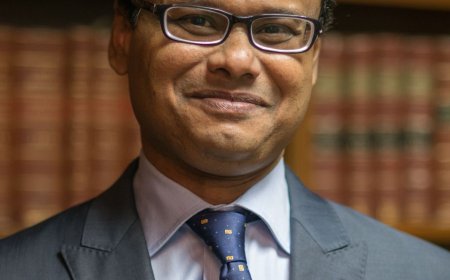
Dr. Rubaiya Murshed (PhD, University of Cambridge) is an Education Economist and an Assistant Professor at the Department of Economics, University of Dhaka.