

































































Bangladesh Chose Normal Over Revolutionary, and That Tells Us Everything
Voters opted for political change at a moment of acute economic strain and fraying public security. They desperately want stability and tangible economic recovery. That's what they voted for. That's what they now expect to receive in return.

Thursday's election should have been revolutionary. On August 5, 2024, a mass uprising forced out Sheikh Hasina after 17 years of increasingly autocratic rule. The country was hungry for change, exhausted by manipulated elections, ready for something genuinely new.
Instead, voters pressed the reset button and returned to a time when democratic competition still functioned.
Bangladesh didn't reinvent its political system. It restored the version that used to work before Hasina's Awami League hijacked democracy.
Understanding Jamaat's Performance
Let's examine what actually happened with Jamaat-e-Islami, because characterizing their 68 seats as a victory fundamentally misreads the electoral context.
Consider the circumstances leading up to the elections. The Awami League, Jamaat's existential enemy, the party that spent decades attempting to eliminate them from political life, was completely absent from this election.
Following the August uprising, the interim government suspended the party's activities and disqualified it from competing. Jamaat's biggest obstacle had been entirely removed.
Their main competitor was BNP, a party that had been systematically suppressed for 17 years under Awami League rule. Its leadership had been forced into exile or imprisoned through what many described as politically motivated prosecutions. The party's organizational capacity had been deliberately dismantled through sustained state persecution.
Jamaat had absorbed leaders from the National Citizen Party, heroes of the uprising who had helped topple Hasina's government. They carried momentum, street credibility, and revolutionary credentials.
The interim government under Nobel laureate Dr. Muhammad Yunus gave them a strong platform to make sure their voices were heard loud and clear. Every conceivable advantage aligned in their favour.
And despite all of this, they were decisively defeated.
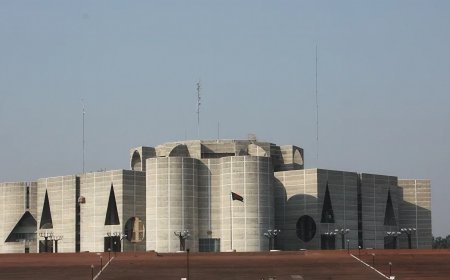
Winning 68 seats in a 300-seat parliament under these circumstances represents not victory but rejection. The result should be understood as exactly what it is: A clear electoral defeat and a message the party cannot afford to misinterpret.
The Bangladeshi electorate has consistently delivered this message. Even in 1991 -- considered Jamaat's breakthrough election -- they managed only 18 seats despite 12% of the national vote.
Bangladesh is increasingly religious and socially conservative, yes. But Bangladeshis fundamentally reject theocratic governance and the complete fusion of religion with state power.
Religious identity doesn't automatically translate into support for religious parties when choosing political leadership. That principle has been reaffirmed decisively.
The Geography of Economic Failure
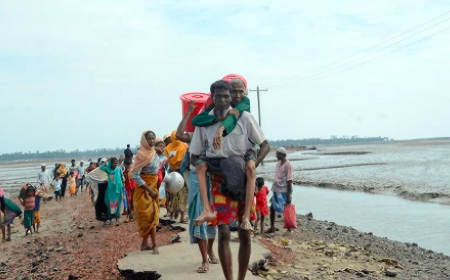
But Jamaat’s relative success does reveal something deeply troubling that policy-makers cannot afford to dismiss. Jamaat-e-Islami performed strongest in economically devastated areas -- particularly the northwest and southwest regions that have been battered by climate change and suffered through decades of economic stagnation. These are areas where meaningful development has been virtually absent.
BNP, by contrast, dominated in urban and peri-urban constituencies with active commercial sectors, established business infrastructure, and ongoing economic activity.
This isn't coincidental. When populations face sustained economic desperation and feel abandoned by state institutions, they become vulnerable to simplistic populist appeals. Religious demagoguery often fills the vacuum created by failed economic policy. History demonstrates this pattern repeatedly.
Any government, regardless of party, must deliver tangible economic improvements to these impoverished regions or watch this pattern intensify. Poverty and abandonment create fertile conditions for extremism. Policymakers can either address the underlying economic failures or continue confronting their political consequences. Those are the only options.
What Women Voters Demonstrated
Women constituted more than half the electorate, and their influence on the outcome was unmistakable and decisive. Jamaat's campaign rhetoric regarding women's roles in politics and the workforce backfired dramatically.
Campaign messaging that framed female participation in public life as representing moral decline alienated not only women voters but male voters as well. Even men found such explicitly regressive positions unacceptable in a party seeking to lead a modern nation-state.
BNP demonstrated a better understanding of contemporary political requirements. Tarique Rahman's daughter participated prominently throughout the campaign, helping the party project a modern, inclusive image aligned with evolving social values around gender equality.
The party's central messaging emphasized moving forward, not backward, while stressing stability, institutional order, and tolerance.
This approach resonated powerfully; not just with women but with the broader electorate tired of narratives suggesting the country should return to some idealized past where half the population remained excluded from public and economic life.
The Liberation War's Enduring Significance
Perhaps more than any other factor, this election demonstrated that Bangladesh's Liberation War of 1971 isn't merely historical background; it remains powerfully alive in national consciousness and political identity.
For context: Jamaat-e-Islami opposed Bangladesh's independence in 1971, actively collaborating with the Pakistani military during the nine-month war that created Bangladesh as a nation. This historical role has never been forgotten by the broader public.
Recent years have seen sustained attempts to rewrite this history: To introduce ambiguity about what occurred, to create false equivalencies where clear historical documentation exists. The electorate has now rejected all such revisionism decisively.
The mandate went overwhelmingly to BNP, a party that has consistently invoked the Liberation War as a source of national pride and political legitimacy. This wasn't accidental. It was deliberate, and it carries profound meaning for how Bangladesh understands its own identity and history.
The Dangers of Concentrated Power
BNP's two-thirds parliamentary majority represents both opportunity and substantial risk. Bangladeshs political history since independence offers an unambiguous lesson: Governments formed with overwhelming parliamentary dominance have consistently faced severe backlash, accused of arrogance, excessive centralization of power, and suppression of opposition voices.
This destructive pattern manifested with BNPs two-thirds majority in 2001 and again with the Awami Leagues super-majority in 2008. In both instances, massive mandates led to majoritarian governance that ultimately plunged the country into sustained political crisis.
Notably, the first two democratically elected governments after 1991 -- when both BNP and Awami League governed with single-party majorities rather than supermajorities -- managed to avoid major catastrophic errors. But provide either party with overwhelming power, and a pattern of abuse has reliably reasserted itself.
Strong mandates can certainly facilitate meaningful institutional reform. But they equally can fatally weaken democratic checks and balances if power is exercised without restraint and genuine humility.
How this new administration handles political dissent, manages parliamentary procedure, and approaches governance reform will be scrutinized intensely both domestically and internationally.
If BNP treats this mandate as permission to govern without meaningful institutional constraint, Bangladesh risks repeating its own recent history. Different party in power, identical authoritarian patterns, same destructive outcomes.
What This Election Actually Represents
This was Bangladesh's first genuinely competitive national election since 2008. After three consecutive manipulated elections under Sheikh Hasinas Awami League government, voters finally faced real political choices again.
They responded decisively, not with revolutionary fervor or radical reimagining, but with pragmatic calculation shaped by immediate economic and security concerns.
Voters chose economic stability over explicitly theocratic governance. They chose relative moderation over religious extremism. They chose the party that emphasized moving forward while respecting national history and identity.
Yet substantial numbers also supported Jamaat-e-Islami. The religious right has consolidated its position. The parliamentary opposition is now structurally rooted in conservative religious politics that wont simply disappear from the political landscape.
Historical evidence demonstrates that Bangladeshi voters exercise sound judgment when presented with genuine competitive choices. Free and fair elections in 1991, 1996, 2001, and 2008 all produced peaceful transfers of power and reflected the electorates capacity to recalibrate politics when necessary.
Thursday's result fits that established democratic pattern. Sheikh Hasina's Awami League deprived Bangladeshis of meaningful electoral agency for over a decade through systematic manipulation of three consecutive elections. That agency has now been restored, and voters have exercised it with clarity and purpose.
The Test That Lies Ahead
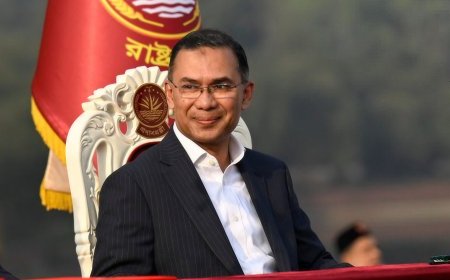
Tarique Rahman has returned to Bangladesh after 17 years of political exile in London, assumed full leadership of BNP following his mothers death, and delivered a landslide electoral victory. His authority within the party is now unquestionable.
But the more significant test begins now: Can he successfully transition from political victor to effective statesman?
The business community responded to Thursday's results with cautious optimism, hoping this government will move swiftly to restore public order and rebuild the investor confidence that has been severely damaged over the past 18 months.
Prolonged political turmoil, sporadic mob violence, and deteriorating law and order have devastated business confidence, disrupted investment flows, and damaged growth prospects.
Voters opted for political change at a moment of acute economic strain and fraying public security. They desperately want stability and tangible economic recovery. That's what they voted for. That's what they now expect to receive in return.
BNP holds the democratic mandate. The electorate has delivered its verdict with absolute clarity. The responsibility for governance has now shifted entirely to those the voters have entrusted with power.
Bangladesh deserves governance that approaches this mandate with genuine institutional humility and meets it with consistent performance and delivery. Voters have demonstrated they remain engaged, politically aware, and fully willing to exercise electoral judgment when presented with real democratic choices.
The question facing Bangladesh isn't whether voters made the correct choice on Thursday. The question is whether those now in power will remember that democratic mandates, especially overwhelming ones, carry profound responsibilities alongside their grant of authority.
Bangladesh has restored normal democratic competition. If this government squanders that restoration through arrogance or authoritarian overreach, the electorate will remember. And they will respond accordingly.
Faruq Hasan is a development worker and a political analyst.