





































































A Mandate Won. Trust Now at Risk.
This government came to power with a democratic mandate. But it risks squandering it. City administrations must look neutral. International crimes prosecutions must feel independent. And the central bank must signal credibility beyond politics.

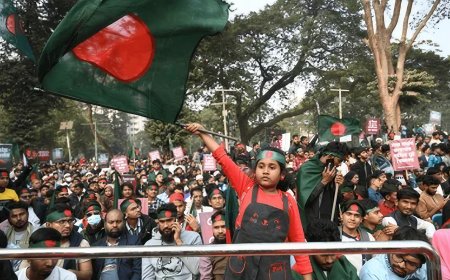
February 12 was a turning point. After 17 years, citizens voted freely. For many, it was the first ballot of their lives. The opposition accepted the result. That moment created something rare in our politics: hope for a functioning democracy.
A new government deserves room to govern. But early decisions define direction. And three early signals are raising serious concerns.
Party Loyalists in City Corporations
Within days of assuming office, the government appointed six senior leaders of the BNP as administrators of major city corporations, including Dhaka North and Dhaka South.
These are not neutral bureaucrats. They are active political figures.
City corporations manage core public services: waste disposal, roads, drainage, public health, licensing, urban planning, etc.
In a country where local elections shape grassroots power, these institutions matter enormously. Control over them means influence over contracts, visibility, public messaging and administrative leverage.
Installing ruling party loyalists just ahead of anticipated local elections creates a perception problem. Even if no wrongdoing occurs, the appearance of partisan advantage undermines public confidence. Democracy requires not only fairness but the clear absence of bias.
If institutions become extensions of party machinery, cynicism deepens. And once citizens lose faith in neutrality, restoring it is far harder than protecting it in the first place.
Removing a Victim-Backed Prosecutor
After the July uprising, victims and student leaders strongly advocated for Tajul Islam to lead prosecutions related to crimes against humanity.
His appointment was not a gift from the political elite. It was driven by those who had suffered. During the crackdown, he stood beside detainees, searched for the disappearance and provided legal support when many others stayed silent. That history created trust.
Under his leadership, experienced trial lawyers were assembled, and reforms were initiated to align procedures more closely with international standards. The process was not perfect, but victims believed the prosecution was not serving political convenience.
Now he has been removed in what appears to be a top-down political decision.
When trials involve powerful state actors, prosecutorial independence is not a luxury. It is the foundation of legitimacy. Victims who testified did so at personal risk. If they begin to suspect that justice is politically managed, participation will shrink, testimony will dry up and the moral authority of the process will weaken.
Justice collapses quietly when trust erodes.
The Central Bank and the Fragility of Confidence
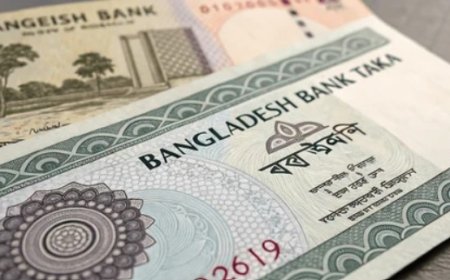
If governance is about institutions, monetary policy is about trust distilled into numbers.
After the fall of Sheikh Hasina’s government, remittances jumped from roughly $24 billion to $33 billion annually. Foreign reserves climbed from $18 billion to around $30 billion within 18 months.
Why? Because the then-governor, Dr Ahsan Mansur, sent clear signals. Interest rates would not be artificially suppressed. The exchange rate would not be rigidly defended. Monetary expansion would not run ahead of real economic production.
Markets respond to credibility. Mansur made controversial decisions. Structural banking reforms were incomplete. Weak banks were refinanced. But investors and remitters believed one thing: He was not taking instructions from the Finance Ministry. That perception anchored the taka.
Now the government has appointed a politically-aligned governor, Mostakur Rahman. The concern is not about personality; it is about perception.
Fears are already circulating about ultra-loose monetary policy, sharp rate cuts, opaque treatment of non-performing loans, politically driven loan rescheduling, and continued refinancing of insolvent banks without deep reform.
Ironically, some of these risks existed before. The difference was credibility. Independence was assumed. That assumption stabilized expectations.
Currency is paper. Its value rests on belief. If global banks hesitate to expand credit lines, they are not reacting only to policy mechanics. They are reacting to signals. And signals shape capital flows long before formal policy changes take effect.
Bangladesh is navigating what economists call a balance sheet recession. Many businesses are distressed not because they are corrupt, but because over-investment has collided with weak demand. Some rate easing and targeted restructuring may indeed be necessary to revive productive capacity.
But easing must come from credibility, not political pressure. If policy shifts are perceived as favors to connected groups rather than macro-economic recalibration, the likely outcome is the opposite of what is intended: Inflationary pressure, exchange rate instability, and renewed capital flight.
The Hasina regime’s greatest damage was not only institutional weakness. It was the erosion of trust in institutions.
Trust cannot be rebuilt with loyalists. It is rebuilt with independence that is visible, consistent and tested under pressure.
The Real Test
This government came to power with a democratic mandate. That mandate gives authority. It does not grant immunity from scrutiny.
City administrations must look neutral. International crimes prosecutions must feel independent. The central bank must signal credibility beyond politics.
If power is exercised with restraint, the promise of February 12 will mature into institutional renewal.
If not, what began as democratic revival risks becoming another rotation of patronage.
The choice is still open.
Dr Mohammad Nakibur Rahman is a professor of Finance at the University of North Carolina and the US spokesperson for Jamaat-e-Islami Bangladesh.