






























































Republic vs State
If South Asia wants its uprisings to mean more than a change of management, it has to stop mistaking collapse for transformation.


South Asia has built a remarkable political machine. It takes in inflation, youth despair, unfair wealth, captured institutions and one spectacular act of state stupidity; it produces a mass uprising, a fallen government, a brief national mood of redemption, and then -- after a respectful pause -- the quiet return of the same old system wearing a fresh shirt.
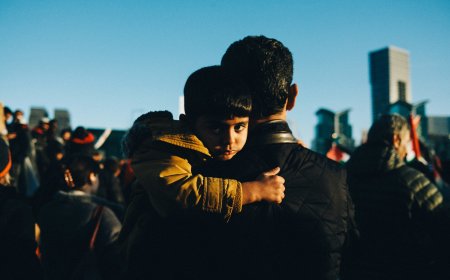
In just three years, three governments were pushed out by mass uprisings -- Sri Lanka in 2022, Bangladesh in 2024, Nepal in 2025.
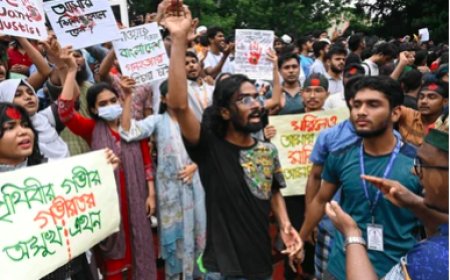
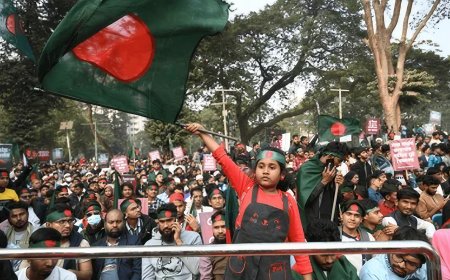
Bangladesh alone paid with up to 1,400 dead and more than 11,700 arrests during the July-August crackdown, then followed that bloodletting with a referendum in which over 48 million people voted yes to the July Charter on a 60% turnout.
Those numbers should have forced a new political settlement. It still didn’t. The fact that it may not tells us the central truth of South Asian politics: The street can smash the front door, but the machine is still running in the basement.
That machine has a familiar operating system. First comes extraction: Wealth pools at the top, opportunity things below, and the state begins to look less like a public institution than a concierge service for the connected.
Bengal under colonial revenue extraction, East Pakistan under structural economic subordination, Bangladesh under crony capitalism and protected loan default -- the costumes change, the script does not.
Then comes the trigger: A cartridge, a language decree, a quota ruling, a social media ban. States like the trigger because it lets them pretend the problem is small. If the issue is technical, then the response can be technical. But the trigger is only the match. The room is already full of gas.
Bangladesh before July 2024 made that painfully clear. Inflation had hit 11.66%, the highest in more than a decade, while food inflation crossed 14%. Around 40% of young Bangladeshis aged 15 to 29 were NEET -- not in employment, education, or training -- and youth unemployment remained above 9%.
At the same time, the public watched an economy shaped by politically protected business groups, bank takeovers, non-competitive contracts, project cost inflation, illicit financial outflows, and a widening gap between the asset-rich and the wage-poor. A small class accumulated wealth with the help of the state; everyone else accumulated patience. Patience, as it turns out, is not a renewable energy source.
This is why uprisings in South Asia are so often misread. Governments tell themselves the protest is about the issue that first appears on the placard. It almost never is. The 2024 uprising in Bangladesh was not really about quotas, just as 1952 was not only about language and 1857 was not only about cartridges.
It was about what the issue revealed: A state that had become visibly unfair, economically exclusionary, institutionally partisan, and increasingly unpersuadable through normal channels. At some point, a policy dispute becomes a legitimacy crisis. The government notices this only after it has already sent the police, which is rather like smelling smoke after you’ve locked all the exits.
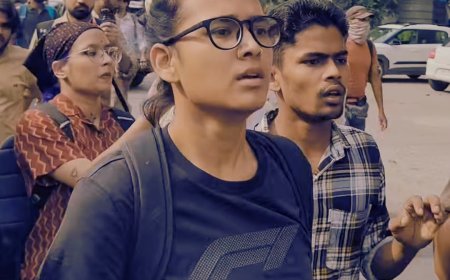
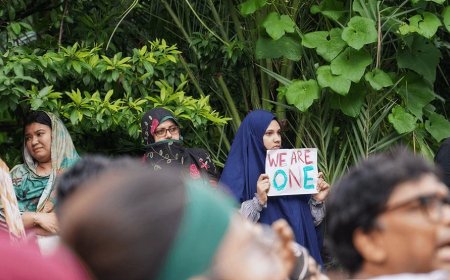
Students usually arrive first because they encounter the state where its fraud is easiest to measure. They meet it in universities, exams, the first job market, and the first humiliating discovery that merit is a speech, not a system. This is why students were central to Bengal’s anti-colonial resistance, the Language Movement, the anti-Ershad struggle, and the July uprising.
They are not naturally more romantic. They are simply positioned at the point where institutional failure becomes personal. Add smartphones, and they become not only the first protesters but also the first record-keepers. The state still behaves as if it can control the narrative by controlling the street. It now discovers that the street has already uploaded the evidence.
That is where the old guard reveals itself most clearly. When challenged, South Asian states reach instinctively for the colonial script: Curfew, blackout, arrest, force. In Bangladesh, that meant a crackdown the UN described as brutal and systematic.
This is not just a problem of excessive force. It is a problem of institutional memory. For example, Bangladesh’s police structure still descends from the Police Act of 1861, a law explicitly designed to make the police an instrument of control.
The bureaucracy still bears the familiar marks of centralization, secrecy, and executive obedience. The state, in other words, is still wired to treat citizens as a management problem and dissent as a software glitch.
And yet one has to be unsentimental here. Uprisings do not win by moral force alone. They succeed when the coercive core of the state decides the ruler is no longer worth saving at any cost. The crowd creates a crisis. The armed establishment decides whether a crisis becomes collapse.
That is one of the region’s least romantic truths and one of its most consistent. It helps explain why uprisings can look democratic in form and still remain unfinished in substance. A prime minister falls. A government changes. The machinery survives the transfer, like a bad landlord who somehow outlives every tenant revolt.
That is where the loopholes begin.
The first loophole is organizational. Movements built to delegitimize rulers are rarely built to redesign states. Their strengths such as decentralization, speed, moral clarity, and suspicion of hierarchy make them powerful in the square and weak in the committee room. Bangladesh after 2024 showed this clearly. The uprising could topple a government.
It could not, by itself, depoliticize the police, protect judicial appointments, clean up public banking, regulate party finance, and create durable anti-corruption institutions. Rage scales faster than administrative capacity. That is not a moral flaw. It is a structural fact. Revolt can break the lock; it does not automatically build a better door.
The second loophole is time. Uprisings generate legitimacy in days, while reform takes months or years.
The first post-uprising period is politically unique because old elites are disoriented and public attention is intense. But it is also when the new order is weakest, least coordinated, and most burdened by immediate crisis management. By the time reform becomes technically possible, it is often politically inconvenient.
The window opens brightly and closes bureaucratically. South Asia’s old guard understands this perfectly. It does not always need to defeat reform. It only needs to outwait it, which is much cheaper and requires fewer press conferences.
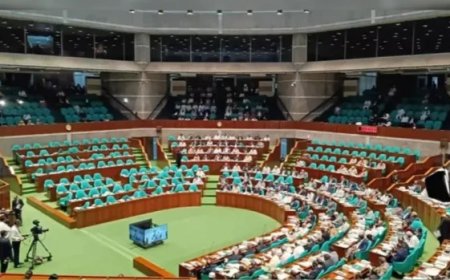
The third loophole is elections. Yes you read it right! Elections, though necessary, can also become a shortcut back to normalcy. Once ballots are cast, the political class begins acting as though procedure has solved substance. Bangladesh now sits exactly inside that danger.
It has had the uprising, the interim phase, the charter, the referendum, and the elected government. On paper, that reads like democratic renewal. In practice, it can still become the familiar South Asian manoeuvre: Change the faces, keep the machinery, declare history complete.
An election does not, by itself, dismantle crony capitalism, recover stolen public wealth, or make the next prime minister weaker than the last one. It mostly changes whose portrait gets printed large.
So what should be done -- in Bangladesh now, and in the next South Asian uprising if there is one?
The first lesson is that any movement serious about change must know before the first march what it wants after the fall. Not 50 slogans. Five institutional priorities. Election administration. Judicial appointments. Emergency powers. Police accountability. Anti-corruption enforcement. Banking supervision. Party finance transparency.
If those items are not settled early, the old guard returns through procedure. It smiles, speaks the language of order, and waits for exhaustion to do the rest. South Asia has enough poetry. What it needs is a checklist.
The second lesson is economic. South Asia’s uprisings are not only about democracy in the narrow procedural sense. They are also about unfair distribution of wealth. If the next uprising does not confront the concentration of financial power, politically protected monopolies, predatory contracting, bank loot, and the conversion of public institutions into private escalators, it will leave the core grievance intact.
People do not risk their lives only because elections are flawed. They do so because they can see who gets rich, how they get rich, and whose future is being used to fund it. Nothing radicalizes a society quite like watching a few people become mysteriously richer during a national crisis.
The third lesson is institutional survival. Movements need civic afterlives. The square empties; the old guard does not. Without watchdog bodies, legal defence networks, student organizations that mature instead of vanishing, stronger local government, and independent media, reform becomes a temporary mood rather than a durable structure.
South Asia does not need more catharsis. It needs better follow-through. The revolution cannot keep checking out before checkout time.
Bangladesh, to its credit, has gone further than most countries in writing this down. The July Charter contains more than 80 reform proposals, was endorsed by 24 political parties, and was backed by more than 48 million voters.
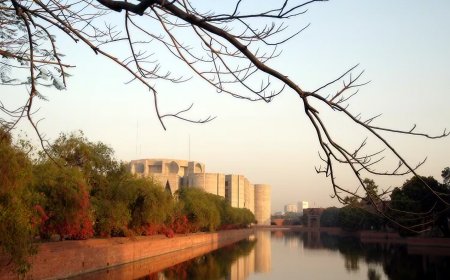
The next parliament was conceived not only as a legislature but as a vehicle for constitutional reform. The new government should stop treating this as an awkward inheritance and start treating it as what it is: The closest thing Bangladesh has to a blueprint.
That means implementing the politically expensive parts first -- independent oversight, judicial reform, police reform, transparency in money and appointments, anti corruption protections, and credible action against crony wealth.
Reform delayed for convenience is usually reform denied politely, with tea served on the side.
And that brings us to the conclusion South Asia keeps postponing because it sounds impolite. The institution is the problem. Not the leader. Not the party. The institution -- the old guard in file, uniform, contract, and habit.
Bad rulers matter, of course. But what keeps producing them is an inherited structure: Colonial policing, centralized bureaucracy, captured regulators, politically protected wealth, and a governing culture that treats accountability as an inconvenience rather than a principle.
This is why governments fall dramatically while systems recover calmly. The old guard is not just in parliament. It is in the police station, the ministry file, the loan committee, the procurement board, the whispered assurance that some rules are for the public and others are for the connected.
That is why institution-building is more radical than regime change. A government can be chased out in a week. An old order can survive flags, constitutions, and martyrs. If South Asia wants its uprisings to mean more than a change of management, it has to stop mistaking collapse for transformation.
The task is not only to topple the ruler. It is to make the next ruler weaker, the next banker less protected, the next police order less political, and the next bureaucrat less obedient to power than to law.
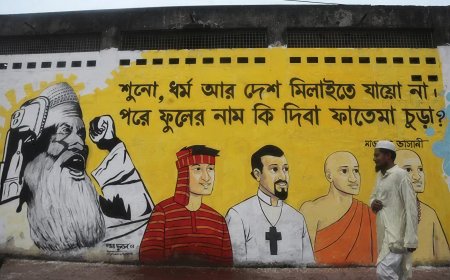
Bangladesh now has both the warning and the mandate: 1,400 dead, 11,700 arrested, more than 48 million yes votes. That should have stopped BNP from calling the reforms or the referendum a “stunt”. It didn’t. But I hope it does, cause there’s still graffiti on the wall that still screams “Murubbi, Murubbi, no no no.”
Apurba Jahangir is a writer, political analyst, and former deputy press secretary to the Chief Adviser of the Interim Government of Bangladesh.