































































Can Bangladesh Resurrect Saarc?
Reviving Saarc is a Sisyphean task, but it is one Bangladesh is uniquely positioned to undertake. In a world of hardening blocs, South Asia cannot afford to be the only region without a voice.
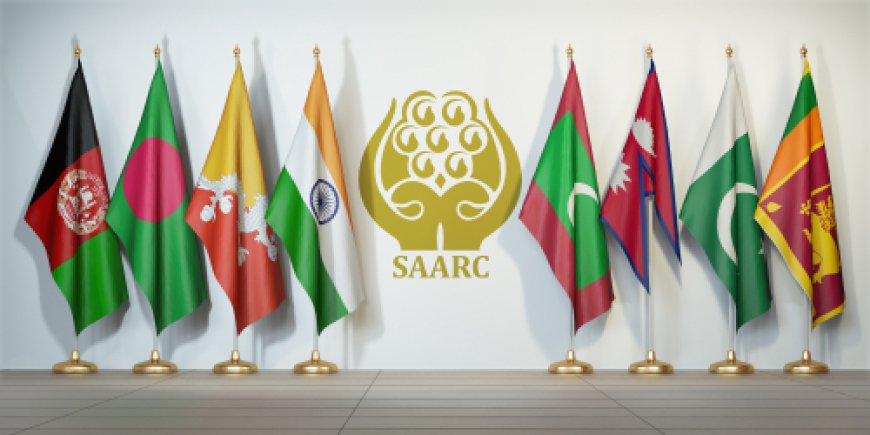
For the better part of a decade, the South Asian Association for Regional Cooperation (Saarc) has existed in a coma, a casualty of the intractable rivalry between New Delhi and Islamabad.
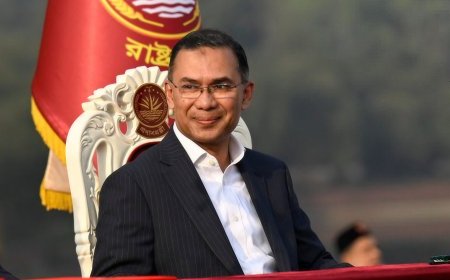
But in Dhaka today, the winds have shifted. The newly-elected government, led by Prime Minister Tarique Rahman, has placed the revival of Saarc at the forefront of its foreign policy agenda.
This is not merely an act of dynastic homage to his father, the late President Ziaur Rahman, who first conceptualized the bloc; it is a strategic calculation that mirrors the intent of the preceding interim government led by Dr Muhammad Yunus.
Both administrations recognized a singular, uncomfortable truth: A fragmented South Asia is a strategic liability for Bangladesh.
But as Dhaka seeks to dust off the files in the Saarc Secretariat, it faces a region transformed. The geo-political chessboard has expanded.
India is projecting power globally while decoupling from its western neighbour; Pakistan is grappling with internal volatility; and China is watching from the wings.
In this charged atmosphere, why is the revival of Saarc critical for Bangladesh, and does Dhaka possess the diplomatic leverage to pull it off?
The Cost of Non-Cooperation
The argument for Saarc has always been economic, but today it is existential.
Intra-regional trade in South Asia hovers abysmally around 5%, compared to 25% in Asean.
For Bangladesh, a rising middle power with a violent geography, the lack of regional integration is a handbrake on growth.
While bilateral ties with India are robust, the "bilateral-only" approach limits Dhaka’s strategic autonomy.
A functioning multi-lateral forum allows smaller states Bangladesh, Nepal, Sri Lanka, and the Maldives to aggregate their bargaining power. It transforms them from peripheral actors into a collective bloc.
Furthermore, the climate crisis does not respect the borders. Managing transboundary rivers, disaster resilience, and energy grids requires a regional mechanism, not just a series of bilateral handshakes.
The Mediation Dilemma
The hurdle, of course, is the India-Pakistan conflict.
Critics will argue that any attempt to revive Saarc is doomed to fail because New Delhi has effectively shifted its focus to Bimstec (Bay of Bengal Initiative for Multi-Sectoral Technical and Economic Cooperation) to bypass Pakistan.
However, this is where Bangladesh’s potential leverage lies. Dhaka is one of the few capitals that enjoys functional leverage with both New Delhi and Islamabad.
Bangladesh cannot "mediate" Kashmir – India has long rejected third-party intervention there – but it can mediate the process.
Dhaka’s strategy must be one of "functional decoupling." The new government can push for a Saarc model that separates political disputes from technical cooperation.
By proposing a "Saarc minus politics" agenda focusing strictly on trade facilitation, energy connectivity, and climate action, Bangladesh can make it costly for either India or Pakistan to be the spoiler.
The message from Dhaka should be clear: We are not asking you to resolve your history; we are asking you to secure our collective future.
The Dragon in the Backyard
Perhaps the most delicate variable is the role of China. Beijing, currently an observer in Saarc, has long sought full membership – a move Pakistan supports and India vehemently opposes.
For Prime Minister Rahman, the situation requires a masterclass in diplomatic balancing.
Bringing China into Saarc as a full member would be a poison pill for India, likely killing the organization for good. However, entirely shutting out the region’s largest investor is equally impractical.
Bangladesh can propose a middle path: Utilizing China (and other observers like the EU and Japan) as "development partners" for specific Saarc projects without altering the membership structure. This allows South Asia to tap into Chinese capital for regional connectivity projects while assuaging Indian fears of strategic encirclement.
It is a risky game, but one that could uplift Bangladesh’s image from a passive aid recipient to a sophisticated geo-political pivot.
Practical Adaptability
If this initiative is to be more than just rhetoric, it needs "practical adaptability" on the ground. We cannot simply call for a summit and hope for its success.
First, Bangladesh should advocate for a "Climate Saarc" summit. By framing the engagement around environmental survival, a threat that looms over New Delhi and Islamabad alike, Dhaka can create a politically neutral entry point for engagement.
Second, the government should reactivate the lower levels of the organization. Even if the Heads of State cannot meet, the central bankers, agriculture secretaries, disaster management chiefs, etc must.
Keeping the institutional plumbing functional is key to eventual revival.
Reviving Saarc is a Sisyphean task, but it is one Bangladesh is uniquely positioned to undertake. In a world of hardening blocs, South Asia cannot afford to be the only region without a voice.
Prime Minister Rahman will not measure the success of this initiative by whether he can convince India and Pakistan to embrace it.
He must convince them that the region shouldn't pay for their feud.
If Dhaka can thread this needle, it will rewrite the future of South Asian diplomacy.