







































































Beyond the Vigilante’s Shadow
Our academics, civil society, and the media must urgently mobilize to stand beside the public. Civil society must venture beyond the comfortable confines of elite, conventional discourse and aggressively advocate for the legal protection of the most marginalized communities.

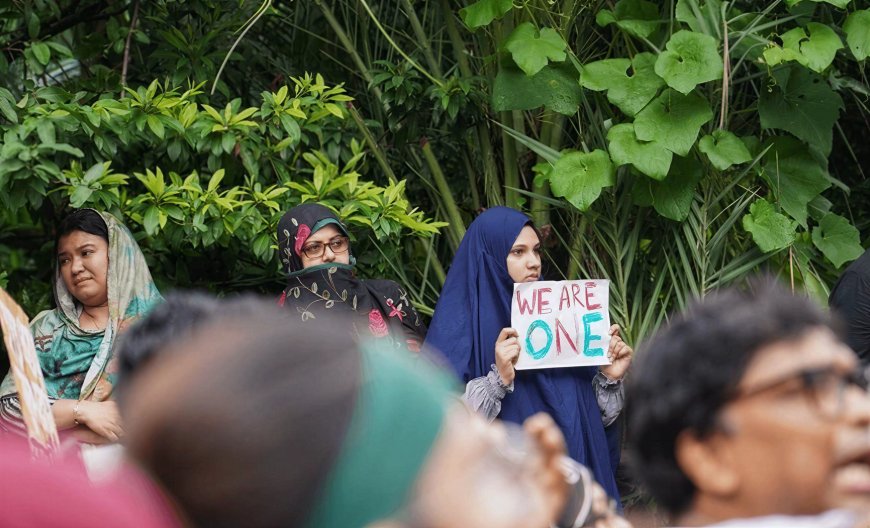
Brutal vigilantism and systemic lawlessness are not inherent cultural traits; they are the desperate symptoms of a public that has lost faith in a weaponized legal system. To step back from the abyss, Bangladesh must embrace procedural justice and rebuild trust from the ground up.
The Everyday Reality of Disobedience
Standing at a gridlocked, sweltering intersection in Dhaka, one routinely watches a motorist nonchalantly run a red light, leaving the rest of the queue to choke on exhaust fumes. Watching this everyday paralysis, we often find ourselves grappling with a cynical yet necessary question: Why do the people of this country have such an apparent aversion to following the rules?
From the chaotic disregard for basic traffic regulations to the endemic evasion of daily administrative duties, an omnipresent, almost reflexive urge to bypass the law persists.
Yet, if we pause to reflect, we must ask ourselves a far more profound question. Do ordinary people genuinely derive pleasure from this lawlessness? Or is there a deeper, structural malaise hidden within our state machinery that forces the public to withdraw its faith from the legal system?
The Vacuum of Authority and the Rise of the Mob
Today, in late September 2026, this question is no longer a matter of mere sociological curiosity; it has escalated into a critical emergency of national survival. Following the political upheavals of August 2024, Bangladesh was thrust into a devastating security vacuum.
The subsequent two years have witnessed a terrifying normalisation of vigilante violence, public lynchings, and digital mob trials across the country.
The streets of our cities and rural hamlets alike have tragically turned into arenas for collective vengeance. When mobs take to the streets to brutally execute suspected criminals, or when online rumours spark communal arson in a matter of hours while law enforcement stands paralysed, we are witnessing the terminal stages of a society that has lost all faith in its institutions.
This violent relapse into vigilantism is the ultimate, catastrophic manifestation of a state where the law no longer belongs to the people.
The Psychology of Compliance
The authentic desire to abide by the law never stems from the fear of a police truncheon or the threat of penal sanctions; it is born from an innate sense of civic duty and a steadfast belief in the fairness of the system. As Rabindranath Tagore eloquently warned, "The voice of justice weeps in silent isolation, when power, blinded by its own allure, binds it in chains".
When the legal framework fails to safeguard fundamental rights and the everyday dignity of the common citizen and instead becomes a blunt instrument for the powerful to incite fear, people inevitably stop seeing the law as their own.
In such a dystopian reality, breaking the rules transcends mere disobedience. It becomes a silent, internalized rebellion, a desperate protest against the relentless injustice and systemic neglect inflicted on the populace.
This is neither a novel psychological phenomenon nor an inherent cultural defect. In his seminal 1990 work, Why People Obey the Law, the Yale University scholar Professor Tom R. Tyler intricately maps out this exact human psychology.
Through extensive empirical research, Tyler demonstrated that while escalating financial penalties or the looming threat of severe punishment might temporarily coerce people into submission, such heavy-handed tactics utterly fail to reduce crime in the long term.
People are naturally predisposed to comply with the law voluntarily only when they perceive the legal apparatus as genuinely neutral, free from corruption, and fundamentally respectful of their struggles and self-worth. Professor Tyler conceptualised this as ‘procedural justice’.
When an ordinary citizen feels visible to the state and trusts that the state is not subjecting them to institutional neglect, they naturally adopt legal compliance as a core component of their civic responsibility.
The Architecture of Inequality
This echoes the foundational British constitutional principle formulated by A.V. Dicey, who argued that the true rule of law requires absolute equality, with no individual, regardless of political rank, bureaucratic power, or immense wealth, exempt from its application.
This principle is mirrored in Article 27 of Bangladesh’s own Constitution, which guarantees that all citizens are equal before the law and entitled to equal protection. Yet, one need only observe the daily realities of Bangladeshi life to see how severely this principle is breached.
Consider the exhausted, sun-burnt rickshaw puller or motorcyclist waiting patiently at a chaotic junction. When a vehicle belonging to a powerful elite effortlessly glides past them on the wrong side of the road, casually ignoring every traffic signal with absolute impunity, profound psychological damage is done.
The ordinary citizen watching this spectacle realizes immediately that a rule enforced solely on the vulnerable is not a law, but an instrument of subjugation; obeying it in isolation feels akin to self-degradation.
"Where all barriers and divides converge into one," wrote Kazi Nazrul Islam, invoking an egalitarian ideal. If the law cannot erase stark power disparities and bring everyone beneath a single, protective umbrella, it breeds a cultural tendency to break the rules.
This asymmetry replicates itself forcefully in our economic lives. When a hard-working, middle-class citizen tries to pay their income tax, they often face months of bureaucratic harassment, moving from pillar to post in government offices.
They watch with bitter resentment as influential billionaires and politically connected oligarchs evade hundreds of crores of taka in taxes, parading their wealth without consequence. Meanwhile, the ordinary taxpayer is disproportionately penalised for the slightest administrative error.
Under such relentless duress, an individual's faith in the legal order evaporates entirely. The prevailing sentiment becomes one of profound cynicism: To remain honest is to invite punishment. Brute force or punitive measures cannot cure this deep-seated despair.
Citizens will only pay taxes willingly, or abide by the law spontaneously, when they feel the state deeply respects their hard-earned money and demonstrably uses it to guarantee the services, safety, and prosperity of their families.
The Democratic Deficit in Lawmaking
The legal philosopher Lon L. Fuller argued in The Morality of Law that when legislation is arbitrary, ambiguous, or detached from public reality, it fails to command the ‘fidelity to law’ required for a functioning society. The profound alienation we are witnessing in Bangladesh today is deeply rooted in this exact failure -- specifically in how our legislation is manufactured.
The degree to which the public accepts a law is intrinsically linked to the transparency of its creation. In our country, the overwhelming majority of legal drafts are cobbled together in closed, air-conditioned rooms, entirely hidden from the public eye.
The very people whose lives these statutes will fundamentally alter -- the struggling farmers, the industrial workers, the small-scale entrepreneurs, and the pedestrians -- are denied any voice or consultation in the process.
Contrast this democratic deficit with international best practices. In 2014, India introduced a 'Pre-Legislative Consultation Policy', requiring that draft laws be open to 30 days of public scrutiny and feedback. Similarly, South Korea has made citizen feedback on draft legislation compulsory through accessible digital platforms.
When a law fails to reflect people's lived hardships and real demands, how can we expect them to embrace it as a shield for their own protection?
Forging a New Social Contract
If Bangladesh is to pull itself back from the abyss of lawlessness and mob rule, the state and the government must radically overhaul their philosophical approach to governance.
This requires embedding a firm, rights-based approach into the very fabric of public policy reform. Before enacting any new legislation, the state must orchestrate open, inclusive public consultations. Ordinary citizens must feel that these legal decisions are crafted specifically to ease the burdens of their daily lives.
Furthermore, our law enforcement agencies must be rigorously and irreversibly detached from partisan political influence, transforming them into entirely professional bodies.
When the public sees that even the most powerful political figures face no leniency from the police or the courts for their offences, a new, restorative relationship of trust will blossom between the state and its people. If the government can guarantee this level of institutional transparency, the necessity for truncheons and punitive fines will rapidly diminish.
The Burden on the Judiciary and Legal Profession
In navigating this precarious path to recovery, the responsibility resting upon the shoulders of our learned judges and legal advocates cannot be overstated. The staggering backlog of over four million pending cases clogging the corridors of our courts is not merely stacks of dusty paper files. They represent the trapped tears, the broken livelihoods, and the excruciating daily struggles of millions of families.
When a family is financially and emotionally decimated after spending years navigating the labyrinthine corridors of justice without receiving a verdict, they incrementally surrender all hope in the law and the formal justice system.
If our esteemed judges and advocates commit themselves with genuine sincerity to eradicating this judicial procrastination -- making the doors of the courtroom accessible and entirely free from harassment -- they will emerge as the ultimate sanctuary for the common citizen. Only then will people begin to believe, once again, that a steadfast refuge for justice remains in the face of tyranny.
A Coalition of Conscience
However, institutional reform in a vacuum is insufficient.
Our academics, civil society, and the media must urgently mobilize to stand beside the public. Civil society must venture beyond the comfortable confines of elite, conventional discourse and aggressively advocate for the legal protection of the most marginalized communities.
Researchers within our universities must abandon purely theoretical, textbook exercises. They must pursue legal reforms that directly address the genuine suffering of ordinary Bangladeshis, applying deep, practical knowledge of the local political and bureaucratic context.
Crucially, the media must look beyond the mere sensationalism of crime reporting. Investigative journalists must illuminate exactly how the labyrinth of legal complexities actively grinds down the lives of the working class. When the media champions the legal battles of the destitute and the voiceless, society as a whole learns to unite in a formidable front against injustice.
The Inner Light and the Path Forward
"It is the inner light of humanity that guides one through all darkness to the rightful path". If we lovingly instil in our children from a tender age that adhering to traffic signals and keeping our environment clean is not a performance enacted out of fear of the police.
Instead, it is a profound expression of love and responsibility toward their fellow citizens and their country -- and that child will never grow up to consciously violate the law.
There is absolutely no loss of freedom in obeying a just rule. On the contrary, only by safeguarding the rights of others can we truly secure our own liberties and lives.
The rule of law is not the dry, lifeless prose of heavy legal tomes, nor is it a distant, unreachable star. At its core, the rule of law is simply the quiet, unshakeable assurance that at the end of a long day, you will return home in peace to see the faces of your loved ones.
When a nation and its society can embrace its citizens with profound compassion, assuring them, "This law is built to protect you, and here you are entirely safe", in such a country, no one willingly chooses the path of crime. On the day our judges, advocates, politicians, and ordinary citizens join hands in a shared bond of mutual respect and affection, the need to govern the populace by force will vanish.
On that day, the law will cease to be a stranger's weapon and will finally become the most reliable sanctuary for our lives and our dignity.
Fayazuddin Ahmad is a legal researcher and development professional.