


























































When Lullabies Become Archives
What appears as playful nonsense often functions as mnemonic residue, compressed narratives of invasion, hunger, gendered sorrow, ecological uncertainty, and communal endurance.

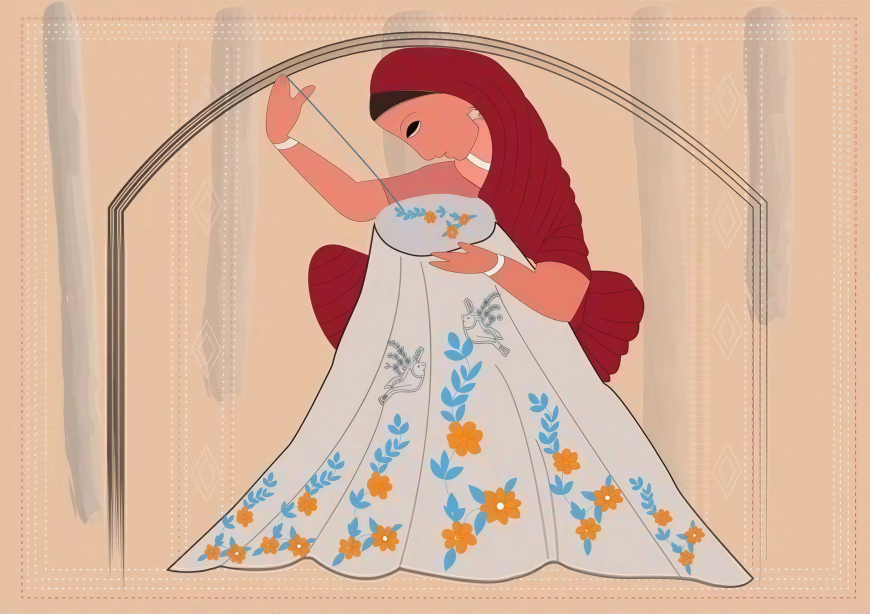
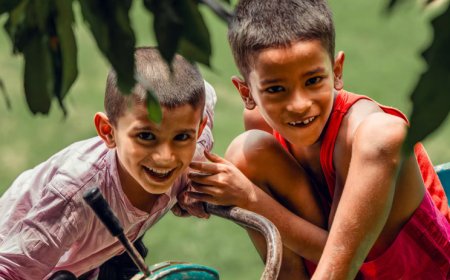
In the bustling lanes of Dhaka or the quiet villages of West Bengal and rural Bangladesh, a mother’s soft voice crooning: “Ay ay chand mama, tip diye ja” remains a timeless and intimate scene. These Bengali folk rhymes, known as chhara, seem at first to be simple verses meant to lull children to sleep or provoke playful laughter. Yet beneath their gentle cadence lies a dense archive of meaning.
They carry echoes of history, social commentary, cultural wisdom, and emotional resilience, passed down through generations by oral tradition. What appears as playful nonsense often functions as mnemonic residue, compressed narratives of invasion, hunger, gendered sorrow, ecological uncertainty, and communal endurance.
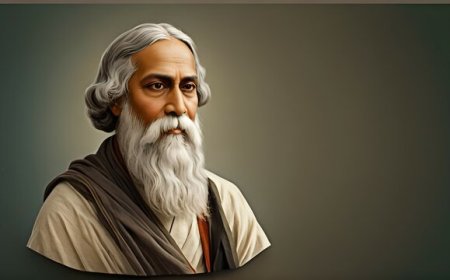
This layered quality is what gives Bengali folk rhymes their enduring power. Syed Mohammad Shahed, the renowned folklorist and former professor at the University of Dhaka, argued in his seminal 1993 paper that Bengali rhymes are far more than children’s playthings.
He described them as “the genesis of all songs,” suggesting that their roots may stretch back nearly a thousand years to the caryā-pada Buddhist verses, the earliest known corpus of Bengali literature.
Emerging from Indo-Aryan traditions and collective authorship, these rhymes are anonymous, fluid, and socially functional. They evolve like living organisms, adapting across regions and historical moments while reflecting the changing inner life of Bengal.
Their anonymity is not a weakness but a strength: Freed from individual ownership, they become collective property, shaped by memory rather than manuscript.
Seen from this perspective, folk rhymes belong to the same expressive universe as nakshi kantha embroidery or alpana floor art. Like these visual traditions, rhymes are shaped primarily by women. Mothers and grandmothers carried memory into domestic spaces through their voices. Whether sung to calm restless children or recited during play, these verses quietly documented social realities.
From Rabindranath Tagore to Subhash Mukhopadhyay, many literary figures engaged with rhymes, yet the defining beauty of folk chhara lies in their spontaneity. They were never designed as formal literature. They flow as naturally as breath itself. In this sense, the courtyard and the kitchen became unwritten archives, and women, often excluded from formal historiography, became custodians of cultural continuity.
Although not composed with the explicit intention of recording history, these rhymes bear unmistakable imprints of lived experience. Their sociological and historical value is immense. They function as invisible pages of Bengal’s past, where alongside the recorded narratives of kings, landlords, and colonial administrators survive the muted anxieties, fears, and aspirations of ordinary people.
To trace these rhymes is to read history from below. With this lens, we now turn to several familiar chhara to uncover the forgotten histories embedded within their rhythms. In doing so, we treat rhyme not merely as literature but as oral historiography, an alternative mode of remembering.
Agdom Bagdom: War Marches Hidden in a Childhood Rhyme
We begin with a rhyme that accompanied many childhoods: Agdom Bagdom. Most of us recited it playfully, without pausing to question its meaning.
“Agdum Bagdum Ghoradum Saje,
Dhak Mridanga Jhanjhar Baje…”
(আগডুম বাগডুম ঘোড়াডুম সাজে,
ঢাক মৃদঙ্গ ঝাঁঝর বাজে…)
The rise and fall of the beat, the insistent rhythm, and the sense of movement remain vivid in memory. Yet beneath this apparently innocent rhyme may lie echoes of ancient Bengal’s war expeditions, border defense, and the valor of communities pushed to the margins of recorded history. The very phonetic force of “Agdum Bagdum” mimics marching cadence, percussive, repetitive, and forward-driving, suggesting coordinated movement rather than idle play.
Like most folk traditions, Agdom Bagdom exists in multiple regional versions. While wording differs slightly between West Bengal and Bangladesh, the core melody remains unchanged. Whether the rhyme mentions “Kamalaphuli,” “Bamunpara,” or “Jhaler Naru Boro Bish,” each version evokes a moving force.
Marching troops, resonant drums, advancing footsteps, and constant vigilance all seem to inhabit its rhythm. Variation does not dilute meaning; Instead, it reveals how collective memory adapts to local landscapes while retaining structural memory of movement and mobilization.
Rabindranath Tagore, in Chhele Bhulano Chhora (Rhymes to Lull Children), famously interpreted the opening of this rhyme as a wedding procession. He argued that elite wedding processions evolved from war marches, since victorious groups in ancient societies often seized women from defeated communities.
Over time, swords, horses, victory drums, and martial attire were absorbed into ceremonial wedding rituals. Through this lens, the rhyme becomes a document of social transformation, recording how violence gradually hardened into custom. Thus, what appears festive may preserve the fossil of conquest.
Many historians, however, remain unconvinced. They argue that the words function not as metaphor but as indicators of military formation.
Agdom may signify the vanguard, Bagdom the flanking guards, and Ghoradom the cavalry. The sounds of dhak, mridanga, and jhanjhar resemble war drums used not only in celebration but also in active campaigns. Even the repetition of sound clusters suggests coded enumeration, as though units were being called into alignment.
The line “Jhaler Naru Boro Bish” (ঝালের নাড়ু বড় বিষ) reads as a warning that food might be poisoned along enemy routes. Meanwhile, imagery of flowers blooming on paddy sheaves points to late monsoon or early autumn, when rivers are swollen and both land and water routes are ideal for military movement. Seasonal markers embedded in rhyme further reinforce its connection to lived agrarian cycles and campaign timing.
Warriors Without Inscriptions: The Dom and Bagdi Communities
At the heart of this interpretation stand two ancient communities, the Dom and the Bagdi. Haraprasad Shastri’s Bener Meye preserves an older version of Agdom Bagdom that contains even clearer references to war marches.
Historical conjecture suggests that in ancient and medieval Bengal, Bagdis often formed the frontline of military forces, supported by Dom, Kaibarta, and Goala groups. Yet their names seldom appear in court chronicles, surviving instead in oral cadence.Their presence surfaces in accounts of suppressing the Kaibarta rebellion during the Pala era and in conflicts involving the Bagdi king Ruparaja of Saptagram and Haribarma.
In medieval Dharmamangal literature, Kalu Bagdi appears as a legendary figure, revered both as warrior and folk deity. Where royal history survives through copper plates and inscriptions, the history of these warrior communities endures through rhymes, ballads, and mangal poetry. Orality thus compensates for archival silence.
History, however, rarely rewards its protectors. Communities that once guarded borders and built roads were gradually marginalized. Anthropological studies describe Bagdis as belonging to the Australoid group. Over centuries, they migrated to the lower Ganges -- Padma delta and settled along the Sundarbans coast.
Clearing mangroves and confronting tigers, snakes, and crocodiles, they sustained fragile human settlements. Many identify themselves as children of Bonbibi, guardians of the forest who live in uneasy harmony with nature. Their ecological labor shaped Bengal’s geography, though rarely acknowledged in textbooks.
Their cultural presence remains strong in jhumur songs, Bonbibi pala, Gazi-Kalu ballads, and Manasamangal. Socially, however, neglect persists. Landlessness, dependence on moneylenders, tiger widows, cyclone deaths, and pirate threats shape daily life.
Poverty, illiteracy, and discrimination force many to conceal their identity. Although officially listed as a small ethnic group in 2019, recognition as indigenous people remains unresolved. In this unresolved status lies another layer of historical erasure.
In this light, Agdom Bagdom ceases to be a simple rhyme. It becomes an oral archive of marginalized history, where unnamed soldiers’ footsteps echo more persistently than royal triumphs. Time has erased regiments and formations, but the rhyme endures, reminding us that history belongs not only to rulers but also to the nameless who shaped Bengal’s geography and society. What survives in rhythm resists oblivion.
Ikri Mikri: The Sigh of the Exploited Peasant
From martial memory we move indoors, to rainy afternoons and the rhyme Ikri Mikri.
“Ikri Mikri Cham-Chikri…”
(ইকড়ি মিকড়ি চাম-চিকড়ি…)
This is not mere child’s play. It reflects exploitation in Mughal Bengal. Emperor Jahangir dispatched General Man Singh to defeat Pratapaditya, one of the Baro-Bhuiyans. During a stormy crossing of the Jalangi River, three Majumdars, Bhabananda, Lakshmikanta, and Jayananda, assisted him. Bhabananda provided boats and provisions.
The rhyme encodes popular memory of collaboration and betrayal during imperial expansion.
Here, Chamchikri implies opportunism, while Chame Kata suggests shameless collaboration. The Damodar River, infamous for floods, symbolizes destructive intermediaries. Feeding the invading army delayed meals for locals, while referring to the invader as “son-in-law” reveals deep popular resentment.
Humor becomes a safe vehicle for critique in societies where open dissent was perilous.
Each symbol is layered. Ikri and Mikri evoke poverty. Majumdar represents revenue obstruction. Flies stand for thieves, blunt tools for ineffective governance, and the blacksmith for the architects of the system itself. Scholars such as Ashutosh Bhattacharya and Dinesh Chandra Sen interpret the rhyme as the suppressed memory of a suffering nation, shaped by Bargi raids and famine.
Thus, even counting-out rhymes carry the cadence of complaint.
Upenti Bioscope: Colonial Humiliation of Women
Another rhyme leads us into the world of girls’ games.
“Upenti Bioscope…”
(উপেনটি বাইস্কোপ…)
Played between two hands forming a “V,” the rhyme appears meaningless. Yet it conceals colonial trauma. Portuguese and British officials often kept local women as concubines, sometimes by force and sometimes through intimidation. Girls were sold into servitude.
The word Bioscope entered later, after Hiralal Sen introduced cinema, but the core memory of suffering remains intact. The rhyme preserves the pain of Bengali women’s exploitation. What is disguised as rhythm may in fact be residue of gendered violence.
Elating Belating: Selling Girls for Wealth
Another girls’ game unfolds as dialogue.
“The king wants a girl…
He will pay a thousand coins.”
(হাজার টাকা দেবে…)
Across India, poor girls were purchased by kings and landlords, with documented markets even in Delhi. The rhyme captures this brutal reality with chilling simplicity. Through repetition in play, children unknowingly rehearse structures of patriarchy embedded deep within feudal economies.
Chhele Ghumalo: The Bloodstained Memory of the Bargi Raids
Perhaps the most haunting lullaby begins:
“The child sleeps, the village quiets,
the Bargis have come…”
(ছেলে ঘুমালো পাড়া জুড়ালো বর্গী এল দেশে …)
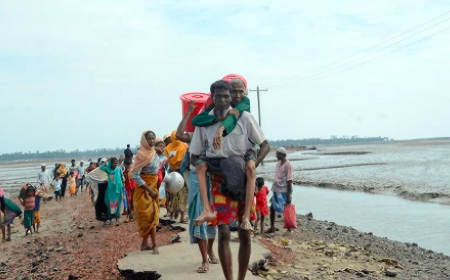
Between 1741 and 1751, Bargi forces under Raghuji Bhonsle raided Bengal repeatedly, killing nearly four hundred thousand people, looting wealth, and assaulting women. Although eastern Bengal was largely spared, fear spread as far as the Hooghly River.
Refugees carried the rhyme across regions. Anxiety over land revenue pulses unmistakably through its lines. The question: “How shall we pay the tax?” reveals not only invasion but fiscal suffocation under layered regimes of extraction.
In eastern variants from regions such as Chittagong, borgi transforms into gorki, meaning tidal waves. The enemy becomes nature itself. This shift reveals the extraordinary adaptability of rhymes as regional coping mechanisms, much like global parallels such as the English “Ring a Ring o’ Roses”.
Whether invader or cyclone, catastrophe enters the cradle song as warning and memory.
Reviving Rhymes, Recovering Roots
Countless such rhymes remain scattered across rural Bengal. Where formal history speaks of kings and queens, rhymes speak of ordinary people. Games such as Ha-du-du, Gadi, Kumir Danga, and Ekkadokka carry deep sociological and anthropological significance. From Rabindranath Tagore to Ramendrasundar Trivedi, scholars have emphasized their value.
Even contemporary cultural studies increasingly recognize folk rhyme as a repository of subaltern consciousness.
Unesco’s work on oral traditions highlights how lullabies build resilience, blending joy with warning. In an age of digital repetition and animated uploads, the danger lies not in disappearance but in forgetting what these rhymes mean.
As scholars such as Dr. Anisuzzaman have long argued, they connect us to our roots and teach endurance through melody. Digitization may preserve sound, but without interpretation it risks flattening memory into mere entertainment.
What is needed today is not only compilation but revival. Otherwise, this history will vanish, not only from books but from living memory itself. To listen carefully to these lullabies is to hear Bengal remembering itself.
Nafew Sajed Joy is a writer, researcher, and environmentalist. He can be reached at [email protected].
References
Bhattacharya, A. (n.d.). Banglar lok sahitya (Vol. 2). (Relevant discussions on folk rhymes and social elements cited in secondary sources).
Chanda, A. (2019, December 15). Chharar chhonde Banglar itihas [Feature on how history of Bengal has been depicted through its rhymes]. Anandabazar Patrika. Feature on How history of Bengal has been depicted through its rhymes - Anandabazar
Ghosh, S. (2020, December 10). Agdum bagdum ghoradum saje shishupathya chharay prachin Bangalir juddhajatrar smriti. Bangla Khobor. https://www.dailyamardesh.com/op-ed/amdqjxqk1hghe
Majumdar, S. (2022, October 29). Agdom bagdom ghoradom saje. Dainik Amader Shomoy. https://www.dainikamadershomoy.com/details/000000062B08
Shahed, S. M. (1993). Bengali folk rhymes: An introduction. Asian Folklore Studies, 52(1), 143–160. https://doi.org/10.2307/1178454
Shahed, S. M. (2013). Bengali and Japanese folk rhymes: A comparative study in oral tradition. Adorn Publication.