

























































A New Chapter in Bangladesh’s Diplomacy
Bangladesh’s foreign policy has entered a period in which strategic balance, with the core guiding principle of “Bangladesh First” will be increasingly important.

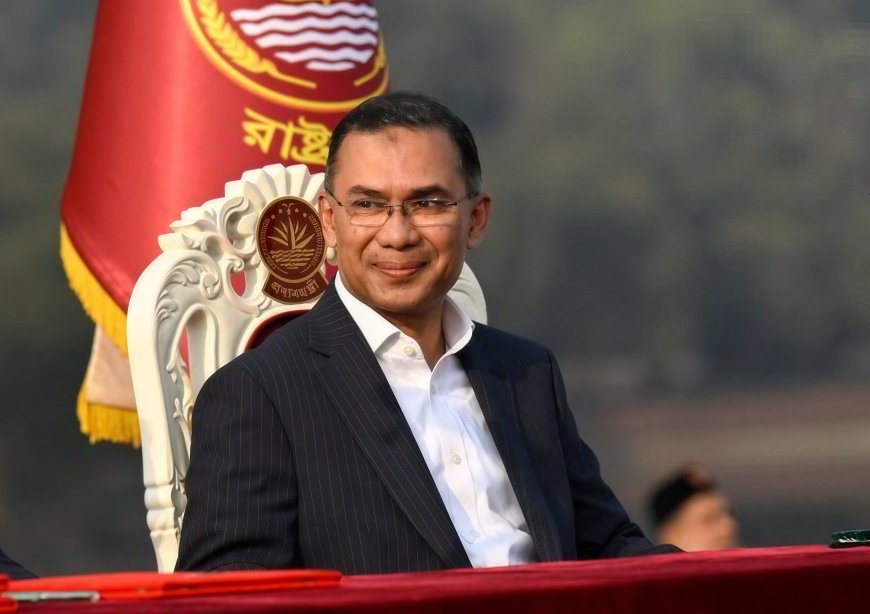
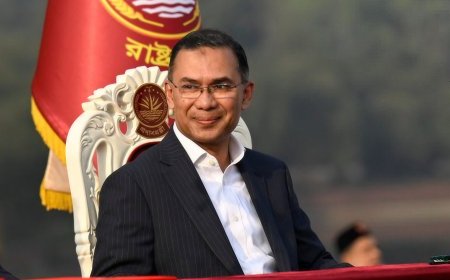
Prime Minister Tarique Rahman’s visit to New York from September 21-25 to attend the 81st Session of the United Nations General Assembly was significant for Bangladesh in several respects.
It was his first appearance at the UN General Assembly since assuming the office of Prime Minister and, therefore, an important opportunity for him to present his government’s vision, priorities and foreign-policy outlook before the international community.
The visit was further distinguished by the presence of Dr. Khalilur Rahman as President of the 81st Session of the General Assembly -- the first Bangladeshi to hold this prestigious position, after 40 years.
The visit also arried an exceptional personal and emotional significance for Prime Minister Tarique Rahman. He became the third member of his immediate family to address the United Nations General Assembly.
His father, Shaheed President Ziaur Rahman, addressed the UN in 1980, while his mother, former Prime Minister Begum Khaleda Zia, addressed the General Assembly on five occasions between 1993 and 2005.
For Tarique Rahman, therefore, the journey to New York was not simply another diplomatic engagement. It inevitably connected the present with a family history that has been closely intertwined with the political and diplomatic history of Bangladesh.
His father’s appearance at the UN in 1980 was Ziaur Rahman’s only visit to New York. His life was tragically cut short in May 1981. His mother subsequently carried the family and political legacy onto the international stage through her repeated appearances at the United Nations.
One can reasonably imagine that, as the Prime Minister walked into the UN complex and eventually approached the podium, memories of those earlier occasions would have been particularly powerful.
He may well have recalled the images and recordings of his parents meeting world leaders, addressing international gatherings and articulating Bangladesh’s interests before the international community.
His own appearance therefore represented not merely a continuation of a family association with the United Nations but also a new chapter in Bangladesh’s diplomatic narrative.
A Broader Diplomatic Engagement
The Prime Minister’s program in New York extended considerably beyond his formal address to the General Assembly. This is important because contemporary summit diplomacy is conducted not only from the UN podium but also through bilateral meetings, informal encounters, working lunches, receptions and discussions with international institutions.
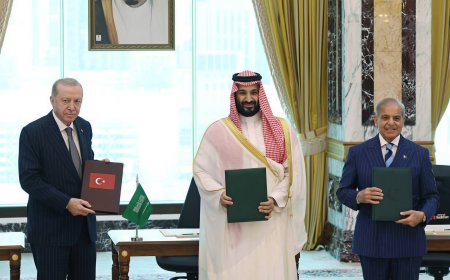
During the visit, Tarique Rahman met several heads of government and state, including Turkish President Recep Tayyip Erdoğan, Iranian President Masoud Pezeshkian, Pakistani Prime Minister Shehbaz Sharif, Kuwaiti Crown prince Sheikh Sabah Al-Khaled Al-Sabah, Prime Minister of Thailand Anutin Charnvirakul, Bhutanese Prime Minister Tshering Tobgay, and other regional leaders.
His meetings, especially with President Erdoğan, President Pezeshkian, Prime Minister Shahbaz Sharif, and the Crown Prince of Kuwait, for example, included discussion of expanding cooperation in the areas of economy, trade, defence, investment, and labour issues.
The Prime Minister and Dr. Zubaida Rahman also attended a breakfast hosted by UN Secretary-General António Guterres for heads of government and their spouses, followed by a dinner hosted by US President Donald Trump and First Lady Melania Trump for world leaders attending the General Assembly.
Such occasions should not be regarded merely as ceremonial. For a country such as Bangladesh, whose economic future depends heavily upon international trade, investment, development cooperation, migration, climate finance and access to global markets, personal interaction among leaders can complement formal diplomatic channels.
The New York visit consequently provided an opportunity to discuss Bangladesh’s interests directly with a diverse group of international actors.
Equally important were the Prime Minister’s engagements with senior representatives of the World Bank, the European Union, the UN system and the UN Secretary-General’s Special Envoy on Myanmar, High Commissioner for UN Human Rights Commission.
His meeting with Secretary-General Guterres included discussions on the Rohingya crisis, climate change, Bangladesh-UN cooperation and the country’s continuing contribution to international peace and security.
Before heading for the country, Mr. Rahman also met separately with a group of top US business leaders and urged them to invest in Bangladesh, highlighting the existence of conditions conducive to the FDI in the country.
These engagements underline an important point: Bangladesh’s foreign policy cannot be confined to traditional bilateral relations. It must simultaneously operate through regional diplomacy, multilateral institutions, development partnerships and global economic networks.
The UNGA Address
The central event of the visit was, of course, Prime Minister Tarique Rahman’s maiden address to the General Assembly on 24 September. He chose to deliver the speech in Bangla, making language itself an expression of national identity and sovereignty.
The speech placed Bangladesh’s domestic transformation and future aspirations alongside issues of wider international concern. At the centre of his presentation was what he described as a “Bangladesh First” approach.
He outlined a three-R strategy -- Recovery, Restoration and Reconstruction -- as the framework for rebuilding the country after the political transition of recent years.
He also spoke about democracy, rule of law, accountability and electoral legitimacy, while paying tribute both to the martyrs of the 1971 Liberation War and to those killed or injured during the
July-August 2024 uprising.
The Prime Minister presented the February 2026 election as the basis of his government’s democratic mandate and described the political transformation that preceded it. His references to the previous period of government and allegations concerning corruption, money laundering, enforced disappearances and killings were part of credible account of Bangladesh’s recent political history.
Beyond domestic politics, however, the speech contained a much broader development agenda. Youth and women featured prominently. Bangladesh possesses a very large working-age population, and transforming that demographic advantage into skilled human capital will be critical to the country’s economic future.
Education, skills development, women’s participation in the economy, entrepreneurship and technological competence will
increasingly determine whether Bangladesh can move successfully into a more competitive global economic environment.
The Prime Minister also placed considerable emphasis on gender equality and women’s economic empowerment. His government has outlined initiatives involving expanded access to education and financial support for women entrepreneurs.
Such policies, if effectively implemented, could have implications extending well beyond social policy because women’s
participation in education and employment is increasingly recognised as a major component of national economic development.
In his effort to reach out to the poorer and more vulnerable segments of society, he also highlighted the government’s initiative to introduce a series of entitlement cards, through which eligible beneficiaries would receive direct financial assistance as part of its broader social protection and welfare programmes.
The Rohingya Crisis
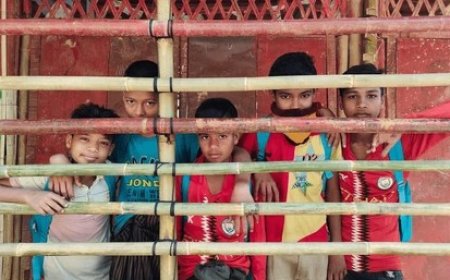
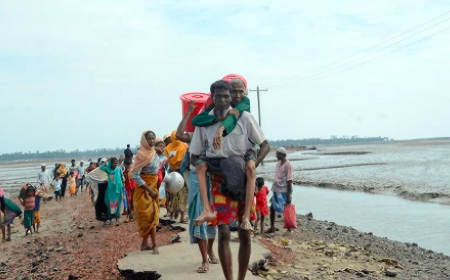
For Bangladesh, perhaps no international humanitarian issue is more immediate than the Rohingya crisis. More than one million displaced Rohingyas remain in Bangladesh, creating enormous humanitarian, economic, environmental and security pressures.
In his address to the high level meeting on Rohingya issues on the side line of UNGA, the Prime Minister reiterated that their safe, voluntary and dignified return to Myanmar remains the ultimate objective, adding that it was created by Myanmar and its solution lies with Myanmar.
His emphasis on moving beyond the mere management of displacement is particularly relevant. Bangladesh has carried a disproportionate burden for a crisis whose origins lie outside its territory.
The international community therefore has a continuing responsibility not only to finance humanitarian assistance- which is also dwindling substantially, but also to address the political and security conditions necessary for sustainable repatriation.
The Prime Minister’s discussions with the UN leadership and the UN Special Envoy on Myanmar were consequently important complements to his General Assembly speech. The challenge now is to convert international expressions of concern into sustained diplomatic pressure, adequate humanitarian financing and a credible process for eventual repatriation.
Climate Change and Climate Justice
Climate change was another major component of the Prime Minister’s international message. Bangladesh remains one of the countries most vulnerable to the consequences of climate change despite its relatively small contribution to global greenhouse-gas emissions.
Rising sea levels, salinity, flooding, river erosion and extreme weather events have direct consequences for livelihoods, food security, migration and national development.The Prime Minister therefore called for stronger international action, including greater attention to climate finance and climate justice.
His participation in high-level discussions on sea-level rise and climate change was particularly relevant because Bangladesh’s experience provides an important perspective on the consequences of climate vulnerability
for densely populated developing countries.
For Bangladesh, climate diplomacy should increasingly be treated not simply as an environmental issue but as an integral part of economic planning, national security, migration policy and international development cooperation.
Peace, Palestine and Multilateralism
The Prime Minister also addressed wider questions of international peace and security. He reaffirmed Bangladesh’s commitment to multilateralism, general disarmament and nuclear non-proliferation, while stressing the importance of dialogue and diplomacy in resolving international disputes. He also highlighted the contribution of Bangladeshi peacekeepers to UN peacekeeping operations.
On Palestine, he reaffirmed Bangladesh’s support for the Palestinian people’s right to self-determination and for the establishment of an independent Palestinian state. These positions are consistent with Bangladesh’s longstanding engagement with the Palestinian issue.
The significance of these issues extends beyond individual diplomatic positions. Bangladesh has traditionally benefited from a rules-based multilateral order because multilateral institutions provide smaller and developing states with a platform through which they can articulate their interests alongside much larger powers.
My Assessment
In my view, the most important feature of Prime Minister Tarique Rahman’s New York visit was that it provided him with an opportunity to introduce himself personally -- not merely through diplomatic representatives -- to a wide cross-section of the international community.
His first address to the General Assembly was undoubtedly a milestone in his political career. But the longer-term significance of the visit will depend less on the symbolism of the occasion and more on what follows from it.
The Prime Minister now has an opportunity to translate the relationships established in New York into concrete outcomes: Greater foreign investment, expanded trade, stronger development cooperation, increased climate finance, sustained international support for the Rohingya cause, stronger labour and migration partnerships, and deeper cooperation in
education, technology and human-resource development.
There is another dimension that deserves attention. Bangladesh’s foreign policy has entered a period in which strategic balance, with the core guiding principle of “Bangladesh First” will be increasingly important.
The country has deep economic and geographic relationships with India, growing economic ties with China, important development and commercial relationships with Japan and Europe, a substantial relationship with the United States, and longstanding connections with the Muslim world and South Asia.
The challenge for Dhaka is to maintain constructive relations with all while ensuring that national interests remain at the
centre of its diplomacy.
This requires professional diplomacy, strategic patience and a clear understanding that friendship between states is strongest when it rests upon mutual interest, mutual respect and reciprocity. The New York visit also demonstrated the importance of personal diplomacy.
A speech at the General Assembly lasts only a short time; relationships developed through repeated meetings, conversations and negotiations can endure for years.
The Prime Minister’s interactions with leaders from South Asia, the Middle East, Europe and the wider international community therefore deserve to be viewed as part of a larger diplomatic process.
Finally, the visit had a distinctly symbolic dimension. Four decades after Ziaur Rahman stood before the United Nations, and more than three decades after Khaleda Zia first addressed the same institution, their son stood at the same international podium representing Bangladesh.
The symbolism is powerful, but symbolism alone cannot determine the historical importance of the occasion. Ultimately, the value of the New York visit will be measured by whether the diplomatic opportunities it created can be converted into tangible national gains.
For Bangladesh, the message to the international community was therefore not simply about a new Prime Minister appearing at the United Nations.
It was about a country seeking to define a new phase of its political, economic and diplomatic journey -- and about how effectively it can transform its aspirations into institutions, policies and measurable outcomes.
The 81st UN General Assembly has consequently provided Prime Minister Tarique Rahman with something more valuable than a ceremonial international debut: It has given him a global platform from which to articulate Bangladesh’s priorities and, perhaps more importantly, a network of relationships through which those priorities can now be pursued.
The author is a freedom fighter, a retired Major, former Secretary and served as Ambassador to several countries.