



































![A Ledger of the Soul: Navigating the Allah-Bhagavant Nexus in a 19th-Century Puruṣākāra Jñāna Caupara [Gyan Chauper]](https://counterpointbd.com/uploads/images/202608/image_430x256_6a93baa3b09a7.jpg)




















It Is Never Our Fault
Bangladesh will begin to escape its cycle when “Look what they did” ceases to be an adequate response to “What have you done?”


In Bangladesh, as in Donald Trump’s America, a convenient enemy can spare a government the trouble of explaining itself. The cost is paid by everyone else.
On April 30, 2025, confronted with an estimate showing that the American economy had contracted, Donald Trump identified the responsible party. “That’s Biden,” he said. Businesses had rushed to import goods ahead of Trump’s tariffs, complicating the figures.
An economy cannot sensibly be assigned to one president on inauguration day. Yet Trump’s allocation of responsibility was wonderfully uncomplicated: The disappointing news belonged to his predecessor.
Bangladeshis will recognize the arrangement. Political power confers the right to inaugurate bridges, distribute appointments and claim national achievements. Responsibility for disappointment remains with somebody else. The opposition. The previous government. Foreign interests.
Occasionally, a conspiracy so extensive that its existence apparently explains why evidence is difficult to produce.
“It is never our fault” is more than an excuse. Repeated often enough, it becomes a method of government.
Citizens are invited to judge their leaders by the wickedness of their enemies. Failure becomes evidence that those enemies are powerful; demands for accountability become evidence that they have sympathizers.
After the Rana Plaza collapse in April 2013, Home Minister Muhiuddin Khan Alamgir offered a startling possibility: Opposition supporters might have shaken the already cracked building and caused it to fall. He advanced the suggestion in a BBC Bangla interview, according to contemporaneous reporting.
Even a catastrophe demanding an urgent investigation into construction, regulation, and worker safety could become an occasion to implicate political opponents. The allegation illustrates the reflex at its most grotesque: Before responsibility had been established, a convenient enemy was already available.
Consider the price of groceries. In March 2024, Awami League general secretary Obaidul Quader said the government was investigating whether the BNP had connections with market syndicates and hoarders. He suggested such networks could destabilize the government.
This was a suggestion under investigation, not a demonstrated finding. Nevertheless, a household struggling with food prices was being offered a familiar political suspect.
Collusion and hoarding deserve investigation. So do the authorities responsible for competition, imports and market supervision. A government alleging sabotage should disclose evidence and explain what it did to prevent it. Otherwise, the allegation conveniently shifts attention from the officials with power to the opponents without it.
External shocks are real, too. Russia’s invasion of Ukraine raised commodity costs and intensified Bangladesh’s foreign exchange pressures, helping precipitate its turn to the IMF in 2023. But an external shock and domestic mismanagement can operate simultaneously. By January 2026, the IMF was linking recovery to better revenue collection and action on financial sector vulnerabilities.
Neither task could be accomplished by identifying a more objectionable enemy.
The BNP’s history supplies its own troubling example. After the August 2004 grenade attack on an Awami League rally, the inquiry commissioned by the BNP government pointed towards foreign enemies. Its chairman later maintained that a neighbouring country had sought to unseat the government.
Meanwhile, investigators presented Joj Mia as a participant. In subsequent court testimony, Mia said officers had threatened his family and made him memorize a fabricated confession. The search for responsibility had produced an extraordinarily convenient suspect.
Precision matters here. The convictions later obtained against Tarique Rahman and other defendants were overturned, and the Supreme Court upheld their acquittals in September 2025.
Those convictions cannot honestly be presented as established guilt today. The earlier inquiry and Mia’s testimony illustrate the dangers of politically convenient narratives; they do not authorize a writer to substitute another narrative for a court’s findings.
The language survived changes in fortune. In September 2025, the BNP accused senior Awami League figures in Delhi of conspiring to destabilize Bangladesh and derail preparations for elections.
That allegation required evidence, just as Awami League allegations against the BNP did. A claim does not become false because it is politically useful. Political usefulness does, however, make independent scrutiny indispensable.
The mechanism becomes more dangerous when the enemy is assigned a moral identity. During the July 2024 quota protests, Sheikh Hasina invoked the contrast between freedom fighters’ descendants and Razakars, the collaborators of 1971. Students understood the remark as an insult. The dispute over access to public employment had acquired the vocabulary of national betrayal.
Bangladesh’s liberation history deserves serious study and remembrance. Its appropriation for everyday political combat diminishes it. Once a government presents itself as the custodian of the nation’s moral legitimacy, criticism can be treated as hostility towards the nation itself. A student asking about a job must first establish that he belongs to the country.
The consequences of the 2024 crackdown were catastrophic. A UN investigation estimated that as many as 1,400 people were killed between July 15 and August 5, and documented systematic violations involving the former government and security apparatus.
A phrase alone did not cause those deaths. But the findings expose the stakes when authorities treat a political challenge as an enemy to be crushed.
Trump’s version draws on different histories but offers a comparable permission to evade complexity. Announcing sweeping tariffs in April 2025, he described an America plundered by countries near and far. Genuine disputes over trade practices were absorbed into a story of national victimhood.
The leader became the rescuer, foreign partners the predators, and the costs of his chosen remedy a test of patriotic endurance.
Sometimes the target is much less powerful than a trading partner. During the 2024 campaign, Trump amplified baseless claims that Haitian immigrants in Springfield, Ohio, were eating pets. Threats followed; a university temporarily closed its campus, and the FBI investigated.
Whatever the intentions of individual speakers, a vulnerable community had become the setting for a national political performance, with consequences its residents could not switch off.
Convenient enemies need not be invented from nothing. More often, an existing grievance is enlarged until it explains everything. A rival party has committed abuses, so every supporter becomes suspect.
A foreign government has pursued its interests, so every domestic failure becomes foreign interference. The leap from particular wrongdoing to collective guilt is where explanation gives way to mobilization.
The attraction is practical. Repairing a banking system requires recognising losses, confronting connected borrowers and deciding who pays.
Naming an enemy delivers an immediate political dividend without settling any of those questions. Supporters receive something, too: Permission to remain loyal without admitting that their leaders have disappointed them.
The distinction matters for Bangladesh’s present economic choices. In April 2026, Finance Minister Amir Khosru said many banks were practically bankrupt and that capital shortages had to be addressed for reforms to succeed. Those are problems with balance sheets, beneficiaries and costs.
A serious response must explain which institutions merit rescue, what their owners will lose and how depositors will be protected. Even a completely accurate account of a predecessor’s failures cannot answer those questions for the government now making decisions.
The long-term damage is institutional. Officials learn that unwelcome information threatens their careers. Journalists must defend their patriotism before their reporting can be discussed.
Police investigations acquire political expectations. Economic mistakes persist because acknowledging them would concede ground to the enemy. Eventually, changing the government changes the authorized explanation more readily than it changes how power operates.
Breaking this cycle requires arrangements that make evasion costly. Every incoming administration should publish an independently reviewed account of the economy it inherited, including bank losses, public liabilities and unpaid obligations. It should then specify measurable commitments and report progress at fixed intervals. An inheritance can explain a starting point. It cannot indefinitely excuse the direction of travel.
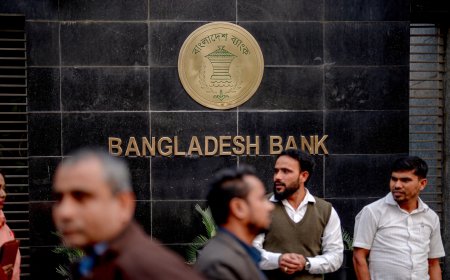
Economic information needs protection from political convenience. The statistics agency should publish methods and revisions openly. Bangladesh Bank should be able to identify troubled lenders and disclose the terms of public support. Procurement contracts and beneficial ownership should be accessible to scrutiny.
Parliamentary committees need the authority and resources to question officials, including when the answers embarrass the governing party.
Accountability also needs an individual address. Investigate particular transactions, orders and acts of violence. Establish responsibility through credible evidence and fair proceedings. Collective punishment makes that work harder by turning potential witnesses into frightened partisans.
The interim government’s May 2025 ban on Awami League activities, pending proceedings over the crackdown, raised precisely this tension between prosecuting grave abuses and preserving political participation.
None of this requires forgetting crimes or pretending that rival parties have identical records. It requires applying standards that survive a change of government.
Journalists should ask what evidence supports an accusation, what action followed and what would disprove it. Party members should demand consequences for their own officials. Voters should be able to dismiss a government without fearing that defeat will make them enemies of the state.
That last assurance is essential. Where losing power threatens personal safety, property or liberty regardless of individual conduct, political competition becomes a struggle for survival.
Independent election administration and enforceable protections for peaceful opponents therefore belong at the centre of reform. They give parties a reason to contemplate defeat without treating it as national extinction, and citizens a reason to expect that tomorrow’s government will still recognize their rights.
A democratic leader does not promise a country without adversaries, inherited problems, or foreign pressures. The promise is to exercise judgement despite them, and to answer for that judgement.
Bangladesh will begin to escape its cycle when “Look what they did” ceases to be an adequate response to “What have you done?”
MK Aaref writes on culture, history, identity, and geopolitics from a South Asian and diasporic perspective.