



















































When Political Citizenship Requires a Religious Purity Test
If a person judges a politically active woman not by her arguments but by her prayers and faith, how would he have regarded the millions of citizens whose religions, beliefs, lifestyles and religious practices differ from his own if he had acquired state power?

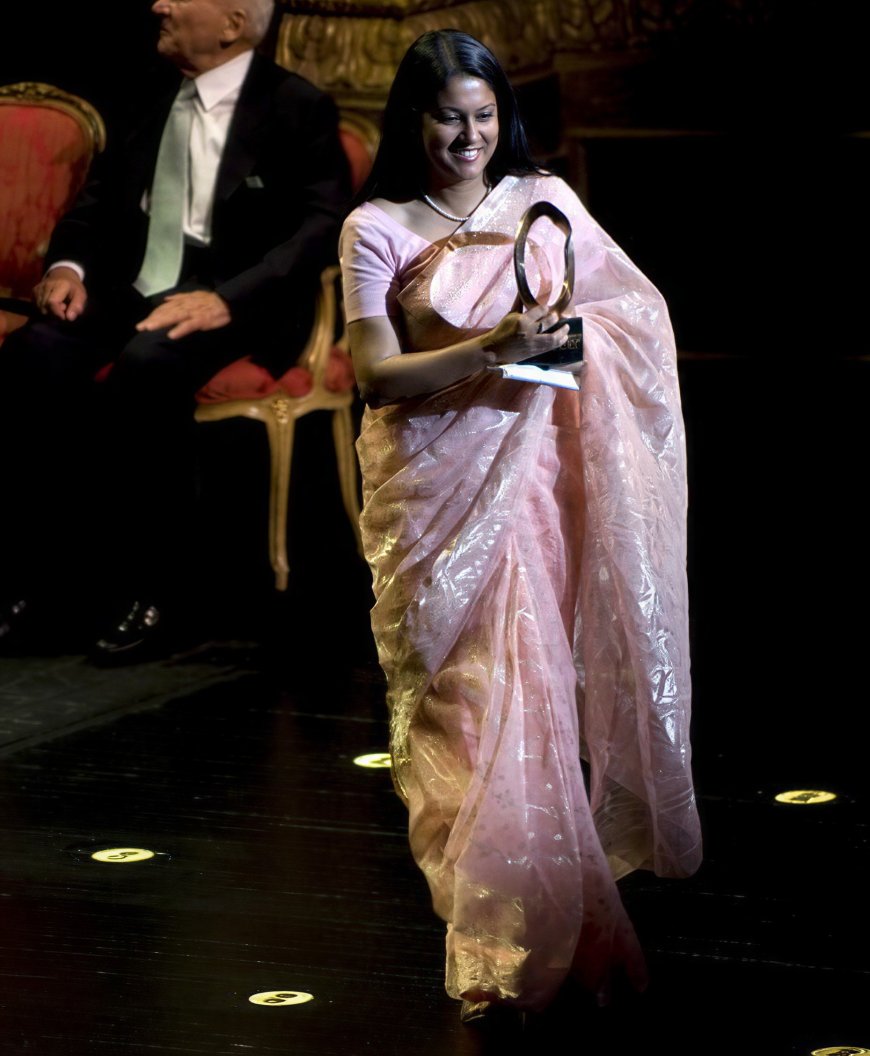
If this had been the comment of an agitated supporter somewhere in a Facebook thread, I might simply have scrolled past it. But according to the statement circulated in the image, these words came from Oli Ahmed, the presidential candidate nominated by an eleven party alliance. That changes the political significance of the remark.
A man who was put forward for the highest constitutional office in the country apparently explained a coalition’s failure to come to power by saying that it contained some “haram women” like Rizwana.
At that point, the statement moves beyond personal bad taste. It raises a much larger political question. A person aspiring to the presidency appears to be classifying citizens through categories of halal and haram.
I find myself wondering whether a new qualification has quietly been added to the presidency, requiring the candidate to keep an account of the faith, prayer attendance and religious acceptability of nearly 180 million citizens.
Why is it necessary to place the word “haram” before a woman’s name in order to establish that she is politically wrong? If her arguments are wrong, answer them.
If her politics are harmful, challenge them politically. If her claims are false, produce evidence. But when criticism of a woman moves from her ideas to her faith, her prayers and ultimately the religious legitimacy of her personhood, this is no longer political argument. It is gendered moral policing.
Oli’s remarks did not make me laugh. They did, however, leave me with several questions.
Are all Muslim politicians in Bangladesh observant Muslims? Do they all pray five times a day? If not, why did the explanation for a coalition’s political failure suddenly require an audit of Rezwana’s prayers? Where are the attendance sheets for the male leaders of the coalition?
Who missed Fajr? Who skipped Isha? Whose faith was insufficiently pure? And exactly what percentage of divine mercy was withheld because of each person? Was anyone keeping the figures?
Or is a man’s prayer life private, while a woman’s prayer life becomes political data?
That selective scrutiny tells us that this is not merely about religious identity. Misogyny is deeply embedded in the logic.
The technique is hardly new in Bangladeshi politics. Male political opponents are commonly attacked as corrupt, authoritarian, incompetent or anti national. When the opponent is a woman, the vocabulary changes with remarkable speed: Shameless, characterless, atheist, anti religious and now “haram.”
Men’s politics is judged through their politics. Women’s politics is repeatedly made to answer for their bodies, clothes, character, sexuality, religious practice and private beliefs. Religion, in this formulation, becomes a gendered instrument for imposing political discipline on women.
A food can be haram. An act can be described as haram within a particular religious interpretation. But when a living human being is transformed into a “haram person,” something different happens. The target is no longer simply an action. Her personhood itself is constructed as morally contaminated.
First, the woman’s argument stops being the subject of discussion and the woman herself becomes the problem. Then her religious legitimacy is questioned. Eventually she is no longer treated as an equal political interlocutor. Her very presence becomes supposedly contaminating, powerful enough to compromise an entire coalition.
One woman, apparently, can be so powerfully “haram” that simply standing beside her prevents divine mercy from descending upon a whole political alliance. I had not realised Bangladeshi patriarchy was capable of such theological generosity in acknowledging female power.
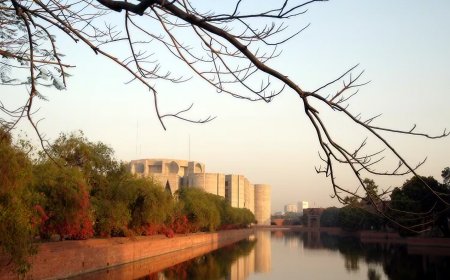
And when such language comes from someone nominated for the presidency, the issue moves beyond sexism and becomes a question about the nature of the state.
The President is not the President only of Muslims who pray five times a day. The office represents Muslims who pray regularly and those who do not, Hindus, Buddhists, Christians, believers, non-believers, women and men. Article 27 of the Constitution establishes equality before the law.
Article 28 prohibits discrimination on grounds including religion and sex. Article 41 protects freedom of religion. The presidential oath is not an undertaking to inspect citizens’ five daily prayer attendance. It is an undertaking bound to the Constitution.
Then there is the extraordinary theory of political causation. Why did the coalition fail to come to power? Electoral strategy? Organization? Candidates? Public support? Political messaging? Voters’ choices?
Apparently not. There were “haram women” like Rezwana. Therefore divine mercy did not arrive.
If that is our analytical framework, decades of political science scholarship have been a terrible waste. We can close Election Studies and establish a new Department of Divine Electoral Analytics.
Before every election, it could conduct a coalition audit:
Members who pray regularly: 87%
Average beard length: Satisfactory
Halal compliance of female members: Under review
Probability of divine mercy: Margin of error plus or minus 3%
We would no longer need exit polls. A “mercy forecast” could be released before the ballots were even counted.
But beneath the satire is a fundamental democratic principle. Political legitimacy in a democracy comes from citizens’ votes and constitutional processes, not from religious certificates issued by political leaders.
A Bangladeshi citizen may pray five times a day, pray irregularly, not pray at all, belong to another religion or hold no religious belief. None of these conditions cancels citizenship, freedom of political expression or the right to participate in public life.
The audience for this rhetoric matters too. Political rhetoric is never produced in a vacuum. Speakers know which words will resonate with their audiences. If phrases such as “haram woman,” “does not pray,” or “does not believe in Allah and the Prophet” can generate political applause, then the problem is larger than one speaker.
For years, a significant strand of popular religious preaching has built an enormous moral discourse around women’s clothing, purdah, character, mobility, sexuality, obedience to husbands and the distinction between the “good woman” and the “bad woman.” Of course, not every waz gathering or religious speaker should be placed in the same category.
But when political language judges a woman first through her religious and sexual morality rather than as a person, citizen or political actor, it imports a familiar vocabulary of moral surveillance directly into electoral politics.
The result is peculiar. A presidential contest is taking place, but instead of a political programme we get an examination of faith. Instead of electoral analysis, we get the vocabulary of the sermon. And the political fate of an entire coalition is explained through the prayer habits of one female political actor.
When the gender politics of the waz stage enters directly into the language of statecraft, the matter stops being funny. Once a religious purity scanner is installed at the entrance to political citizenship, the obvious question is: who controls the scanner?
The 11-party alliance therefore has a political responsibility here as well. What an individual privately believes is his own concern. But when eleven political parties nominate that individual for the highest constitutional office, questions about his conception of the state are no longer his alone.
So I would ask those eleven parties a simple question: Do you also divide Bangladeshi women citizens into “halal” and “haram” categories? Does a woman’s political legitimacy diminish if she does not pray? If not, how does the language of your presidential candidate relate to your own political position?
The theological dimension is no less strange. If a politician on an electoral platform assumes the authority to determine whom Allah will bless, whose worship will be accepted and whose faith is sufficient, then apparently even divine jurisdiction has been brought within the scope of political decentralization.
The distribution of Allah’s mercy should at least be left to Allah. Presidential candidates might begin with a smaller responsibility: Recognizing the people of Bangladesh as equal citizens under the Constitution.
Bangladesh was fortunate that this conception of the state did not make its way into Bangabhaban. Otherwise, given this political methodology, it would hardly have been surprising to find a new department established within days: The Directorate of Citizens’ Faith, Prayer and Divine Mercy Verification.
Before a presidential address, the microphone test might have sounded something like this:
Hello, hello, can you hear me at the back? Sisters, please adjust your purdah. We shall now begin the discussion of national policy…
The serious question remains. If a person judges a politically active woman not by her arguments but by her prayers and faith, how would he have regarded the millions of citizens whose religions, beliefs, lifestyles and religious practices differ from his own if he had acquired state power? And how do the eleven parties that considered him suitable to become President of Bangladesh regard those citizens?
Dr. Lubna Ferdowsi is an academic and researcher based in England.