

































































Balancing Acts
Bangladesh’s government faces a delicate balancing act. Every move in the international arena will be closely scrutinized for signs that the government is “tilting” towards one geopolitical axis or another.

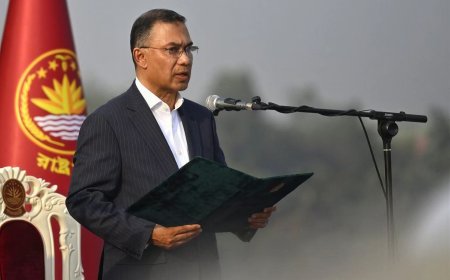
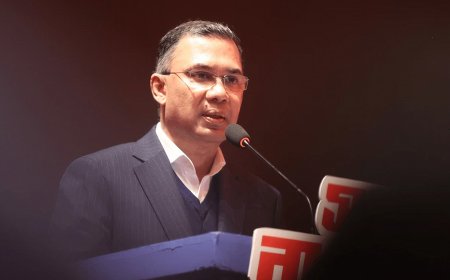
Both before and since assuming office, Bangladesh’s Prime Minister Tarique Rahman and Members of his Cabinet have spoken repeatedly of the BNP Government’s desire to pursue a “Bangladesh First” foreign policy.
This amounted to a rejection of the approach of the previous Awami League government, which was widely seen as subordinating the country’s interests to former Prime Minister Hasina’s political needs.
At the same time, a “Bangladesh First” policy implied that the BNP was pledging to follow in the footsteps of its immediate predecessor, which during its 18-month tenure had broadened the country’s diplomatic and political outreach and had repaired much of the damage done to other bilateral relationships during the Hasina years.
The interim government had been able to leverage Chief Advisor Yunus’ personal network while also capitalizing on international goodwill in the wake of the July 2024 revolution. The BNP inherited much of this good will given the smooth transition from its predecessor after widely applauded elections.
Given the above, many observers have closely watched the BNP Government’s initial forays into foreign policy for signs of whether they would be true to their word and seek balance in international engagement.
The government’s initial highest-level interactions with international partners reassured those who were looking for such balance in PM Tarique’s global engagement.
He spoke with counterparts from throughout the region immediately after taking office, and in his initial engagements in Dhaka went to great lengths to ensure that no single partner was singled out for special treatment.
Senior officials from the region all attended the PM’s swearing in and the new government reiterated its intent to prioritize efforts to revitalize SAARC.
There remains much speculation regarding when and where the Prime Minister will make his first international trip, with possible visits to other regional capitals all being discussed.
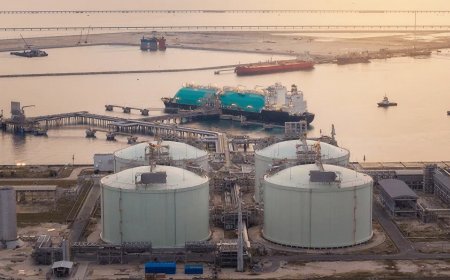
As the government weighs these decisions, of course, the international environment has changed with developments related to the U.S-Iran War, and its impact on global energy prices and other ancillary effects.
With this in mind, there has been a great deal of scrutiny paid to Foreign Minister Dr. Khalil Rahman’s recent visit to India, where he was accompanied by the Prime Minister’s foreign affairs advisor Humayun Kobir.
While Bangladesh termed this a “goodwill visit” en route to a regional meeting in Mauritius, Indian commentators highlighted the Foreign Minister’s visit as a major reset in the bilateral relationship.
In addition to a meeting with his Indian counterpart, the Bangladeshi FM also met India’s Petroleum Minister, in recognition of the critical importance of energy issues in the wake of the Iran war. (Of note, the FM had earlier made an unplanned visit to Washington to meet with the U.S.
Energy Secretary to seek relief from Russian sanctions to allow Bangladesh to procure Russian petroleum to meet its energy requirements).
The public statements by both India and Bangladesh following the meetings in New Delhi were upbeat, with the expected slight differences in emphasis.
For example, the Bangladesh side highlighted FM’s Khalil’s emphasis on the importance of India extraditing former PM Hasina and others convicted of crimes against humanity by Dhaka courts.
Not surprisingly, Indian commentators did not focus on this aspect of the bilateral discussions, even if both sides did note India’s arrest of those accused of murdering Bangladeshi student leader Sharif Osman Hadi in the run up to Bangladesh’s elections.
Understandably, the publicity given to the Foreign Minister’s India visit and the celebratory nature of the reactions in India (which seem to imply that the formation of a BNP government in Dhaka amounted to a diplomatic “win” for New Delhi) has raised concerns in Bangladesh that the new government risked falling into back into India’s policy orbit.
No doubt, India has significant economic leverage which it could apply vis a vis Bangladesh.
At the same time, many in Bangladesh had welcomed the interim government’s more balanced approach which had opened doors to regional and global engagement that had long been shut.
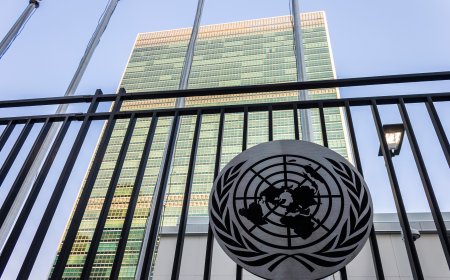
These skeptics will be looking closely at the BNP government’s future foreign policy moves, including high level visits by the Foreign Minister (even as he actively campaigns for the UN General Assembly Presidency) and ultimately by the Prime Minister.
Beyond the immediate neighborhood, many are also waiting to see how the BNP government engages with China, which has also enjoyed warm relations in the past with Bangladesh and PM Tarique’s party.
In a hyper-partisan domestic environment and with geopolitical tensions in South Asia and the broader world at a high point, Bangladesh’s government certainly faces a delicate balancing act.
Every move in the international arena will be closely scrutinized for signs that the government is “tilting” towards one geopolitical axis or another.
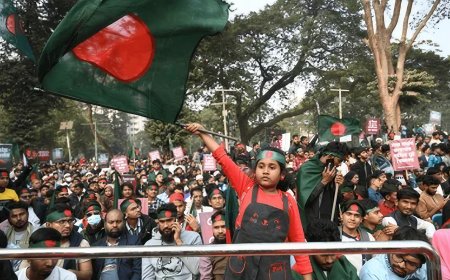
With emotions in Bangladesh still raw after the July Revolution and with demands for justice still resonating, foreign policy also will have an impact on the government’s ability to promote political stability at home.
Successfully managing the domestic and international pressures and leveraging these relationships to advance Bangladesh’s interests will be a true test for the country’s leadership.
Jon F. Danilowicz is a retired American diplomat of the Department of State.