































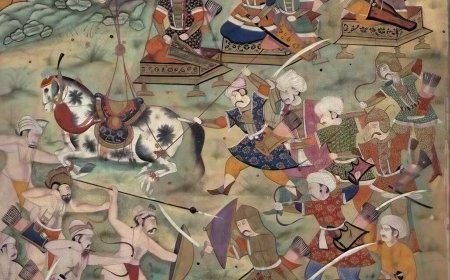


























A Reply to Shahidul Alam on Performative Governance
A government that reduces VIP protocol but continues to evict vendors without rehabilitation has merely exchanged one performance for another.
Shahidul Alam is a photographer and intellectual for whom I have deep respect. When he speaks of complicity, of our own roles in the theatre of power, I listen.
But when he asks me to appreciate the gestures of the newly elected Prime Minister Tarique Rahman as a “break from a damaging norm,” I must refuse.
Not because I enjoy cynicism, but because I have seen this play before.
Alam points to small gestures. The Prime Minister has reduced his motorcade from 13 vehicles to four. He has ordered his portraits removed from billboards. He works from the Secretariat, not from a distant Prime Minister’s Office. He dresses simply. He follows traffic signals.
These are indeed performances.
Alam argues they are a different kind of performance -- one that signals a new relationship to power, a cultural shift in the making. I argue they are the same old theatre, just with better lighting.
The Stage
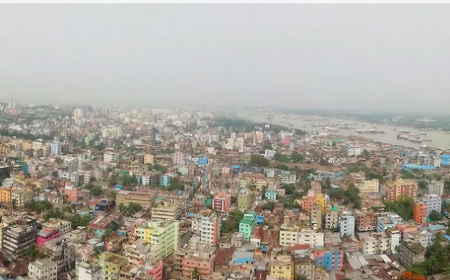
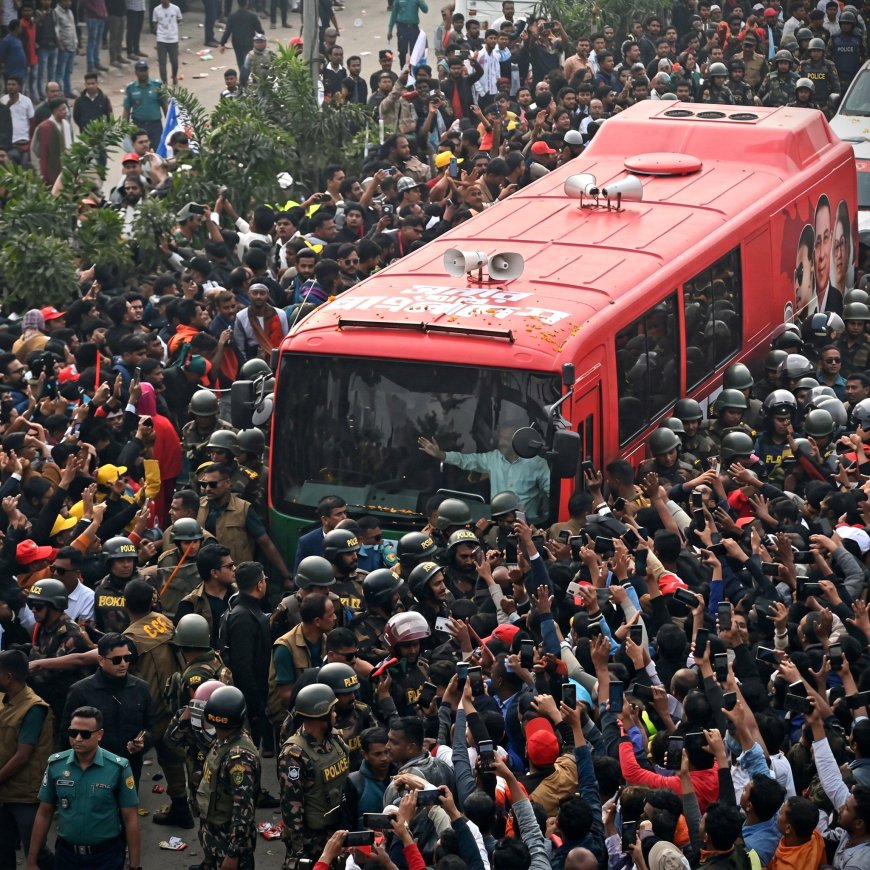
Picture a morning in Dhaka. The Prime Minister’s convoy moves through the capital, reduced to four cars. No roads are blocked. Traffic flows at 5.3 kilometres per hour, up from 4.5, according to a report submitted to his office.
A banner bearing his photograph, spotted in front of Police Plaza at Hatirjheel, is removed within hours. The Prime Minister arrives at the Secretariat at 9:10am, where he works long hours, sometimes 16 in a single day. His office plants a sapling and unveils a commemorative stamp. The cameras roll. The headlines praise humility.
Now picture another scene.
On April 1, the Dhaka Metropolitan Police begins a citywide campaign to clear footpaths and roads of illegal encroachment. Mobile courts jail 23 people on the first day, collect fines totalling 192,000 taka, seize goods. Vendors who have nowhere else to go watch their makeshift stalls dismantled. The drive continues for days.
51 people are jailed. Fines total 261,000 taka. And then, as authorities themselves acknowledge, similar eviction drives in the past “failed to sustain results, with footpaths returning to previous conditions within days”.
These two scenes are not unrelated. The first is the performance of humility. The second is the performance of order. Both are visible. Both are dramatic.
And both, in the framework of performative governance as theorized by urban scholar Ananya Roy, create a state of permanent exception -- where the poor are always vulnerable to discretionary enforcement, while those with connections remain protected. The gesture and the crackdown are two acts of the same play.
The Script
Alam’s examples of Tarique Rahman’s gestures are drawn directly from the Prime Minister’s own press briefings. The story of the banner at Hatirjheel was released by his Additional Press Secretary. The traffic speed increase from 4.5 to 5.3 km/h was cited by the same official.
The 16-hour workday was framed by his office as “a message to the countrymen.” Even the removal of portraits was a story the government chose to tell, complete with the detail that the Prime Minister noticed the banner while leaving his residence.
This matters. A gesture that is not merely performed but also broadcast, narrated, and celebrated by the state’s own communication machinery is not a spontaneous act of humility. It is a carefully staged signal. And signals, in the economy of performative governance, are currency. They buy time. They reset expectations. They allow the state to claim transformation without delivering it.
The Cycle
The footpath evictions that began on April 1 were announced in a public notice issued on March 23. The notice gave shop owners until March 31 to clear out. On April 1, the mobile courts arrived. This is the same script I described in my original op-ed: A deadline, a raid, a headline, a quiet return.
By April 4, within days of the eviction drive, footpaths in areas including Indira Road, Bangla Motor, Moghbazar, and Dhaka Medical College Hospital were already being reoccupied. The only difference is the name of the prime minister.
Traffic congestion in Dhaka costs the economy an estimated 550 billion taka every year. A BUET study places daily losses at 1.53 billion taka from wasted working hours, fuel costs, accidents, pavement damage, and pollution. A World Bank report notes that Dhaka loses approximately 3.2 million work hours daily to traffic. The reduction of VIP protocol is a welcome gesture.
But it does not build a single new footpath. It does not create a single vending zone. It does not address the structural reality that only 7 to 9% of Dhaka’s land is allocated to roads, far below the international benchmark of 25 %.
The Prime Minister has also directed action on rising coarse rice prices. His press secretary claimed an “immediate positive impact” on the market. Yet inflation in January 2026 stood at 8.58%, the highest since May 2025, with food prices continuing to strain household budgets. A gesture does not fill a stomach.
The Uncomfortable Question
Alam writes that “symbols shape culture, and culture is part of what needs to shift.” I agree. But symbols shape culture only when they precede systems.
A prime minister who removes his own portraits but does not dismantle the patronage networks that erected them has changed nothing.
A government
Alam asks me to appreciate the signals from the top.
I ask him: What would count as evidence that these signals are not just better-dressed substitutes?
A vending zone built and maintained. A footpath that stays clear without weekly raids. A price control mechanism that works without press releases. An inflation rate that falls without a spokesperson claiming victory. These are not radical demands. They are the minimum expectations of governance.
The Curtain
We are not enemies in this argument. Alam and I share a frustration with the cycles of spectacle that have trapped Bangladesh for decades. Where we differ is in our willingness to applaud the same old performance simply because it has a new lead actor. The burden of proof is not on the sceptic. It is on the performance.
Until the gestures translate into outcomes -- until the footpaths stay clear, the prices stay stable, the traffic moves, and the vendors have a place to sell -- I will continue to watch. Not cheering, not dismissing, but watching. Because the theatre of the streets has run for too long.
It is time for governance without a script.
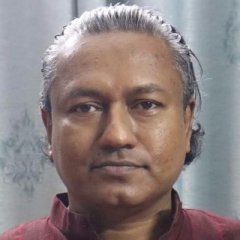
Zakir Kibria is a Bangladeshi writer, policy analyst, and entrepreneur based in Kathmandu, Nepal.