





















































The Politics of Synthesis 2.0
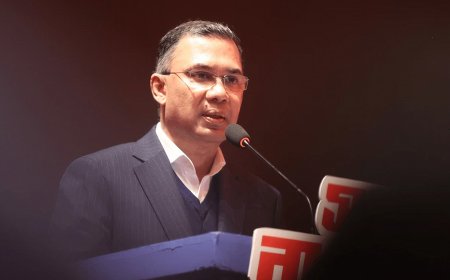
In one simple way, Tarique Rahman stands to be more successful than either of his parents. Neither of them could successfully, peacefully, finish their term and hand over power to the next government. Ziaur Rahman was gunned down by rogue officers. Khaleda Zia faced an implacable foe who made good on her promise of not allowing the former prime minister a moment of peace.
Economists are infamous for their physics envy, whereby they try to model social phenomena involving human interactions with precise mathematical rigour. Scholars of politics or sociology, in turn, are said to suffer from economics envy in their desire to paint a grand narrative and prognosticate.
Of course, it is very important for commentators and analysts to step back from the daily din every now and then, and to take a big picture view of the political landscape.
Well into the fourth month of the fourth BNP government is a good time to take such a big picture stock. While resisting the temptations to make any grand statement, such a big picture view suggests that history may well beckon for the Prime Minister.
The Politics of Synthesis OG
That the BNP was going to win the election of February 12 was perhaps never really in serious doubt. Whether the actual result -- seemingly a record for the party in terms of seats won, and arguably a record for any party in a free and fair election -- was what might have been expected or an underperformance -- the party did lose a large number of urban seats -- in a relatively low turnout election ought to be further debated and analysed.
Also, up for inclusion in the ‘should be further analysed’ file are the roles of minority and formerly Awami League voters -- how many of them switched to BNP, and how much did they matter?
Such analysis notwithstanding, in a very big picture way, BNP’s electoral dominance might be explained by the fact that it sits well within the ‘invisible triangle of Bangladeshi politics’ posited by Faham Abdus Salam -- that no political party in Bangladesh is electorally viable if it can be portrayed as against the Liberation War, or subservient to Indian hegemony, or is insensitive to Muslim values. It is very difficult to convincingly paint BNP as an anti-1971 or a pro-Indian or an anti-Muslim party.
Indeed, Ziaur Rahman’s articulation of Bangladeshi nationalism alluded to these very elements, and more, when he used the terms ‘absorption power’ and ‘elbow room’ to accommodate multiple threads of our identity.
Zia’s politics of synthesis -- a term that was very much in wide circulation in his time, but seems to have fallen out of fashion since -- envisaged a civic nationalism that subsumes cultural identities and identity politics.
Further, being propelled into power through the macabre maelstrom that shook the very fabric of the society in the early 1970s Bangladesh (see the seminal work of Professor Naomi Hossain, for example), Zia wanted politics to be about solving problems than identity and culture. Whether it is pragmatic developmentalism in economic policy, cautious (and ultimately failed) attempt at military withdrawal from politics, or a pro-active foreign policy -- Zia’s politics of synthesis favoured problem solving and experimentation over ideology and rhetoric.
It is not a surprise that the Ershad regime of the 1980s, Sheikh Hasina trying to revamp the Awami League in the 1990s, the 1/11 regime of the 2000s, and the peddlers of the so-called “notun bondobosto” after the July uprising have all tried to repackage a variation of the same synthesis.
As the heir to the original politics of synthesis, one might expect BNP to enjoy a degree of electoral advantage. But such advantage can easily disappear during an electoral cycle, particularly in the face of an anti-incumbency wave. And that is exactly what happened in 2008. That election might not have been as free and fair as the three preceding it -- in the sense that playing field under the 1/11 regime was definitely not level -- but there is also no denying that BNP was suffering from a massive anti-incumbency backlash which would have seen them suffer a heavy defeat.
The Path Chosen
In the wake of that December 2008 election debacle, against the backdrop of changing relationship with India, rising income inequality and social dislocation, emergence of political Islam, and global geopolitical developments, the BNP found itself in a distinct fork in the road. As I wrote in Forum in January 2009, the party faced two plausible paths -- populist and liberal nationalisms.
The standard bearer for the former strand might have been Mahmudur Rahman. Consider his credentials as of the early 2010s -- a product of the country’s two most prestigious educational institutions, top-most salaried corporate executive, a minister-ranked technocrat in the last BNP government, and then a firebrand editor against the 1/11 regime. All of that before he was jailed by the Hasina regime for being the first one to report about Sajeeb Wajed’s corruption.
Upon being released from jail, in a very theatrical manner, Mr M Rahman raised his fist and shouted Allahu Akbar, not Bangladesh Zindabad. The symbolism was pointed. This was the path of populist nationalism.
The logic of dynastic politics meant that it was always going to be a different Mr Rahman -- one exiled in London under a cloud of allegations and terrible image problems at that time -- who would be the front runner for BNP leadership after Begum Khaleda Zia. And Tarique Rahman might also have easily chosen the populist path. But crucially, he didn’t.
Under his leadership, and supported by the Secretary General Mirza Fakhrul Islam Alamgir and other senior leaders, BNP has consciously, deliberately rejected populist nationalism. Instead, painstakingly, and perhaps not-very-convincingly, but decisively, the party has, over the past decade, been trying its hand at liberal nationalism -- one that emphasises positive personal images of its iconic leaders and candidates, political tranquillity and opposition in parliament, courts, and media rather than streets, reducing inequality through growth that generates employment, an open arms foreign and trade policy that avoids being entangled with other people’s conflicts, and a social policy that is pluralist if not secular.
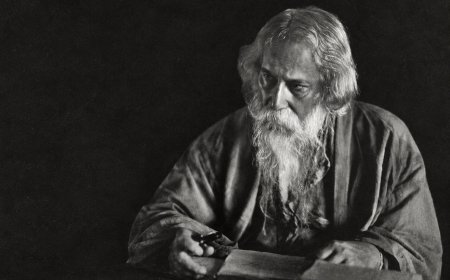
That is, BNP’s apparent repositioning in Bangladeshi politics as seemingly the less stridently anti-Indian party, or its staunch defence of the ethos and memories of the Liberation War, its evocation of Rabindranath Tagore as a liberal icon just as Hindutva wins a thumping victory across the border, or its manifold development programs are not just election season opportunistic gimmicks.
These represent conscious decisions by the party leadership to return to the politics of synthesis upon which the party was founded back in the 1970s. Populism may be the way of the future in many other parts of the world, but BNP leadership has consciously eschewed populist politics at a meta level.
Many typical analyses of our current political conjuncture fail to grasp this major factor.
The Anti-Populist
Another factor that is often missed by many political analysts is the very persona of the current prime minister that can best be described as a very model of a modern anti-populist politician. Indeed, I myself made a very wrong call by missing this over a decade ago.
Our political tradition has always favoured larger than life figures and cults of personalities who relied heavily on the gift of the gab. AK Fazlul Huq, Abdul Hamid Khan Bhashani and Sheikh Mujibur Rahman were populist demagogues par excellence. HS Suhrawardy, Fazlul Quader Chowdhury, Moudud Ahmed and many others were not exactly populist figures, but were excellent parliamentary orators and rhetoricians.
Lacking any of these characteristics, Sheikh Hasina built an elaborate cult of personality around her father, and relied on heavily ritualistic (and by the end of her despotic rule, vulgar) performance of victimhood.
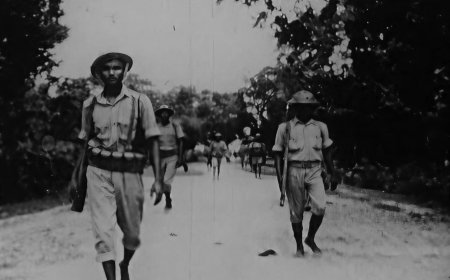
The Prime Minister’s parents were exceptions. But his father was a decorated war hero who literally walked the length of the country upon assuming the responsibility of government, and his mother personified resistance, courage and dignity.
Given that background, I urged in January 2015 (published in the Dhaka Tribune, just before he was effectively banned from the media), as it became clear that the unelected Hasina regime was set to continue in power, that Tarique Rahman should return to Bangladesh and follow the path of every major politician before him in our history.
Implicitly, I was urging him to go down the path of building his own cult of personality.
In the event, he had done nothing of the sort. Instead, he had chosen to communicate directly with his party rank and file during his years in exile, while trusting the party senior leaders in Dhaka to run the daily activities.
In doing so, of course, Tarique Rahman was physically absent from the momentous events of the Long July. Uncomfortable parallels with Sheikh Mujibur Rahman in 1971 were made -- publicly by Mahmudur Rahman in fact in one of Tarique Rahman’s first meetings in Dhaka. And Mr T Rahman responded in a very calm, collected, and ultimately persuasive manner that while it was true that he was absent physically, it is probably not the case that he was completely out-of-touch, and nonetheless, he welcomed engagement with the full spectrum of politics and beyond.
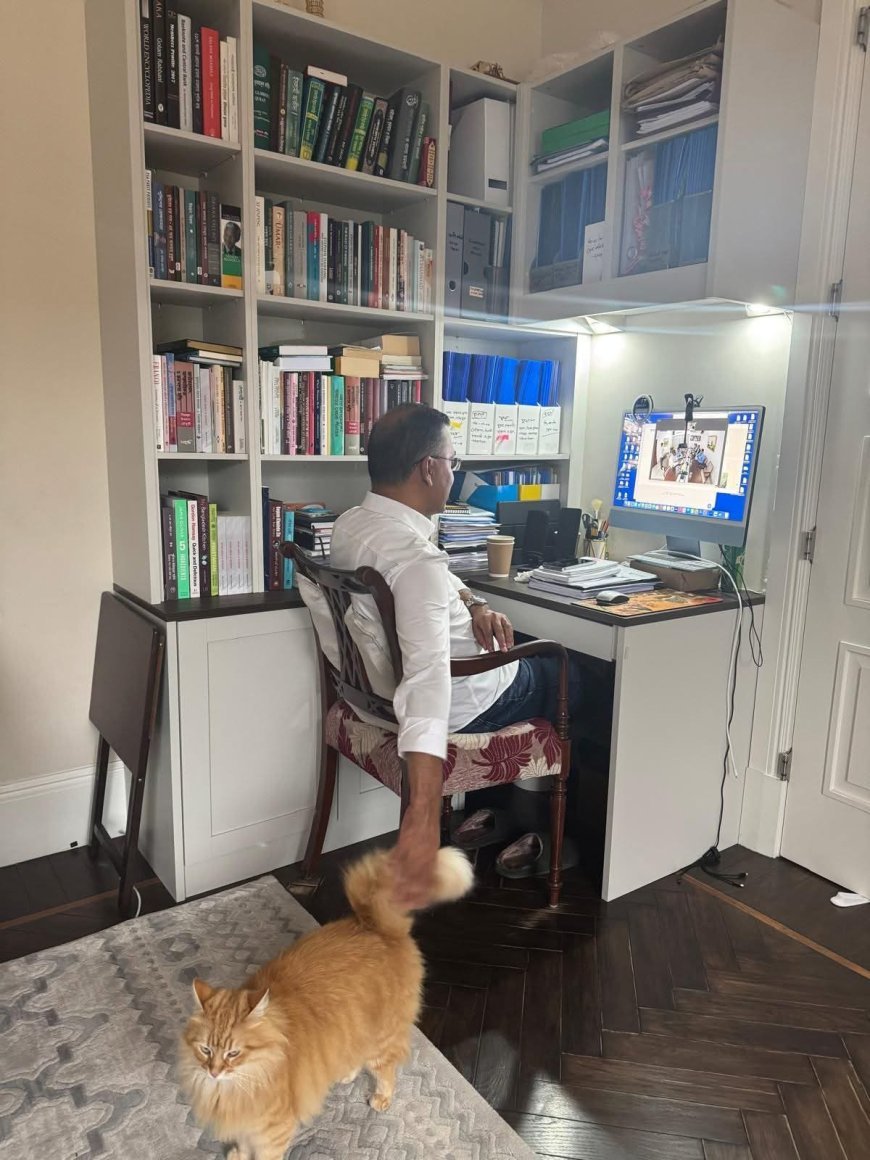
His speeches are at best anodyne if not soporific. Rather, in public meetings as well as in official or closer format ones, he prefers to listen closely and carefully. He has shown an ability to connect with ordinary citizens at an individual level. He eschews playing the victim, a sharp contrast with the fallen despot. He does not surround himself with elaborate security protocol. In fact, his penchant for holding his wife’s hand in public, catching a movie with his adult daughter, or fun time with the family cat, showcases an everyman persona that we have not seen among any of our leaders.
Slowly and steadily, Tarique Rahman -- indeed, note the very name, and deliberate absence of his father’s first name-- is establishing himself as his own man, not his parent’s son. Not the dashing war hero in ray ban aviator or debonair suits, nor glamourous like his mother, but in simple monochromatic shirt or polo, often untucked, without a tie, a simple prescription pair of glasses -- he could be the middle-class professional uncle next door. It’s not easy growing up under the shadows of great parents, and the image contrast alone can sometimes be quite Shakespearean in the latent family drama!
After the trauma of the Hasina years and the turbulence of July and aftermath, Tarique Rahman maybe the anti-populist the country needed.
In an era of populist demagogues, in a country where such figures always thrived, Tarique Rahman is very much against the mould. If he is successful in government, he may well become a case study on how to beat the populist wave elsewhere.
The Song Remains the Same
Of course, it will be years before we can pass a judgment on whether the Prime Minister Tarique Rahman has succeeded or failed. And what does being successful even mean?
The government has inherited an economic mess. Is an economic recovery the metric of success? Or is avoiding a catastrophe sufficient? Sheikh Hasina and other perpetrators of the previous regime’s manifold crimes remain at large. Will a failure to punish them be considered a failure? Or a general improvement in the law and order be success enough? What if the law and order situation improves, but is accomplished through draconian means like extrajudicial killings?
Bangladesh does not face the existential crises that Ziaur Rahman inherited in November 1975. But Tarique Rahman is grappling with the same mundane governance problems that his father was facing when he visited Chittagong that fateful day 45 years ago last week.
Ironically, the late president was visiting the port city to mediate between powerful factions of his own party. And it is BNP’s factions that may give us a clue about how the government of Tarique Rahman will evolve over the coming years.
We have already noted that as a party, BNP has decided at a very high level that it will eschew populist politics and have embraced liberal nationalism. In practice, and at grassroots level, BNP is perhaps better understood through a different prism. Using the work of Professor Mushtaq Khan, one might think of BNP as a transactional party that caters to the constituency through patron-client relationship.
One way to judge the government, and arguably this is how the voters will ultimately judge it, will be its ability to deliver upon these patron-client promises. And manifold and complex factions complicate the picture at local level.
There are also philosophical differences at the very highest level of party leadership that create a dialectic tension that needs to be synthesized by the Prime Minister. There are those for whom the path to development is primarily through deregulation and unleashing of entrepreneurship, and government’s redistributive impulses might be a distraction at this moment.
And there might be those for whom the human welfare and redistribution is the very essence of politics. Then there are those who are far more pragmatic, want a stronger bureaucracy, and would prefer to reach accommodations with oligarchs. What will the synthesis of these thesis and antithesis look like?
And finally, there are the pillars of the establishment that have been the de facto bastions of power since the modern Bangladesh was effectively established by the Zia regime -- civil-military bureaucracy, the business sector, and the international partners. In the 1990s democratic era, the establishment was agnostic between the two main parties and people voted freely. In the 2010s, the establishment swung heavily behind the Hasina regime and elections stopped happening.
How will the coming decade be?
This Time is Different
In one simple way, Tarique Rahman stands to be more successful than either of his parents. Neither of them could successfully, peacefully, finish their term and hand over power to the next government. Ziaur Rahman was gunned down by rogue officers. Khaleda Zia faced an implacable foe who made good on her promise of not allowing the former prime minister a moment of peace.
Well, our army is not the rag tag force where every other major dreamt of emulating Zia himself by going on radio to make another iconic speech. And contrary to the more excitable commentators, the political constellation aligns for a completion for parliamentary term because no one has any incentive to hit the streets any sooner.
Jamaat-e-Islami, the official opposition, is grappling with far too many inexperienced MPs, and an existential question about how to transition from a Leninist organisation to a mass political party. At the very least, these first time Jamaat MPs want to consolidate their grip over the local electorate over the full five-year term. They have no reason to seek an early election.
Biding its time to build its strength might be the best strategy for the NCP as well, which would mean recruiting local politicians, contesting local elections, and building parliamentary profiles of its young leaders, while waiting for the anti-incumbency to take its toll.
Meanwhile, there is no incentive for the government to allow the Awami League to return to politics under its old leadership. This is not to say that Awami leaning political figures wouldn’t make statements here and there, nor to say that local politicians might not run as independents or for any of the existing or new parties. But the relevant point is, Awami League as a political force has long ceased to matter.
The Centre Will (probably) Hold
That is, considering all the various factors, it is more than likely that the Prime Minister will see out a rather peaceful few years to the end of the decade. If he takes the country to a free and fair election, he will already have achieved more than his illustrious parents.
To be sure, the country will face a surfeit of shocks from abroad -- economic and geopolitical. And the Prime Minister’s ability to synthesize various philosophical strands and clientelist factions within the party remains to be seen. Perhaps these things will become too hard to manage. Perhaps the Prime Minister will start learning bad habits of his predecessors, with a new cult gradually emerging, and new oligarchs making new sweetheart deals that prove far too costly for the public.
If the opposition parties can resolve their problems and put together a slate of candidates and their own anti-populist everyman, they may win on an anti-incumbency wave in 2031.
But none of that is a certainty. No one expected much from Tarique Rahman, so he is already ahead of the curve. Perhaps a plodding economic recovery and a general improvement in the law and order situation without gross human rights abuse will see the humane, empathetic Prime Minister re-elected in a free and fair election.
Time will tell.
Jyoti Rahman is the Executive Editor of the weekly Counterpoint.