









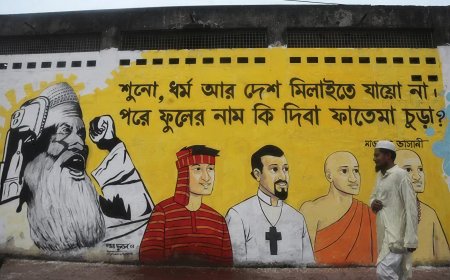




















































Political life becomes a stage where guilt is assigned by association, not by evidence.

Until 2019, people in the country used to say the country was on the right track. After 2020, there has been a sharp decline. Recently, 53% of people now say the country is running well again.

In a few words of thanks, the ICT judges suggest partiality towards the prosecution side

We do not need to be perfect voters, and we do not need to know every answer. In a transitional period, what matters is the willingness to participate and the courage to relearn what authoritarianism tried to take away: that our voices count and that democracy is a skill we can rebuild together.

Neither Tarique Rahman nor Sajeeb Wazed Joy can claim moral leadership without embracing financial transparency. They owe the public answers not because they are accused men, but because they are influential men. They owe the public honesty because they seek to shape the future of Bangladesh.

The choices Bangladesh makes in the coming years will determine the future. Political experience, ideological moderation, and administrative grounding -- all characteristics associated with the centrist tradition -- will be essential components of a successful democratic transition.

From five charges to two: The shifting charges in the Hasina trial

Stop doomscrolling and ignore the online doomsayers. We are on course for a peaceful democratic transition.
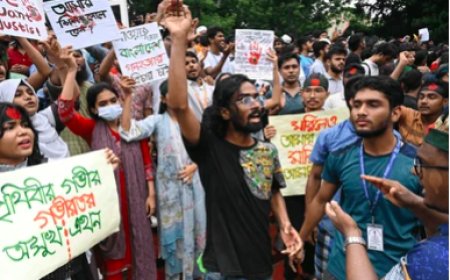
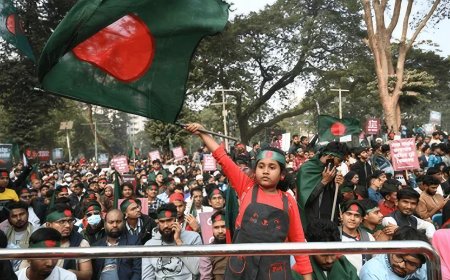
If the February 2026 election is to be festive, free and fair, we will need a campaign so that Bangladeshis believe that their votes will count and their voices will be heard.
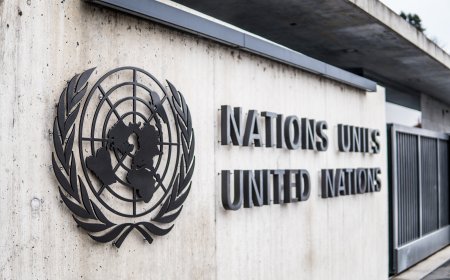
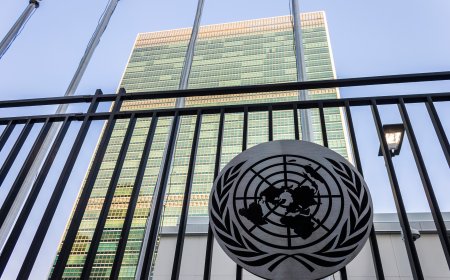
The UN response to the Hasina verdict affirmed the moral and factual weight of the case, acknowledged the reality of mass state violence, and confined its criticism to a doctrinal anti-death-penalty stance it applies uniformly in every country.

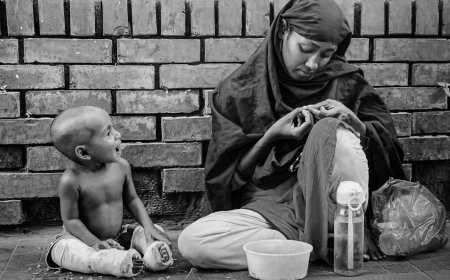
His politics was never abstract; it grew from lived experiences of precarity

The judgment of the Tribunal is therefore not only a sentence against one person; it is a declaration that no one, however powerful, stands above the law of the Republic. The arc of justice has finally bent toward Bangladesh.

Bangladesh's goal should be to make our own decisions while skillfully using multiple major powers to serve our national interests. This approach is called intelligent dependence -- we remain dependent in some ways, but we control how that dependence works.
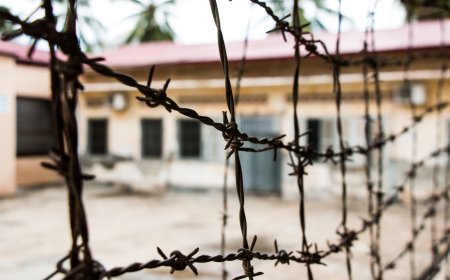
Ending the death penalty and ensuring fair trials would not weaken the pursuit of accountability -- it would strengthen it. In doing so, Bangladesh’s long-awaited reckoning with the past could become the foundation of a more just, rights-respecting, and humane future.

By binding the concept of reform so tightly to the consensus commission's existence, and suggesting that the commission's end would spell the end of reform itself, we have propagated a dangerous fiction: that meaningful reform requires suspending normal democratic politics and governing through unelected technocrats.