






























































The Moral Cost of Being a Politician in the Global South
Political life becomes a stage where guilt is assigned by association, not by evidence.

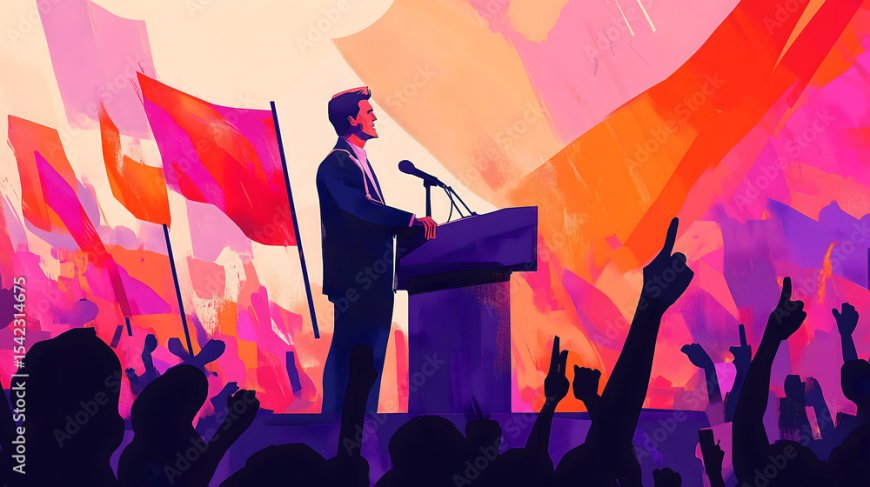
The most startling truth about politics in the global south is not the corruption, the patronage networks or the dramatic shifts of power. It is the quiet, corrosive reality that anyone who enters politics immediately becomes a suspect.
Before a leader delivers a policy speech, inaugurates a school or even wins an election, public judgment has already been passed.
The presumption of guilt precedes the act. This instinct did not arise suddenly. It is the product of long political histories shaped by colonial extraction, uneven state formation and the unstable evolution of democratic institutions.
Political theorists like Guillermo O’Donnell argued that many postcolonial democracies live in a “brown area,” where formal legality exists but informal norms dominate. In such environments, citizens learn to doubt everything, because the state itself offers no consistent signals about who can be trusted. Suspicion becomes the default setting.
This suspicion feeds a political culture where accusations operate as political currency.
The frequency, intensity and absurdity of allegations reveal more about the political system than about individual guilt. Cases of stolen relief tin or misappropriated orphan funds are not designed to withstand legal scrutiny.
Their theatrical quality is the point. They function as public messaging devices, not legal arguments. As Judith Shklar noted, political cruelty is often symbolic: Punishment becomes less about justice and more about establishing hierarchies and humiliating opponents.
The curious inversion in this dynamic is that the truth of a politician’s actions matters less than the timing of their power. Those in office enjoy the aura of legitimacy. Those who fall from power instantly become villains. Courts that acquit today may convict tomorrow.
Media narratives that portray someone as a hero in one political cycle may swiftly reframe them as a thief in the next.
The inconsistency is not accidental; it is a reflection of institutional weakness. Samuel Huntington observed that when political institutions are weak, political behaviour becomes unpredictable, and unpredictability breeds fear.
This fear shapes the moral terrain of political life. A politician navigates an environment where legal income is insufficient for political demands. Elections require immense financial mobilization.
Constituents expect material assistance far beyond the state’s capacity. Party structures demand unfunded loyalty. Under these pressures, the line between public duty and private obligation blurs. Max Weber argued that modern politics forces individuals into a conflict between the ethics of conviction and the ethics of responsibility.
In the global south, this conflict becomes acute: Survival within the system often requires bending the very rules one is supposed to uphold.
The structural design of these political economies deepens the problem. In many countries, politicians are highly visible while bureaucrats remain largely invisible.
Yet the bureaucratic machinery controls procurement, contracts, permits and public funds.
The politician becomes the face of corruption partly because visibility attracts blame. Bernard Williams warned against moral simplification, the tendency to reduce complex actors into good or bad categories.
In the global south, this simplification becomes a cultural reflex: The politician becomes the convenient container for collective frustrations.
This reflex flourishes in environments where state institutions themselves communicate uncertainty. When the judiciary’s independence fluctuates with political tides, when anti-corruption bodies perform like selective instruments, and when law enforcement operates unevenly, citizens lose confidence not only in politics but in the very idea of fairness.
The law becomes associated with power rather than principle. Michel Foucault’s idea of power as a producer of social meaning resonates here: institutions produce narratives as much as they enforce rules.
When institutions selectively pursue cases, they produce a narrative that guilt is situational rather than factual.
Another layer of complexity emerges from the political imagination of the public. Citizens in the global south, shaped by histories of authoritarianism, patronage and volatile governance, often expect personalized benefits rather than systemic reforms.
This expectation fuels a paradox: Politicians are condemned for corruption while simultaneously being expected to engage in informal, and often dubious, practices that deliver tangible benefits. The public’s relationship with politics becomes transactional, yet the transactions themselves generate the very corruption that the public condemns.
This paradox is not merely cultural; it is historically conditioned. Colonial administrations built states that extracted rather than represented. Postcolonial governments inherited structures designed for control, not participation.
Political legitimacy therefore had to be produced through performance rather than institutional confidence. Leaders became symbols rather than administrators, amplifying scrutiny and suspicion.
The consequence is a political ecosystem governed by insecurity. Incumbents fear future prosecutions. Opposition leaders fear present harassment. Every political actor anticipates retaliation once the balance of power shifts. In this environment, political behaviour is governed less by ideology and more by the calculus of risk.
Huntington’s assertion that political order requires stable expectations becomes particularly salient: where expectations are unstable, political actors behave defensively, sometimes desperately.
The pattern repeats across many states: Accusations, counter-accusations, sudden arrests, theatrical court appearances, dramatic acquittals, selective investigations.
This cyclical drama reveals a fundamental truth: Politics in much of the global south operates without a shared belief in institutional neutrality. Without that belief, politics becomes a perpetual contest of narratives, each designed to delegitimise the other.
The tragedy is that within this vortex, even honest politicians cannot escape suspicion. Political life becomes a stage where guilt is assigned by association, not by evidence.
Public trust collapses into cynicism. Cynicism hardens into fatalism. And fatalism, once embedded, becomes a self-fulfilling prophecy: if every politician is already presumed corrupt, the incentive to act differently erodes.
The result is a political culture where suspicion is not an exception but the architecture. It frames how politicians behave, how institutions evolve and how citizens imagine their relationship to the state.
The cost of entering politics in the global south is therefore not merely financial or personal. It is the loss of the benefit of the doubt, replaced by a permanent, unshakable presumption of guilt.
H. M. Nazmul Alam is an Academic, Journalist, and Political Analyst based in Dhaka, Bangladesh. Currently he is teaching at IUBAT. He can be reached at [email protected].