







































































The Monster Was a Woman
The Gothic leaves us with that uncomfortable space between sympathy and fear. Its women linger there, neither innocent nor monstrous, but painfully human.
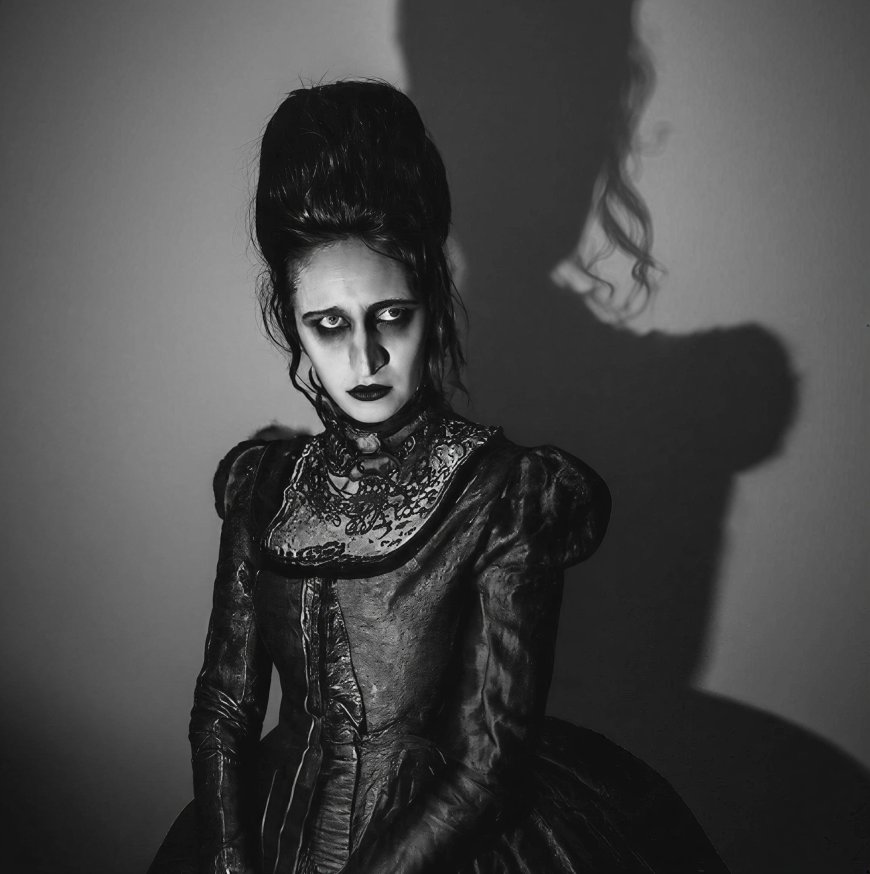
Every Gothic house has a mysterious room nobody dares to enter, because oftentimes there is a woman in it.
Sometimes we hear her demented laughter, or we see her in a wedding dress that has been on her body far too long, or her name already cut into a coffin lid. She has been abandoned, confined, betrayed, buried, possessed, or simply left alone. Her soul turns rabid and her story makes us fear the monster that she nurtures within her.
Bertha Mason may be the cruelest example of this. In Jane Eyre, she lives sealed inside the attic at Thornfield. She is heard before she is seen. Her laughter moves through the corridors at night, low and impossible to place. She bangs on doors, attacks Rochester, sets fire to his bed.
By the time Jane finally sees her, Bertha has become almost unrecognizable, crawling on all fours in a state of violent, animalistic madness.
What we know of her comes mostly through other people. She has no ordinary life left. She cannot move freely through the house. She cannot tell Jane what happened to her or speak for herself. Rochester controls the story of her illness, her confinement and her marriage.
He decides where she lives and how much of her existence the outside world is allowed to know. Even her name begins to disappear behind the simpler fact that she is Rochester's mad wife.
The more unsettling question is not what Bertha has become, but what has been taken from her.
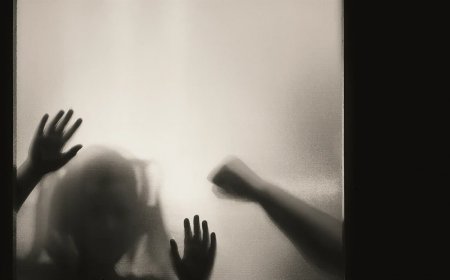
Her only tactile presence in the sentient world is when she begins to scream.
Miss Havisham's horror is a quieter one. She is left at the altar and with the stubbornness of grief, decides to mummify the wretched day. The wedding dress stays on her body for decades. The clocks stop at twenty minutes to nine. The feast is left to rot on the table, and the dust settles over everything like a second, finer fabric.
The spectacle is both pitiable and grotesque. She turns her grief into an ominous ritual, and then, patiently, into a weapon. Estella becomes her instrument to punish other men. Dickens keeps the woman beneath the grotesque figure just within reach. We can still see the bride that she once was.
Medea is harder to pity, because she goes so much further. She kills.
But before she becomes the woman who kills her children, she is a woman who has been betrayed and discarded. She left her own country for her husband and built her life around him in an unknown city.
Then her husband decides another marriage will serve him better, and labels that decision as prudence. Ambition. Necessity. Men like Jason have always been remarkably gifted at finding respectable words for their selfishness.
Medea is expected to bear the consequences but she refuses to do so.
What is unsettling is that she knows exactly where her anger is taking her. She understands that what she is about to do will ruin her as thoroughly as it ruins Jason.
Her revenge is appalling, and nothing can make the murder of her children anything less than horrific. Before this dreadful event takes place, Euripides lets Medea speak to us.
She understands the precariousness of being a woman who has no family near her, no political power and no secure footing in the city where she lives. She understands marriage as a bargain in which the woman often bears the greater cost.
Madeline Usher is barely permitted to speak at all.
In Poe's The Fall of the House of Usher, she is ill, pale and increasingly fragile. Physicians are baffled at her condition and eventually she is pronounced dead.
And then she is buried.
Alive.
The horror of Madeline’s story is almost painfully simple. A woman is declared dead, carried into a vault and sealed inside it. When she finally returns, she is bruised. She is bloodied. She has had to claw her way out of the grave that was meant to contain her.
Ligeia is again different than others. She is not imprisoned in an attic or house. She is not abandoned in quite the same way as Miss Havisham or Medea. She dies.
And yet she refuses to remain dead.
In Poe's Ligeia, the narrator is fascinated by her intelligence, her beauty and her extraordinary will. He remembers her with an intensity that borders on obsession. After her death, he marries Rowena, but Ligeia does not leave him. Her memory persists until it begins to occupy the room with him.
After Rowena's death, the story enters a space where nothing feels certain anymore. The dead woman's body appears to transform, slowly taking on the features of Ligeia.
Poe never explains what we are seeing. Has Ligeia returned? Is the narrator hallucinating? Is grief distorting everything before his eyes?
The mystery matters less than the effect it creates.
The narrator wants to hold on to Ligeia, to keep her alive in memory, but memory refuses to behave. It grows into something obsessive and overwhelming, until it becomes impossible to know whether he is remembering Ligeia or living entirely within her shadow.
Ligeia survives as an idea, a memory, a hallucination, a ghost. However we choose to read her, she refuses to disappear.
And that is what brings these women together.
Bertha, Miss Havisham, Medea, Madeline and Ligeia are very different women. They belong to different periods, different writers and different kinds of Gothic fiction. One burns a house. One lets herself decay inside one. One murders. One claws her way out of a grave. One may have returned from the dead.
But each of them is trapped in some way.
Bertha is locked away because the people around her have decided that she is impossible to manage. Miss Havisham cannot move beyond the hour of the day in which she was abandoned.
Medea is left socially and emotionally cornered after Jason decides that he wants someone else. Madeline is confined inside a death that was never hers. Ligeia becomes trapped inside the memory of a man who cannot accept that she is gone.
The Gothic is marvelous at showing us what happens when a woman is pushed too far.
Perhaps the Gothic is doing something stranger than simply frightening us with women who refuse to behave. It takes emotions that are recognizably human and pushes them past the point where we feel comfortable looking at them. Grief becomes obsession. Anger becomes violence. Loneliness becomes madness. Desire becomes possession.
And perhaps this is why the Gothic woman so often feels larger than life. She is carrying emotions that ordinary life teaches women to hide. Rage that must be softened. Grief that must be made presentable. Desire that must be contained. Loneliness that should not become anyone else's problem. The Gothic takes all of that restraint and lets it snap.
None of this excuses what these women do. Medea's children are still dead. Bertha still commits violence. Miss Havisham still wounds Estella. Madeline's return comes too late to save the Ushers. Ligeia remains inseparable from the disturbing gaze of the man who tells her story.
A Gothic woman is also never only frightening. She is also excessive, inconvenient, wounded, furious, grieving, and unwilling to disappear neatly when the story expects her to. Her presence unsettles the order around her because she exposes what that order would rather keep hidden: Desire that cannot be contained, grief that is not mendable, anger that will not soften itself for the comfort of others.
What makes these women memorable is not simply that they cross a line. It is that, in doing so, they make the line visible. They show us the narrow boundaries within which women are expected to remain, and what the consequences are when someone steps outside them.
Perhaps this is also why their stories resist easy judgement. We can condemn what they do without pretending that their pain means nothing. We can be frightened by them and still understand them. The two responses do not cancel each other out.
The Gothic leaves us with that uncomfortable space between sympathy and fear. Its women linger there, neither innocent nor monstrous, but painfully human.
And perhaps that is the most haunting thing of all: Not that these women become monsters, but that, even after everything, we can still recognize ourselves in the things that made them so frightening.
Azeema Anhar is an English Language Instructor at ULAB and member of the editorial team at the weekly Counterpoint.