






























































The Green Blueprint
Let us move beyond the annual rhetoric of a single calendar day. Let us embed environmental resilience into the DNA of our national growth, ensuring a safe, prosperous, and liveable homeland for generations to come.
Every year on June 5, the global community observes World Environment Day with standard platitudes. But for Bangladesh, this day cannot afford to be a symbolic ritual. As one of the most climate-vulnerable nations on Earth, environmental survival is a matter of immediate national security.
We find ourselves trapped in a cruel paradox: While Bangladesh contributes less than 1% of global greenhouse gas emissions, our people pay the highest price. Rising coastal salinity, prolonged northern droughts, relentless riverbank erosion, blistering heatwaves, and chronic urban flooding are no longer distant projections -- they are the disruptive background noise of our daily lives.
If we are to secure our economic future, we must stop viewing environmental protection as a luxury and place it at the absolute centre of our national development strategy.
The Looming Water Crisis and the Padma Barrage
Over the next few decades, the battle for Bangladesh’s sustainability will be fought over water. Right now, a staggering 80% of our domestic and industrial water is aggressively pumped from underground aquifers. In megacities like Dhaka, the groundwater table is plummeting by two to three meters every single year. This is a ticking ecological time bomb.
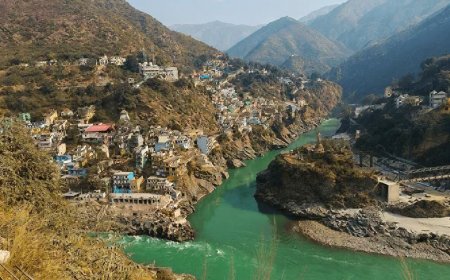
To defuse it, we need structural ambition matching the scale of the crisis. The proposed Padma Barrage Project is exactly the type of historic intervention required. By strategically conserving and managing water within the Ganges-Padma basin, this project could revitalize the southwestern region with vital irrigation, restore dying river navigability, and dramatically ease the burden on our dying groundwater reserves.
Much like the landmark Padma Bridge proved our engineering capability, the Padma Barrage could secure our ultimate water sovereignty.
Reclaiming Our Lost Arteries
Bangladesh was once defined by its magnificent, interconnected web of natural rivers and canals. Yet, over the last few decades, a toxic mix of lawless encroachment, indiscriminate dumping, and administrative neglect has choked thousands of kilometres of these waterways out of existence. The proof of this failure arrives with every heavy downpour, as cities like Dhaka instantly paralyze into gridlocked swamps.
The political commitment outlined in the BNP's 31-point reform agenda to re-excavate and restore roughly 20,000 kilometres of canals and rivers offers a fundamentally transformative vision. Reviving these lost arteries would achieve far more than simple flood mitigation; it would naturally recharge our aquifers, boost agricultural and fisheries yields, preserve vanishing biodiversity, and inject fresh economic life into the rural landscape.
However, a warning to policymakers: Good intentions are not enough. We must candidly audit the canal-digging campaigns of 1991–96 and 2001–2006 to understand why they failed to leave a permanent footprint. To prevent history from repeating itself, future dredging must abandon ad-hoc execution and adhere to a meticulous, nationwide hydrological network.
This massive undertaking should be steered by a unified, competent coordination committee featuring relevant ministries, the Water Development Board, local governments, and independent environmental experts.
Fostering a Culture of Conservation
Simultaneously, our rapidly growing urban centres must embrace a modern culture of water recycling. Global frontrunners like Singapore, Australia, and California have conclusively proven that when you combine smart technology with public transparency, recycled water is entirely safe and viable.
Bangladesh must quickly pivot to mandating greywater recycling and rainwater harvesting systems in all new residential complexes, industrial clusters, and Special Economic Zones (SEZs). Furthermore, to sustain this shift across generations, we must embed the principles of sustainable urbanization and resource conservation directly into our primary school curriculums. We must teach children to value water before they learn to waste it.
250 Million Trees
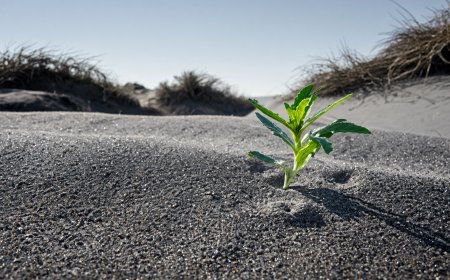
In the fight against rising temperatures, nature remains our best defence. The ambitious pledge to plant 250 million trees between 2026 and 2031 has the potential to become one of the most sweeping social forestry programs on the planet. Given that a single mature tree can trap up to 25 kilograms of carbon dioxide annually, this green wall would provide monumental long-term benefits for climate mitigation, temperature control, and soil stabilization.
But let us be realistic: planting a tree is easy; keeping it alive is the real challenge. Past campaigns have often collapsed into superficial photo-opportunities, leaving saplings to wither away. To turn this promise into a legacy, the program must deploy digital monitoring systems, actively incentivize local communities, and lock in mandatory maintenance funding for at least the first five critical years of growth.
Turning Waste into Wealth
If there is a blind spot in our current environmental management, it is the disastrous state of urban waste. Our cities churn out more than 25,000 tons of solid waste every single day, the vast majority of which is simply piled into toxic open dumps.
Even in newly established urban jurisdictions like the Bogura City Corporation, municipal waste is routinely dumped directly into the earth -- poisoning local water tables, leaking massive amounts of methane gas, and triggering severe public health crises.
We must aggressively shift toward district-level waste segregation, industrial composting, and a true circular economy. The moment we stop looking at waste as a nuisance and begin treating it as a raw economic resource, we protect our environment while unlocking an entirely new frontier of green jobs and sustainable industries.
The Frontier of Renewable Energy
We stand at a critical crossroads regarding our energy security. For decades, our heavy reliance on natural gas and expensive imported fossil fuels has left our economy vulnerable to global shocks and bled our foreign exchange reserves dry.
While the government’s stated goals to scale up solar, wind, and alternative energy are commendable, paper targets do not power factories. Transforming our energy landscape demands investment-friendly policies, heavily modernized grid infrastructure, seamless technology transfers, and robust private-sector participation.
In the modern global market, transition to renewable energy is no longer just an ethical obligation; it is the absolute baseline for future economic competitiveness.
The Call for Coordinated Leadership
For far too long, Bangladesh’s approach to climate change was trapped in rigid administrative silos -- divided between isolated engineering projects, bureaucratic red tape, and foreign aid checklists. But climate change is a complex, cross-cutting crisis. Solving it requires a synchronized strategy that seamlessly weaves together hard science, macroeconomics, urban planning, and deep behavioural change.
Encouragingly, we are seeing signs of institutional awakening at the highest levels of leadership. The recent appointments of a Special Assistant to the Prime Minister for Environment, Climate, and Water, alongside a dedicated Chief Coordinator for Sustainable Development Goals (SDGs), send a powerful signal.
With 11 of the UN’s 17 SDGs tied directly to environmental health, Bangladesh’s economic ascent will stall entirely if we fail to hit our targets on clean water, sustainable cities, and responsible consumption.
The Ultimate Verdict
Ultimately, saving our environment cannot be treated as a top-down government mandate. It requires a collective national contract. Everyday citizens, local municipalities, corporate entities, classrooms, and political parties must all step onto the field. Small, everyday acts -- refusing single-use plastics, conserving power, separating household garbage, and protecting neighborhood canals -- aggregate into national triumphs.
The defining message for Bangladesh this World Environment Day is clear: economic growth and environmental preservation are not bitter rivals; they are entirely dependent on one another. By executing the Padma Barrage, restoring our canals, successfully growing 250 million trees, and modernizing our waste and energy sectors, Bangladesh can reshape its destiny.
Let us move beyond the annual rhetoric of a single calendar day. Let us embed environmental resilience into the DNA of our national growth, ensuring a safe, prosperous, and liveable homeland for generations to come.
The author is an expatriate Bangladeshi environmental researcher and urban planner currently working as a specialist at Sydney Water, Australia. He is a Fellow Member of the Bangladesh Institute of Planners (BIP). Contact: [email protected]

Faysal Kabir Shuvo
Dr. Faysal Kabir Shuvo is an Australia-based urban planner and a member of the Bangladesh Institute of Planners.