






































![A Ledger of the Soul: Navigating the Allah-Bhagavant Nexus in a 19th-Century Puruṣākāra Jñāna Caupara [Gyan Chauper]](https://counterpointbd.com/uploads/images/202608/image_430x256_6a93baa3b09a7.jpg)




















Malaysia First, Then China
This is not a government choosing China over India, or East Asia over the West. Rather, Dhaka is trying to keep every door open for as long as the money keeps coming in and as long as no single lender or ally claims it exclusively.

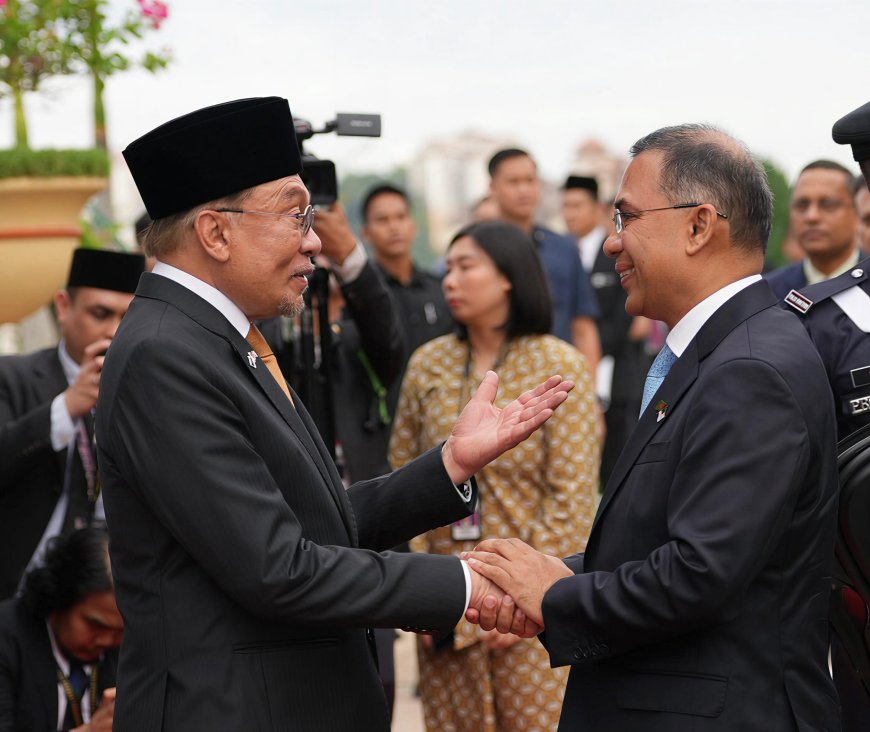
Four months after becoming Prime Minister, Tarique Rahman has taken his first trip abroad. He spent two days in Kuala Lumpur, then went to China for four days, including a stop at the World Economic Forum's "Summer Davos" meeting in Dalian.
He did not go to Washington, nor to Saudi Arabia, even though the Saudi ambassador was the first foreign envoy to meet him after he took office, nor even to New Delhi first, by ignoring India's Prime Minister Narendra Modi, who had invited him back in February.
A leader's first trip can only be used once, and Rahman chose to spend it on a labour market and a lender, not on a security ally or an old trading partner. That choice tells us something real, and we should look at it carefully instead of brushing it aside.
What Malaysia Gives to Bangladesh
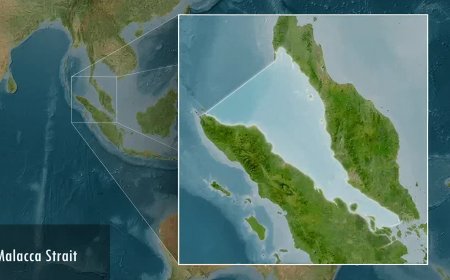
Let's look at the simple facts first. Malaysia is one of the largest destinations for Bangladeshi immigrant labour -- more than 800,000 officially documented and hundreds of thousands are without valid documentation. However, they stopped accepting new foreign workers starting mid-2024, and this freeze has cost Bangladesh almost two years of lost jobs and remittances from workers.
Reopening this door is not just for show, but the fastest way for Bangladesh to fight its biggest problem at home -- unemployment.
The trip's main goals are to gain access to Malaysia's job market, to protect migrant workers, and to attract tech and factory investment. There is also a smaller point worth noting. Bangladesh already sells semiconductors to Malaysia and has the skills to export more trained workers to the industries where they are needed. This shows that the relationship is not only about RMG but also about pushing Bangladesh's exports toward higher-value goods.
So the Malaysia visit looks less like politics and more like a government trying to fix its most urgent domestic problem through the easiest and earliest path available to it. The fact that this came before any visit to a rich Western country or to India tells us where this government's priorities truly sit right now -- jobs and remittances sent home by workers, ahead of big-power diplomacy.
What the China Numbers Show
The China visit is harder to read because it focuses solely on economics, given its size. Bangladesh is asking China for about $6 billion. Roughly $2 billion would go to broader development projects, and $4 billion would be split among upgrading the power grid, building a new elevated highway, building a water treatment plant, and buying new ships.
A deal for a hospital funded by a Chinese grant is also expected, and Bangladesh looks set to officially join China's Global Development Initiative. These are not small numbers. Beijing is already Bangladesh's largest trading partner, with annual trade exceeding $24 billion. This new request comes after China already gave $2.1 billion in loans and grants to the interim government in March 2025, and after the agreement in January 2026 to build a drone factory in Bangladeshi soil.
Put these numbers together, and the pattern is clear without needing anyone else to explain it -- Bangladesh's reliance on Chinese money was already growing before this government took power, and Rahman's visit is accelerating a financial relationship that has been building for over a year.
The real question is not whether Bangladesh is moving closer to China -- the money already answers that. The real question is how much control Bangladesh keeps once it owes this much. A $6 billion request, added on top of $2.1 billion already given and a drone factory deal, starts to look less like spreading out risk and more like growing dependence, no matter how the trip gets described later.
The Teesta Clue
The clearest sign of how careful Dhaka is being shows up in what is not happening this week -- the Teesta River Project. It is something China has wanted to fund for years for its regional geo-political benefit, and India has just as firmly opposed it for just as long. However, this project will remain at the planning stage during this visit and will not proceed to a funding agreement.
If Bangladesh were simply tilting fully toward China, Teesta is exactly the kind of big, symbolic project it would want to lock in right now, while goodwill is strong. The fact that it is being held back on purpose is the strongest proof that this trip is being managed carefully, not blindly embraced.
Dhaka seems to want Chinese money for power grids and bridges, without taking on the river dispute with India that would come with Teesta funding. That is a more careful, calculated position than simple labels like "pro-China" or "just routine economic diplomacy" suggest.
The Real Signal Came Before the Trip
The clearest non-money clue showed up just before Rahman left Dhaka for the trip. Ambassadors from the US, UK, Japan, and Sweden met Bangladesh's foreign minister days before the China trip began. Four Western-aligned countries asking for a meeting in the same week as a big China visit is nothing.
It is the kind of coordinated check-in that happens when other countries want their concerns noted without making a public statement. Whether Dhaka meant this trip as a signal or not, the fact that Washington, London, and Tokyo treated it as one shows us how the world outside Bangladesh is actually reading it -- no matter how Dhaka chooses to describe it at home.
What it All Adds Up to
Put all these facts together, and a clear picture forms -- this is a government trying to keep its options open in every direction, not a government picking one side. It is grabbing fast, urgent help from Malaysia on the one issue -- jobs -- most likely to decide whether it survives politically at home.
It is building a large and growing economic relationship with China, while knowingly holding back the one project that would force a real break with India, and it is doing all this while Western countries watch closely enough to schedule a meeting just before the trip.
This is not a government choosing China over India, or East Asia over the West. Rather, Dhaka is trying to keep every door open for as long as the money keeps coming in and as long as no single lender or ally claims it exclusively.
The real test is not this week in Kuala Lumpur or Beijing. It is whether this balancing act still holds once the money actually arrives -- and once the bills, financial and political, come due.
Ahamed Jobayer is a recent postgraduate in International Relations from South Asian University, New Delhi.