


















































Balochistan and the Ghost of Pakistan’s 1971
Its economy survives on IMF support with reserves near depletion. Its own defence minister accuses India of funding the insurgency, an allegation India denies.

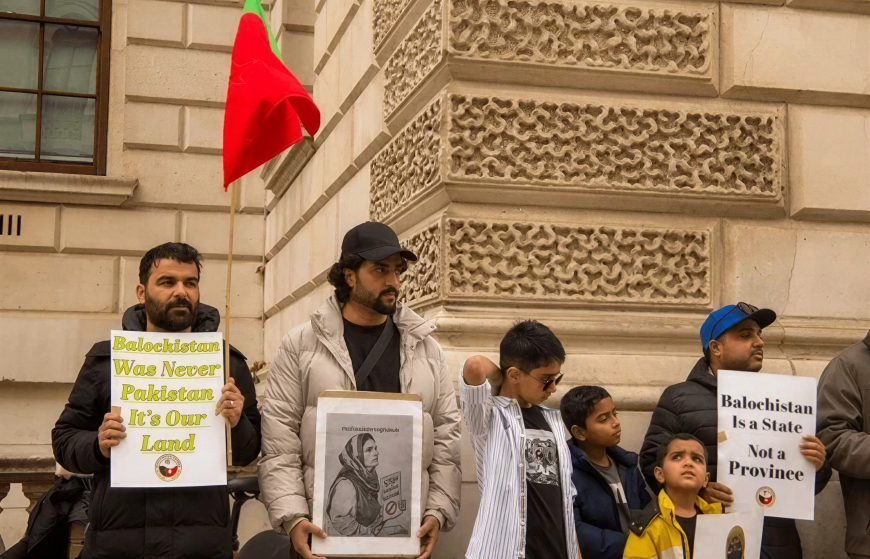
On 13th July, a message spread across social media declaring the birth of the “Republic of Balochistan,” complete with its own flag, anthem and currency. No government recognised it.
Pakistani troops still patrolled Quetta and Gwadar. Yet the declaration landed at a moment when Islamabad can least afford it: In the preceding fortnight, attacks by Baloch armed groups had killed more than a hundred Pakistani soldiers, part of a pattern that has turned Balochistan into the bloodiest theatre in South Asia.
Balochistan makes up 44% of Pakistan's landmass but holds barely 5-6% of its population. It sits on staggering reserves of gas, coal, copper and gold, yet its villages still burn wood for cooking while its gas heats homes and runs factories a thousand miles away in Punjab.
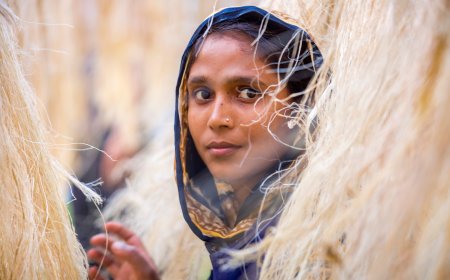
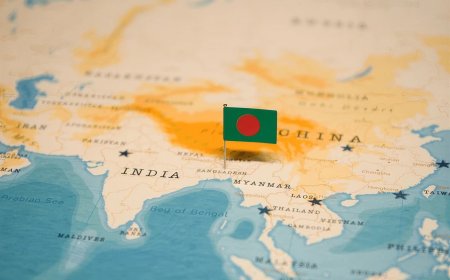
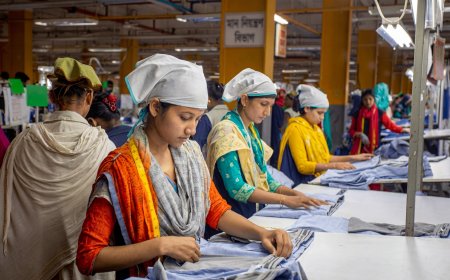
This is not merely an old story of an unequal federation; it is our story, replayed with different names. Before 1971, East Pakistan produced the jute that earned Pakistan its foreign exchange while decisions about that money were made in Islamabad and Rawalpindi. The grievance was never abstract; it was about whose labour paid for whose progress.
A grievance older than the state itself
Balochistan covers 44% of Pakistan’s landmass but holds barely 5-6% of its population, and beneath that thin population, a disproportionate share of the country’s gas, copper, coal and gold. Its villages still burn wood for fuel in the province that heats and lights Punjab. That imbalance is close to the entire grievance in miniature.
Politics runs at least as deep as economics. When the British left in 1947, the Khan of Kalat briefly declared independence before Pakistani forces occupied the state in March 1948 and extracted an Instrument of Accession under duress, an act Baloch nationalists have never accepted as voluntary.
Insurgencies followed in 1958, 1963 and 1973, each crushed by force. The killing of Nawab Akbar Bugti, a former provincial governor turned rebel commander, by Pervez Musharraf’s army in 2006, did not end the movement; it produced a martyr and hardened it. That insurgency, now in its fifth phase, has not stopped since.
An insurgency that Balochis have learned to coordinate
What distinguishes today’s crisis from earlier rounds is competence. The Balochistan Liberation Army’s hijacking of the Jaffar Express in March 2025, which took some 380 passengers hostage at Bolan Pass, had no real precedent in the region.
Ten months later, Operation Herof 2.0 struck more than a dozen locations simultaneously: Banks, schools, checkpoints, operations demanding financing, planning and manpower on a scale Pakistani security planners had not credited the BLA with possessing.
Attacks in July 2026 deliberately hit infrastructure guarding a dam project, signaling that development itself, not only the military, is now a target.
Running alongside the armed campaign is the Baloch Yakjehti Committee, a civil movement that insists it seeks rights rather than secession but which many analysts read as the BLA’s political wing.
Pakistan’s own military has acknowledged coordination between the BLA and the Pakistani Taliban in the northwest, meaning two insurgencies, not one, are increasingly moving together, even as Islamabad separately manages a hostile border with Afghanistan and unrest in Pakistan-administered Kashmir.
The 1971 parallels
Here the comparison to Bangladesh strains. East Pakistan in 1971 held a demographic majority within the United States and a national movement with a single, internationally legible leadership.
Balochistan is a demographic minority nationwide; its insurgency split between an armed wing that most governments, including Pakistan’s, the United States’ and the European Union, formally designate as terrorist, and a civil wing that explicitly disavows independence.
Bangladesh’s war drew a decisive external patron in India, whose intervention shaped both the outcome and the recognition that followed. Islamabad accuses India of backing the BLA, an allegation New Delhi denies and which remains unproven in any public forum; nothing resembling 1971’s scale of external military backing exists today.
Under the criteria international law traditionally applies to statehood: A permanent population, defined territory, an effective government, and the capacity to enter relations with other states.
The “Republic of Balochistan” satisfies none convincingly, and the muted global response reflects that. Where the world eventually reframed Bangladesh’s struggle as a war of liberation, it currently reads Balochistan through the vocabulary of counterterrorism.
Balochistan is not Bangladesh in 1971 (yet)
That said, honesty requires acknowledging that Balochistan is not Bangladesh, at least not yet. Three factors currently work in Pakistan's favour.
First, its military, however stretched, remains the most powerful actor in the country and has crushed four previous insurgencies through sheer force. Second, China has poured over 62 billion dollars into the China-Pakistan Economic Corridor, with Gwadar port sitting at its heart in Balochistan itself.
Beijing has every incentive to keep Pakistan intact, even as its patience with Islamabad's security failures visibly thins. Third, Washington views Baloch violence through a counterterrorism lens rather than a liberation lens, and no major power currently wants to see Pakistan fragment, not with a nuclear arsenal and a volatile neighbourhood at stake.
Yet incentives for outside powers to preserve a status quo are not the same as that status quo being sustainable. Pakistan is now fighting what analysts call a four-front crisis: The Balochistan Liberation Army in the southwest, the Tehrik-i-Taliban Pakistan in Khyber Pakhtunkhwa, a deteriorating and now militarised relationship with Afghanistan, and unrest in Pakistan-administered Kashmir.
Its economy survives on IMF support with reserves near depletion. Its own defence minister accuses India of funding the insurgency, an allegation India denies but one that conveniently distracts from Islamabad's decades of self-inflicted wounds.
A state fighting on four fronts while its currency, its foreign reserves and its international credibility all bleed simultaneously is not a picture of stability, whatever the maps still say.
The honest conclusion is not that Pakistan breaks apart tomorrow. It is that the question being asked in Quetta, in Gwadar, and increasingly in international policy circles, is no longer whether Balochistan's grievances will destabilise Pakistan, but when and how far that instability spreads.
Bangladesh has no stake in encouraging fragmentation elsewhere, and our diplomacy should stay measured. But as a nation that was itself once told to accept unity imposed by force.
We owe the Baloch people at least this much honesty: A state that answers its citizens' demands for dignity and resources with disappearances and gunfire is not choosing stability; it is only postponing its reckoning.
Shafqat Aziz is a barrister (Lincoln’s Inn) and an accredited Civil-Commercial Mediator (ADR-ODR International).