















































![A Ledger of the Soul: Navigating the Allah-Bhagavant Nexus in a 19th-Century Puruṣākāra Jñāna Caupara [Gyan Chauper]](https://counterpointbd.com/uploads/images/202608/image_430x256_6a93baa3b09a7.jpg)




















The Michigan Primary Sent a Message Beyond America: Bangladesh Should Pay Attention
The Michigan primary was not merely a victory for one candidate. It demonstrated that authenticity could withstand unprecedented financial pressure. It showed that principled leadership still resonates with voters.

The Michigan Democratic Senate primary was about far more than one candidate or one state. It became a referendum on political authenticity, organized civic participation, and perhaps most importantly, the limits of Islamophobia as an electoral strategy.
Dr. Abdul El-Sayed's victory was significant for several reasons. It demonstrated that even after tens of millions of dollars in negative advertising, sustained efforts to portray a visibly Muslim candidate as politically dangerous could not overcome voters' own assessment of his character, consistency, and record. For observers in Bangladesh, the election offers an important lesson.
Elections Are Won by Coalitions, Not Communities
Michigan was a close race. In elections decided by narrow margins, no single constituency can honestly claim sole credit for victory. Every organized segment of society contributes to the outcome.
Young voters mattered. Healthcare workers mattered. African American communities mattered.
Jewish organizers who campaigned within their own moral tradition mattered. And so did Muslim voters in cities such as Dearborn, Hamtramck, Canton, and Sterling Heights, many of whom became politically engaged with unprecedented energy.
In several communities, turnout exceeded previous primary elections. For many Muslim Americans, voting ceased to be merely symbolic. Mosques encouraged civic participation, community leaders emphasized political engagement as a moral responsibility, and thousands who had previously remained politically disengaged decided their voices mattered.
The lesson extends well beyond Michigan. Democracy functions best when citizens who have historically stayed on the sidelines become active participants. Political engagement is not about ensuring victory for one group. It is about strengthening the legitimacy of the democratic process itself.
Money Cannot Always Buy Trust
The Michigan primary also challenged another long-held assumption: That overwhelming financial advantage inevitably determines electoral outcomes. Approximately $60 million was reportedly spent opposing Dr. El-Sayed, including around $30 million from AIPAC-backed political spending. The objective was clear: To define the candidate before voters could define him themselves.
It failed. That failure deserves careful attention. Modern campaigns increasingly rely on saturation advertising designed to overwhelm public perception. Consultants often assume that repeated messaging eventually becomes accepted truth.
Michigan suggested otherwise. Voters proved capable of distinguishing between expensive political messaging and lived experience.
Dr. El-Sayed remained remarkably consistent throughout the campaign. Rather than altering his positions to neutralize attacks, he continued emphasizing healthcare, combating corruption, and serving all Michigan residents. Authenticity, it turns out, can still compete against money.
Gaza Became a Test of Character
Although the campaign addressed numerous domestic concerns, Gaza remained one of its defining issues. Yet what made Gaza politically significant was not simply that it represented a foreign policy disagreement.
It became a test of personal integrity. Many voters watched a candidate maintain a principled position despite knowing it would invite tens of millions of dollars in hostile advertising. At a time when public trust in politicians is exceptionally low, refusing to abandon deeply held convictions became a political strength rather than a liability.
Whether one agreed or disagreed with Dr. El-Sayed's position on Gaza, many voters respected that his principles were not for sale. In democratic politics, consistency has become increasingly rare and increasingly valuable.
When Islamophobia Stops Working
Perhaps the most underreported aspect of the Michigan primary was the relative failure of Islamophobic political messaging. For decades, American elections have repeatedly relied upon a familiar image of the Muslim candidate: Foreign, suspect, potentially disloyal, or somehow incompatible with democratic leadership.
Those narratives did not disappear in Michigan. They simply proved less persuasive than expected. That outcome says as much about Michigan's voters as it does about the candidate himself. Many Americans chose to evaluate the individual before them rather than the stereotypes presented to them.
They rejected caricatures in favor of character. This should encourage anyone who believes democratic societies can resist politics rooted in fear.
Bangladesh Should Take Notice
Although the political contexts differ substantially, Bangladesh should not ignore this lesson. Election campaigns in Bangladesh frequently feature their own version of fear politics.
Candidates or political movements associated with Islamic values are often portrayed, not through careful examination of their actual policies, but through sweeping allegations, insinuations, and labels designed to provoke anxiety rather than informed debate.
Sometimes these accusations are directed at individuals. Sometimes they are directed at entire political parties or religious constituencies. The objective is remarkably similar to what Americans witnessed in Michigan: Persuade voters to fear identity instead of evaluating ideas.
This does not mean every religiously inspired political movement deserves public support or immunity from criticism. Democracies require rigorous scrutiny of all candidates and parties.
But criticism should be grounded in evidence, constitutional principles, and public policy, not prejudice. A politician should be judged by integrity, competence, respect for democratic institutions, and commitment to justice, not by assumptions attached to religious identity.
Civic Participation Is a Moral Responsibility
One additional lesson deserves emphasis. The increased political participation of Muslim Americans did not emerge overnight. It resulted from sustained civic education, community organizing, conversations within mosques, and reminders that political participation can be a means of promoting justice and reducing harm.
For many Muslims, voting was understood not simply as a constitutional right but as a moral responsibility. That understanding has relevance far beyond the United States.
Whether in America, Bangladesh, or elsewhere, communities cannot expect better governance while remaining politically disengaged.
Participation should not begin only when one's own interests are threatened. Citizens committed to justice have an obligation to contribute to improving society through every peaceful and lawful means available.
A Victory Worth Reflecting Upon
The Michigan primary was not merely a victory for one candidate. It demonstrated that authenticity could withstand unprecedented financial pressure. It showed that principled leadership still resonates with voters.
It suggested that organized civic participation can reshape electoral outcomes. And perhaps most significantly, it offered evidence that fear-based campaigns rooted in Islamophobia are not invincible.
For Bangladesh, that may be the most valuable lesson of all. Democracies are strongest when elections become contests of ideas rather than identities, of character rather than caricature, and of public service rather than manufactured fear.
Michigan reminded us that voters can make precisely that choice. The challenge now is whether democracies elsewhere, including Bangladesh, are willing to do the same.
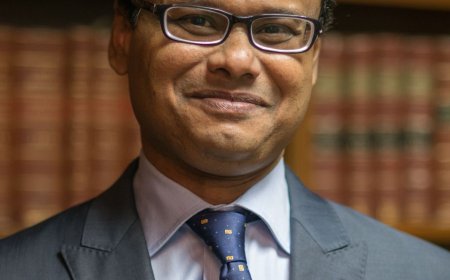
Dr Mohammad Nakibur Rahman is a professor of Finance at the University of North Carolina and the US spokesperson for Jamaat-e-Islami Bangladesh.